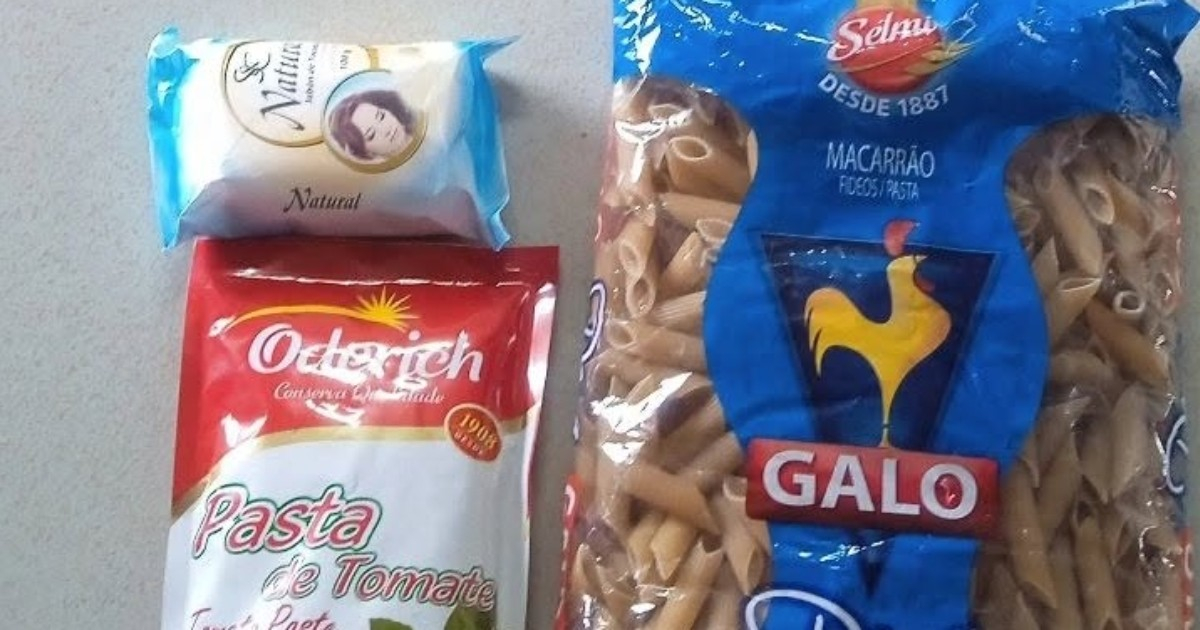
On Monday, a Cuban woman named Maray Quesada took to Facebook to share an image depicting three basic items along with their staggering prices, voicing the frustration felt by countless others: "Down with everything. This is not a life." The image showed a bar of soap priced at 670 Cuban pesos (CUP), a can of tomato paste for 600 CUP, and a pack of macaroni costing 900 CUP.
"First annoyance of the day, Monday started off heated, how much longer are we going to keep living like this?" Quesada lamented in her post accompanying the image of the three items.
From Santiago de Cuba, a user reported the price of tomato paste had reached 950 CUP. Others mentioned purchasing it for 1,100 CUP, with one stating, "I went for the cheaper option, as the other was priced at 1,300." In Santa Clara, elbow macaroni was sold at 1,000 CUP. Concerning the soap, someone noted, "If you paid 1,000 pesos, you're still doing alright; where I live, it's 1,200."
In Artemisa, another user reported powdered milk selling for 2,250 CUP per pound, exclaiming, "Unheard of in history, I think we might be unique in the whole world." Other accounts shared that a pound of beans costs 800 CUP, while a single chicken cutlet is priced at 1,000 CUP.
"Everything is expensive; even having Italian pasta is a real luxury, bathing too," a citizen lamented.
Recently, bars of soap were reported to range between 600 and 1,000 CUP in various areas of Villa Clara and Las Tunas. Meanwhile, rice prices surpassed 400 CUP per pound in Mayabeque, Santa Clara, and Bauta.
As part of the 176 economic changes package, Resolution 150/2026 by the Ministry of Finance and Prices deregulated the prices of chicken, oils, powdered milk, pasta, and sausages, leading to the expected outcome: consumer prices skyrocketed.
These prices starkly contrast with wages, which have become laughably inadequate. The minimum wage was raised to 3,210 CUP monthly as of July 2026, but even Prime Minister Manuel Marrero publicly admitted that the new minimum wage fails to cover the basic necessities.
Understanding Cuba's Economic Challenges
What are the main causes of high prices in Cuba?
The main causes include economic reforms that liberalized prices, leading to inflation, and the inefficiencies of the state-controlled economy.
How have Cuban citizens reacted to these price surges?
Many Cubans have expressed frustration and desperation over their inability to afford basic necessities due to the soaring prices.
What measures has the Cuban government taken to address the economic crisis?
The government has implemented a series of economic reforms, including raising the minimum wage, though these measures have not sufficed to alleviate the financial burden on citizens.