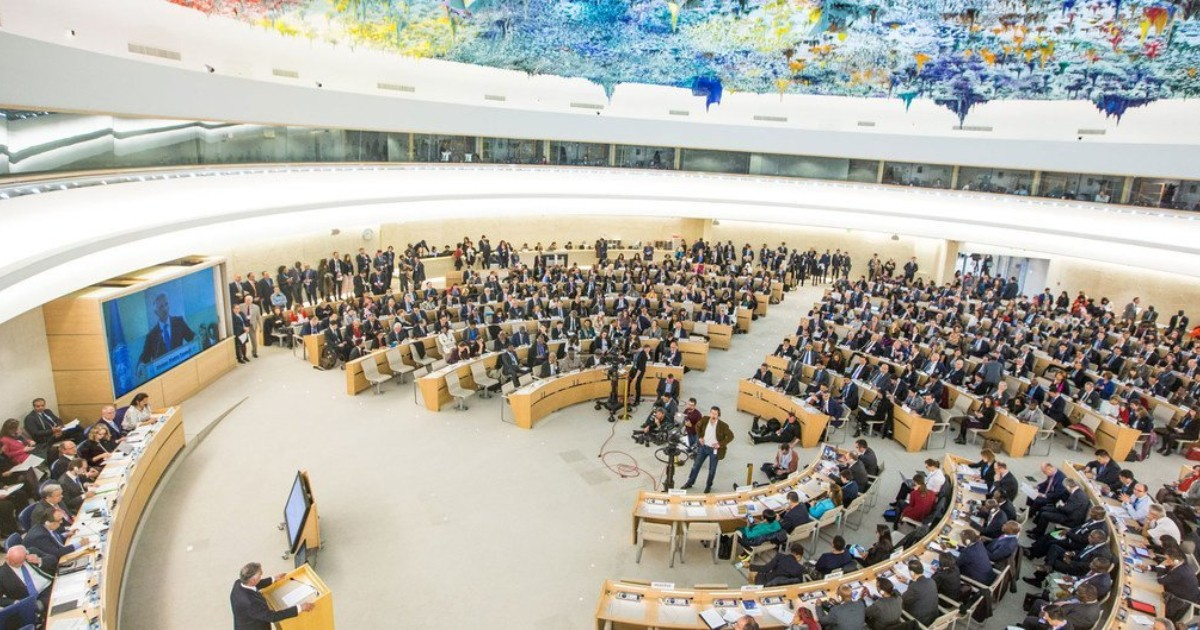
On Tuesday, the United States made history by becoming the first nation to completely reject participation in the Universal Periodic Review (UPR), a mechanism of the UN Human Rights Council that examines the human rights records of all 193 member states, as reported by the Associated Press.
The U.S. delegation was absent from the scheduled session in Geneva, resulting in the examination's cancellation since the process cannot proceed without the country's presence.
This isn't the first instance of Washington skipping this important review. Previously, the U.S. missed its review initially scheduled for November 2025. The Council rescheduled the session, hoping the administration might reconsider, but to no avail.
In February 2025, the Trump administration formally withdrew from the Council via an executive order, citing an "anti-American" and "anti-Israel" bias and questioning the Council's commitment to the values it claims to uphold. A State Department spokesperson told AP, "We give this body no credibility. This irredeemable organization makes a mockery of human rights with its systematic failures to uphold its own values while promoting anti-American rhetoric."
The Council has once again postponed the review to January 2027, citing Washington's lack of cooperation.
This decision has sparked significant criticism from international human rights groups. From Geneva, Jamil Dakwar, director of the American Civil Liberties Union (ACLU) Human Rights Program, stated, "The administration is signaling to the world: we don't care if we're reviewed or not, we'll continue violating human rights uninhibited. And we respond: enough is enough. The Council must hold the United States accountable."
Human Rights Watch has urged that no further indefinite delays be granted to the U.S. and suggested that UN High Commissioner for Human Rights, Volker Türk, present a report on the U.S. situation in the March 2027 session.
Eric Tistounet, the first secretary of the Council and currently a visiting professor at the Geneva Graduate Institute, warned of the implications for the system's credibility: "If the leading global power—which has always claimed adherence to human rights norms—fails to show up or even justify its absence, then you're in serious trouble."
Critics point out the irony: the Council's members include regimes considered authoritarian or not free—such as Cuba, China, Vietnam, Egypt, Eritrea, and Qatar—that do participate in the review mechanism. Cuba, a single-party dictatorship, has attended all its UPR cycles—2009, 2013, 2018, and 2023—despite facing ongoing international criticism for arbitrary detentions, opposition repression, and protest suppression.
This marks the second time Trump has withdrawn the U.S. from the body; the first was in June 2018 during his initial term. President Biden later reinstated the U.S. as an observing member in February 2021.
For this cycle's review, civil society organizations submitted a record 155 reports on the U.S. in 2025, with 60 updated in April 2026 to document new alleged violations. The ACLU and its allies have urged the High Commissioner to present their findings in the March 2027 session, regardless of Washington's involvement.
Implications of U.S. Withdrawal from UN Human Rights Review
Why did the United States reject the UN Human Rights Review?
The U.S. rejected the review citing alleged biases against America and Israel and questioning the UN Human Rights Council's adherence to its own stated values.
What are the potential consequences of this decision?
The absence of the U.S. from the review undermines the credibility of the UN Human Rights system and may embolden other countries to disregard similar reviews.
How have international human rights organizations responded?
Organizations like Human Rights Watch and the ACLU have criticized the U.S. decision and called for the UN to hold the country accountable for its human rights practices.