The Cuban National Assembly of People's Power has enacted Law 182, the "General Law of Science, Technology, and Innovation." This represents Cuba's first comprehensive legislation focused solely on this sector, as published in the Official Gazette No. 94 Ordinary of 2026. The law is part of the economic reforms that the regime is attempting to implement amidst a severe crisis.
Approved on December 18, 2025, during the VI Ordinary Session of the X Legislature, and signed by the National Assembly President, Esteban Lazo Hernández, the law will be effective 60 days post-publication, likely by January 8, 2027.
The key feature of the law is the formal incorporation of the private sector into the National System of Science, Technology, and Innovation.
Private Sector's Role in Science and Innovation
The legislation acknowledges private enterprises, agricultural and non-agricultural cooperatives, local development projects, and self-employed workers as participants within the system. These entities will now have equal access to training resources and funding opportunities alongside state universities and research centers.
The law also sanctions public-private partnerships to establish tech-based companies, allows for royalty contracts, and facilitates technology transfer payments between public and private entities. It enables the creation of patent and trademark-based companies to attract foreign or private investment.
Funding and Economic Integration
Available funding mechanisms include seed capital, non-repayable funds, soft microloans, venture capital, and medium to long-term investment funds.
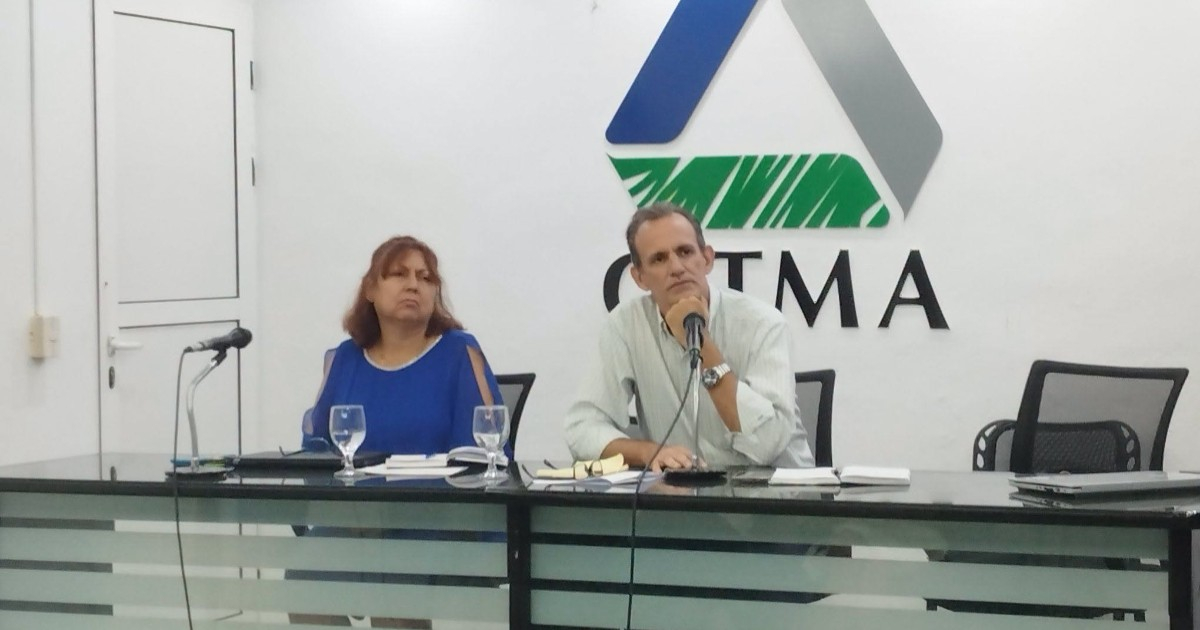
During a press conference in Havana, Daimar Cánovas Casado, Vice Minister of the Ministry of Science, Technology and Environment (CITMA), highlighted that "one of the law's goals is to ensure growing participation in science projects from both public and private, state and non-state sectors."
Cánovas emphasized, "As more innovation permeates all economic players, our country can advance more swiftly."
Complementary Regulations and Structural Changes
The same Official Gazette No. 94 includes three additional regulations: Decree-Law 139 from the Council of State, updating the legal framework of the Cuban Academy of Sciences; Decree 154 from the Council of Ministers, a regulation of Law 182 that establishes the National Registry of Science, Technology, and Innovation Entities; and Decree 155, which governs innovation activities and sets up the Innovation and Rationalization Fund.
Law 182 repeals previous regulations, including Decree-Law 323 "On Science, Technology, and Innovation Entities" (2014) and Decree-Law 7 "On the Science, Technology, and Innovation System" (2020). It aligns with the economic reform package of 176 measures introduced by Prime Minister Manuel Marrero Cruz in June 2026, focusing on digitalization, artificial intelligence, and the knowledge economy.
This legislative development coincides with the enactment of Law 186 "On the Organization of the Central State Administration," which dissolves CITMA and redistributes its responsibilities between two new ministries.
Vice Minister Cánovas assured that this restructuring "will not hinder the implementation of the new law," noting that the agency's dissolution will proceed gradually over six months to a year. However, this decision has been criticized by experts concerned about the potential risks of dismantling Cuba's scientific oversight body.
According to official data cited by EFE, over 16,000 private companies are currently operating in Cuba, a sector that this new law aims to formally integrate into the island's scientific and technological ecosystem.
Understanding Cuba's New Science Law
What is the significance of Law 182 for Cuba's scientific system?
Law 182 marks the first comprehensive legislation in Cuba dedicated to science, technology, and innovation, formally incorporating the private sector into the national system and promoting public-private partnerships.
How does the new law aim to fund scientific and technological projects?
The law introduces diverse funding mechanisms such as seed capital, non-repayable funds, soft microloans, venture capital, and long-term investment funds.
How will the restructuring of CITMA affect the implementation of Law 182?
According to Vice Minister Cánovas, the gradual dissolution of CITMA will not impede the new law's implementation, despite concerns about its potential impact on the management of Cuba's scientific framework.