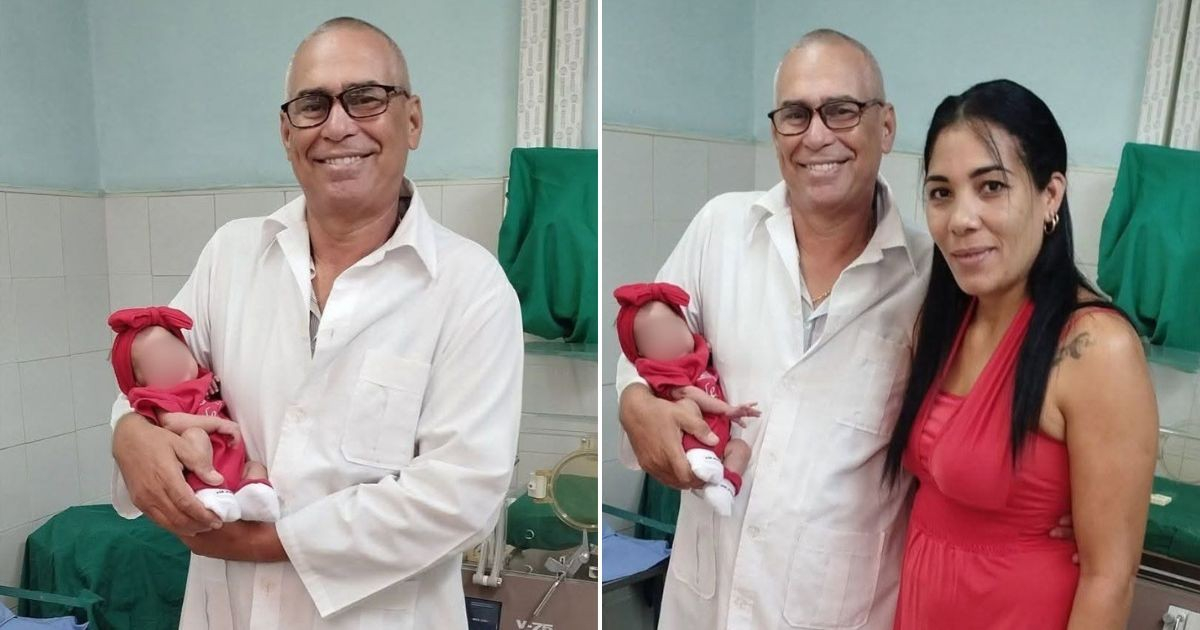
In a country where resource scarcity and deteriorating hospital conditions often make medical care resemble a battlefield, the survival of Mia Valentina stands out as a truly remarkable story.
Mia, born extremely premature and severely underweight, defied the odds after enduring a grueling 90-day battle for her life in Camagüey. Her recovery is a tremendous source of joy for her mother, family, and the healthcare professionals who supported her.
This past Monday, the Provincial Health Directorate of Camagüey announced that the little girl, affectionately known as "Mia the Warrior," had been discharged from the hospital.
Dr. Adrianyi Pacheco shared insights into Mia's journey, revealing that she spent 35 days in intensive care and required mechanical respiratory support throughout her recovery.
Born well before her due date and with critically low weight, Mia's initial months were spent under constant medical supervision.
After three challenging months, Mia finally met the criteria for discharge, thanks to specialized care and the dedicated attention of staff at the Ana Betancourt de Mora University Provincial Gynecobstetric Hospital.
The Kangaroo Method: A Turning Point
A pivotal moment in Mia's recovery occurred when specialists decided to move her to joint accommodation with her mother, employing the "kangaroo care" method, even though she weighed less than 1,000 grams.
This approach fosters direct contact between mother and newborn, particularly through skin-to-skin contact, helping regulate the baby's body temperature, promoting breastfeeding, and strengthening emotional bonds. For extremely premature infants, such care is crucial to neonatal attention.
Given Mia's low weight, the decision was made cautiously. Her inclusion in the joint accommodation program was extraordinary, as she was the smallest baby to be cared for under this method at that time.
A Mother's Dedication and Health System Challenges
Behind Mia's miraculous recovery stands her mother, Yadira, who navigated the difficult early months of her daughter's life. The family’s unwavering support during Mia's hospital stay was acknowledged in the announcement of her discharge, marking the beginning of a new chapter outside the hospital.
While Mia's story is a testament to the dedication of healthcare professionals, it also highlights the dire state of Cuba's healthcare system. The very hospital that treated Mia has faced recent criticisms.
Independent journalist José Luis Tan Estrada exposed images of newborns placed on old chairs due to a lack of beds in the pre-delivery area. Additionally, a pregnant woman reported sleeping on aluminum chairs for the same reason.
Earlier in 2026, reports of deteriorating facilities and unhygienic conditions at the hospital circulated on social media. In May, Tan reported the deaths of over 15 newborns between January and May, amidst allegations of sewage leaks and medicine shortages in the neonatal section.
Hope Amidst Adversity
Mia's story is not an isolated beacon of hope. Other premature babies have also survived long hospital stays in Cuba. In September, Aurora was discharged in Holguín after 138 days of hospitalization. She was born at just 26 weeks and weighed 1,050 grams. Her mother, Mirelis Linares Alonso, finally took her home after more than four months of care.
In July, another infant, Patricia, born at 27.1 weeks and weighing only 770 grams, was transferred from intensive care to joint lodging with her mother after 82 days at the Iván Portuondo Hospital in Artemisa.
FAQs About Premature Births and Healthcare in Cuba
What challenges do premature babies face in Cuba?
Premature babies in Cuba face numerous challenges, including inadequate medical resources, deteriorating hospital conditions, and a scarcity of essential medicines. These factors complicate their survival and recovery.
How does the kangaroo care method benefit premature infants?
The kangaroo care method benefits premature infants by promoting skin-to-skin contact with the mother, which aids in regulating the infant's temperature, encourages breastfeeding, and strengthens the emotional bond between mother and child.
What issues are currently affecting Cuba's healthcare system?
Cuba's healthcare system is troubled by a lack of resources, deteriorating infrastructure, and insufficient medical supplies. These challenges have been exacerbated by economic difficulties and have led to substandard care in many instances.