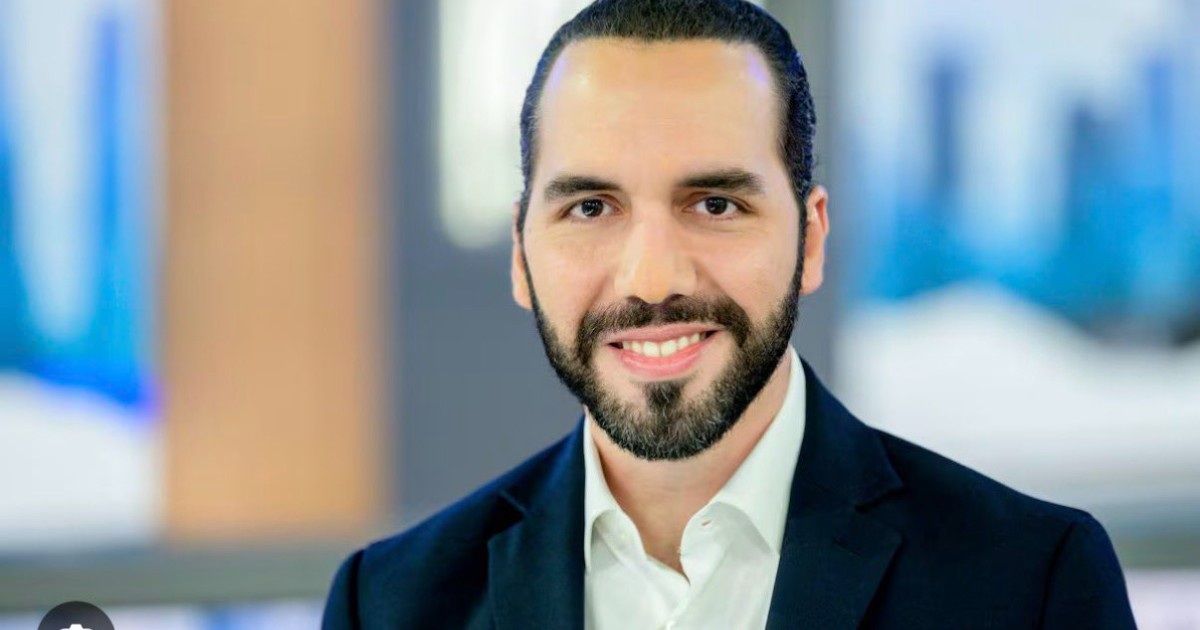
Nayib Bukele, the President of El Salvador, has extended his crackdown on gangs to Haiti. He aims to dismantle criminal groups there as he did back home. However, this venture plunges him into uncharted waters: a military intervention on foreign soil against heavily armed organizations, with the looming threat of becoming embroiled in a prolonged conflict.
This cautionary perspective was offered by Romain Le Cour Grandmaison, director of the Haiti Observatory at the Global Initiative Against Transnational Organized Crime, during an interview with BBC Mundo.
Challenges of Military Engagement in Haiti
The expert highlighted the perilous nature of deploying over 2,000 Salvadoran soldiers following the disappearance of four aviation technicians from El Salvador. Le Cour argues that comparing the military engagement in Haiti to Bukele's domestic security strategy is misguided. While both initiatives target criminal organizations, they present distinct challenges and contexts.
In El Salvador, Bukele spearheaded a campaign of mass incarcerations and established a prison system designed to detain thousands of suspected gang members. Conversely, in Haiti, Salvadoran troops find themselves in a military operation outside their borders, in an unfamiliar territory where the state lacks control over vast regions.
Potential Consequences and Risks
This represents an extraordinary experience for El Salvador and a rarity in Latin America, where it's uncommon for a country to deploy combat forces to another nation in the hemisphere without a United Nations peacekeeping mandate. The greatest risk, according to Le Cour, is Bukele becoming ensnared in an unwinnable war that is even harder to exit.
Le Cour warned that the operation could become "extremely bloody and costly" for Salvadoran forces without delivering the expected outcomes. He reminded that many armies have found themselves trapped in battles against armed groups that, despite being outnumbered and outgunned, possess intimate knowledge of the terrain.
Haitian gangs epitomize these adversaries. Some operate like militias, wielding semi-automatic weapons, controlling roads and neighborhoods, and establishing barricades, trenches, and escape routes that complicate military operations.
Strategic and Operational Challenges
Estimates cited by Le Cour suggest that Haitian criminal groups comprise between 15,000 and 20,000 members, varying based on organizations and alliances. The most powerful factions hold sway over extensive areas of Port-au-Prince and its surroundings, maintaining extortion networks and connections with political and economic sectors.
For Salvadoran soldiers, a major obstacle is the lack of familiarity with local communities and the organizations operating within them. Their troops do not speak Haitian Creole and lack their own intelligence networks, a significant disadvantage when fighting in densely populated neighborhoods.
International Relations and Political Implications
Questions also arise regarding the mission's organization. In Haiti, the National Police, Haitian Armed Forces, international contingents, and private military contractors are active, yet Le Cour believes coordination between these entities remains limited. He pointed out that neither the rules of engagement for most Salvadoran troops nor the extent of their mandate are publicly known.
The massive deployment followed the October 18 disappearance of four Salvadoran aviation technicians during an ambush in Croix-des-Bouquets, northeast of Port-au-Prince. Before this attack, El Salvador maintained about 125 personnel in Haiti, primarily for air operations and medical evacuations.
Following the technicians' disappearance, Bukele ordered an expansion of the military presence to over 2,000 personnel and issued a warning to those responsible for the ambush. The president asserted that his troops would act to confront the gangs and locate the missing individuals. As of the interview date, the four Salvadorans remained officially missing, with authorities yet to provide conclusive results regarding their whereabouts.
The escalation of hostilities has already displaced at least 2,000 people, according to the International Organization for Migration, while Médecins Sans Frontières has treated gunshot and explosion victims and suspended some mobile activities due to security concerns.
Le Cour acknowledged that Salvadoran forces might reclaim territories and temporarily diminish some gangs' capabilities. However, he emphasized that these operations alone will not resolve the crisis unless Haitian authorities can restore justice, public services, and permanent control over recovered areas.
The intervention could also carry political repercussions for Bukele. While a successful operation might earn him international recognition, a prolonged campaign with military casualties and high expenses could create domestic pressure in El Salvador. According to Le Cour, Bukele claims El Salvador bears 90% of the operation's costs, questioning how long this effort can be sustained if the intervention drags on.
The intervention received a nod of approval from Donald Trump. A report by Axios in late October revealed that the former U.S. president told Bukele during a phone call, "Do what you have to do." The exchange did not suggest direct U.S. military involvement, although Washington has provided logistical support for troop deployment.
The expert believes that the relationship with Washington could enable Bukele to position himself as a more influential player in regional security, although the outcome will depend on the combat's progression and the Haitian authorities' ability to sustain any gains.
Salvadoran presidential threats have also elicited responses from criminal organization leaders. Wilson Joseph, alias Lanmò San Jou, head of the 400 Mawozo gang, sought United Nations mediation and warned of potential violence escalation. His request followed clashes in areas where the four Salvadorans are being sought.
Le Cour had previously warned in late October about the possibility of the offensive reuniting Haitian gangs, some of which had begun distancing themselves from the criminal coalition Viv Ansanm before Salvadoran reinforcements arrived.
Key Considerations for Bukele's Haiti Intervention
What are the primary risks of Bukele's military intervention in Haiti?
The main risks include becoming involved in a prolonged conflict, facing heavily armed and terrain-savvy gangs, and encountering significant logistical and operational challenges.
How does Bukele's approach in Haiti differ from his strategy in El Salvador?
In El Salvador, Bukele's strategy focused on mass incarcerations and building a prison infrastructure. In Haiti, the approach involves military intervention in an unfamiliar setting with complex local dynamics.
What logistical challenges do Salvadoran troops face in Haiti?
Key challenges include language barriers, a lack of local intelligence networks, and the need to operate in unfamiliar and densely populated areas.