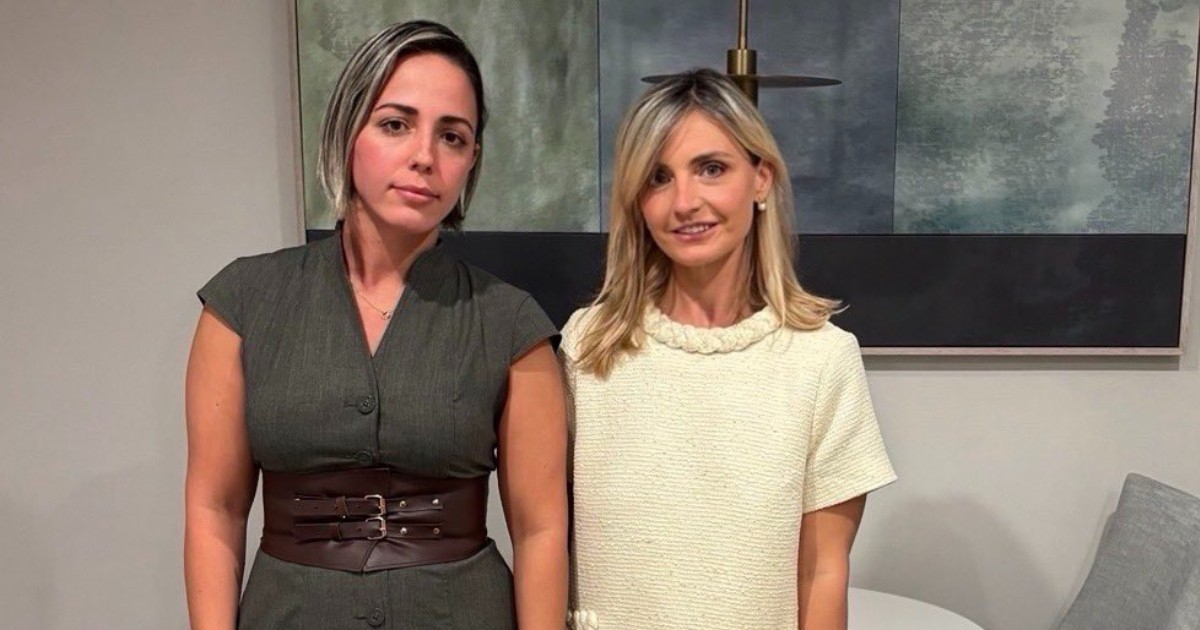
"Thank you for hearing my story and giving it a voice." These were the words of gratitude from Cuban doctor Yohana Arronte to Sarah B. Rogers, the U.S. Under Secretary of State for Public Diplomacy, after she shared her life-changing experiences from her time in Cuba's medical brigades, her escape, and her hopes for a new life in freedom.
Arronte's message, shared on Wednesday on X, gained fresh attention this Monday when Rogers publicly highlighted her meeting with the Cuban doctor. She used the opportunity to condemn what Washington describes as exploitative conditions faced by thousands of workers sent abroad by the government of Havana.
Beyond the political accusations, Yohana's words reveal what arriving in the United States meant to her. She didn't speak of grand ambitions or privileges, but rather of simple desires like raising her children without fear and regaining control of her life.
"For me, the United States symbolized hope: the chance to live freely, raise my children without fear, and rebuild my life. I will always be grateful for that opportunity," the doctor expressed.
A Voice for the Voiceless
Her gratitude extended further. Arronte remembered those still tied to the Cuban medical missions who haven't had the chance to share their stories: "Many Cuban doctors are still waiting for their voices to be heard."
Rogers responded publicly five days later. She expressed her pride in meeting Arronte, whom she described as an advocate for those who have endured the alleged conditions within the medical brigades.
"Proud to have met Dr. Yohana Arronte, an advocate for survivors of the Cuban medical brigades," wrote the undersecretary before directing criticism at the Cuban government.
Exposing the Exploitation
Rogers claimed that Cuban authorities use their citizens' work abroad to generate income, stating that over 15,000 workers, many of whom are healthcare professionals, have been sent to more than 50 countries under forced labor conditions.
The senior official also warned that the Trump administration would not tolerate state-sponsored human trafficking in the hemisphere, attributing to the leadership of Secretary of State Marco Rubio the decision by several countries to sever ties with Cuba’s medical missions program.
Rogers' words follow her earlier testimony, where she shared some of the most challenging episodes of Arronte's life.
She recounted that the Cuban doctor was sent abroad as part of a medical brigade after receiving just ten months of training. The family never received the promised salary from Cuban authorities, and after her escape, her relatives faced threats.
The Struggle for Freedom
One of the most harrowing details was Arronte's physical condition when she received help. According to Rogers, she weighed only 80 pounds, approximately 36 kilograms, when rescued.
During their conversation, Rogers asked Yohana what she thought of the United States before leaving Cuba. Her response was straightforward: for her, that country (the U.S.) had always represented "the only hope."
The doctor has taken her story to other dialogues with U.S. representatives. In September, she also met with Juan Pablo Segura, a State Department official for Western Hemisphere Affairs, where she defended the right of Cuban professionals to determine their own destinies.
"We deserve the freedom to choose where to work, where to live, and what to say," Arronte declared, summarizing the claims she continues to champion.
Understanding Cuban Medical Brigades and Their Challenges
What are Cuban medical brigades?
Cuban medical brigades are groups of healthcare professionals sent abroad by the Cuban government to provide medical services in various countries, often under agreements with those nations.
Why are the conditions of Cuban medical workers criticized?
Critics, including the U.S. government, argue that these workers often face exploitative conditions, with inadequate compensation and restricted freedoms, amounting to forced labor.
How has the U.S. responded to Cuban medical missions?
The U.S. has condemned the missions as a form of state-sponsored human trafficking and has encouraged other countries to sever ties with the program.