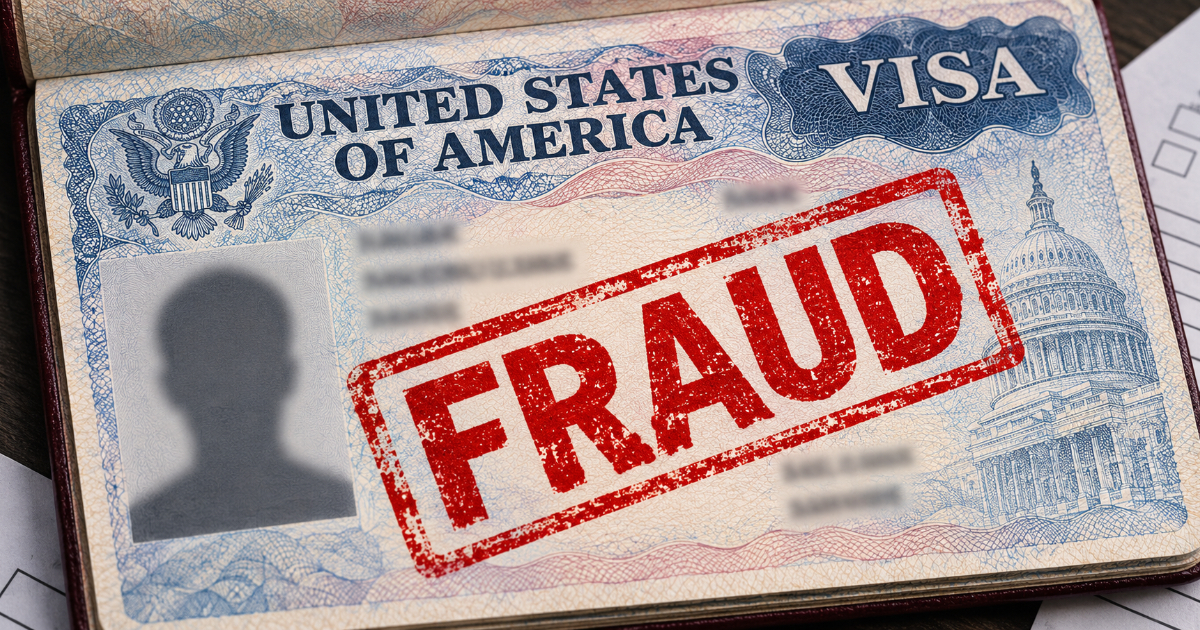
The United States Department of State disclosed on Monday four distinct visa fraud operations, ranging from fictitious hiring firms in a Caribbean nation to East African networks that falsified nationalities to bypass security checks. This announcement was made via a thread on the official @StateDept account, with explicit backing from President Trump and Secretary of State Marco Rubio.
The statement outlines four unique deception tactics. Firstly, applicants from an unspecified Caribbean country posed as "personnel recruitment companies," employing unregistered agents to recruit foreign workers, charging them exorbitant illegal fees, and funneling them into unauthorized jobs through falsified employment contracts under exploitative conditions.
Another scheme involved immigrant visa applicants from a South American country who attempted to hide their criminal records with fraudulent police, judicial, and penal certificates, exploiting gaps in their home countries' document security systems.
These revelations are part of a dynamic immigration landscape. Stay updated with all developments in our U.S. Immigration section.
A third case involved an unidentified recruitment agency that inserted unqualified candidates into U.S. exchange programs using fake academic transcripts and false statements about the applicants' student status. The Consular Affairs Bureau responded by tightening verification processes, which led to the identification of 30 additional fraudulent agencies and resulted in 250 visa denials.
The fourth scheme, with national security implications, involved East African networks that helped their nationals—some with concerning backgrounds—fraudulently claim citizenship of another country. "Corrupt intermediaries produced fake documents used by impostors to deceive consular officials," the Department noted.
The agency was unequivocal in its stance: "The Department of State has zero tolerance for those attempting to defraud our system and violate our laws to gain entry into the United States."
This communication offensive is part of a sustained campaign by the Trump-Rubio administration. Since January 2025, the Department has revoked over 300,000 visas. The escalation has been rapid: in August, the number was around 175,000, and by the end of September, it surpassed 250,000, as confirmed by spokesperson Tommy Pigott.
The schemes described on Monday have parallels in recent court cases. In October, a federal grand jury in Florida indicted 13 individuals, including Cuban and Brazilian nationals, linked to Legacy Imigra Solutions LLC, an Orlando-based company that allegedly amassed over $20 million offering false immigration advice and fraudulent documents. A year earlier, the Department of Justice charged 12 individuals—several of whom were Cuban—for operating "Asesoría y Servicios Migratorios LLC," a network that generated more than $18 million by promising visas and residency that never materialized.
In September, the Department launched an online portal for anonymously reporting visa fraud and expanded social media scrutiny to new categories of applicants.
Rubio has encapsulated the administration's doctrine in a phrase that has become a hallmark of this policy: "No one has the right to a visa," warning that it can be revoked at any time if the holder engages in activities contrary to national interest.
Understanding the U.S. Visa Fraud Crackdown
What are the key types of visa fraud identified by the U.S. Department of State?
The Department of State identified four main types: fake recruitment companies, fraudulent criminal record hiding, insertion of unqualified candidates in U.S. programs, and false nationality claims.
How has the U.S. responded to these visa fraud schemes?
The U.S. has tightened verification processes, identified additional fraudulent agencies, revoked visas, and launched an online portal for anonymous reporting of visa fraud.
Why is visa fraud considered a national security issue?
Visa fraud poses a national security threat as it can allow individuals with concerning backgrounds to enter the country under false pretenses, potentially endangering public safety.
What legal actions have been taken against those involved in visa fraud?
Recent legal actions include indictments of individuals linked to fraudulent immigration services, with significant financial penalties and criminal charges for those involved.