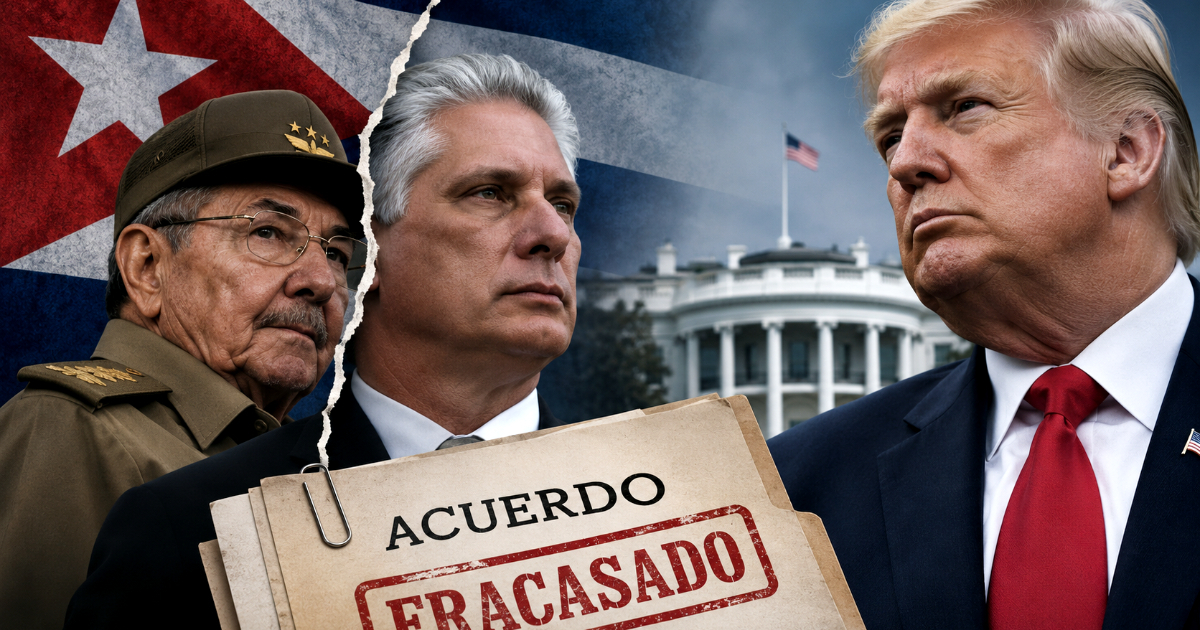
A proposed deal, involving Raúl Castro's relatives, aimed at removing Miguel Díaz-Canel from power nearly materialized but ultimately failed due to strong opposition from within the Castro regime itself. This opposition was particularly against negotiating with Donald Trump's administration, as reported by Spanish journalist David Alandete, a correspondent based at the White House.
In his program "The Alandete Report," which aired on YouTube's ViOne channel this past Sunday, Alandete delved into the negotiations between Washington and Havana, highlighting the internal hurdles and the shift in U.S. strategy following the breakdown of talks.
"An agreement was almost finalized; Díaz-Canel's exit was going to be forced," stated Alandete. He explained that discussions involved Raúl Castro's family members but faced stiff resistance from within Cuba's power structure, especially from those opposed to any deal with Trump or Secretary of State Marco Rubio.
This internal opposition was compounded by the reluctance of Cuban exile communities in Miami, who were against any understanding that might ensure the continuation of the Castro power structure in exchange for removing Díaz-Canel.
Alandete's comments align with details from a September investigation by The Miami Herald, which exposed a U.S. proposal to supply Cuba with oil and investments in return for the leader's departure and the privatization of the state-owned company CUPET.
According to that investigation, one of the key interlocutors was Raúl Guillermo Rodríguez Castro, known as "El Cangrejo," Raúl Castro's grandson and personal aide. Havana's reservations about the economic and political terms, along with pressure from Miami, prevented the initiative from succeeding.
From Failed Negotiations to Increased Pressure on the Regime
Alandete believes that the collapse of the negotiated path led to a harsher strategy from Washington, which shifted from seeking a negotiated exit for Díaz-Canel to intensifying the economic and political isolation of the regime.
"Trump has chosen to cut the aid Venezuela gives to Cuba, isolate it further, increase pressure, and seek change from within," the correspondent explained.
This interpretation places the current economic and diplomatic siege within a strategy aimed at provoking changes in Cuba's power structure, following unsuccessful talks with Raúl Castro's circle to produce the political transition Washington sought.
Will Trump's Strategy Change After Republican Defeat?
Alandete's statements come after the Democrats' decisive victory in the November 3 legislative elections, giving them control of both chambers of the U.S. Congress starting in January 2027.
Cuban official circles have viewed the election results as a chance to withstand until the end of Trump's term. The platform Razones de Cuba even depicted the U.S. president as a "lame duck," politically weakened and with reduced capacity to enforce his agenda.
However, Alandete argues that the new balance of power in Congress is unlikely to significantly alter Washington's plans toward Cuba and Venezuela.
While the Democrats can exert stronger parliamentary oversight, investigate executive decisions, and block legislative initiatives, the president retains significant powers in foreign policy, sanctions, and national security matters.
Regarding Venezuela, the journalist contends that the new scenario won't force Trump to abandon his strategy. "Trump is not someone prone to making radical changes based on external demands; on the contrary, he is quite stubborn in his policies," he asserted.
Alandete also warned about the political calculations of those who hope that time and Trump's electoral wear will restore previous relations with Washington. He explained that Venezuela's interim president, Delcy Rodríguez, might be betting on outlasting Trump's presidency, a strategy he finds comparable to that of the Castro regime.
Additionally, Alandete noted that U.S. presidents often focus on international issues during the final stages of their terms, a tendency that, in his view, could keep Cuba and Venezuela among Trump's priorities for the next two years.
Key Questions About the Failed Deal and U.S. Strategy
What was the proposed deal involving Raúl Castro's relatives?
The proposed deal involved Raúl Castro's relatives and was aimed at removing Miguel Díaz-Canel from power in exchange for U.S. oil and investment incentives for Cuba.
Why did the negotiations fail?
The negotiations failed due to strong opposition within the Castro regime against a deal with Trump's administration and resistance from Cuban exile communities in Miami.
How has the U.S. strategy changed following the failed talks?
The U.S. strategy shifted from seeking a negotiated exit for Díaz-Canel to increasing economic and political isolation of the Cuban regime.