In a recent interview with CBS's 60 Minutes, President Donald Trump signaled a willingness to negotiate an immigration deal with Democrats. This agreement could potentially allow undocumented immigrants with stable jobs to remain in the United States. The interview aired on Sunday, shortly after the Republican Party's setbacks in the midterm elections.
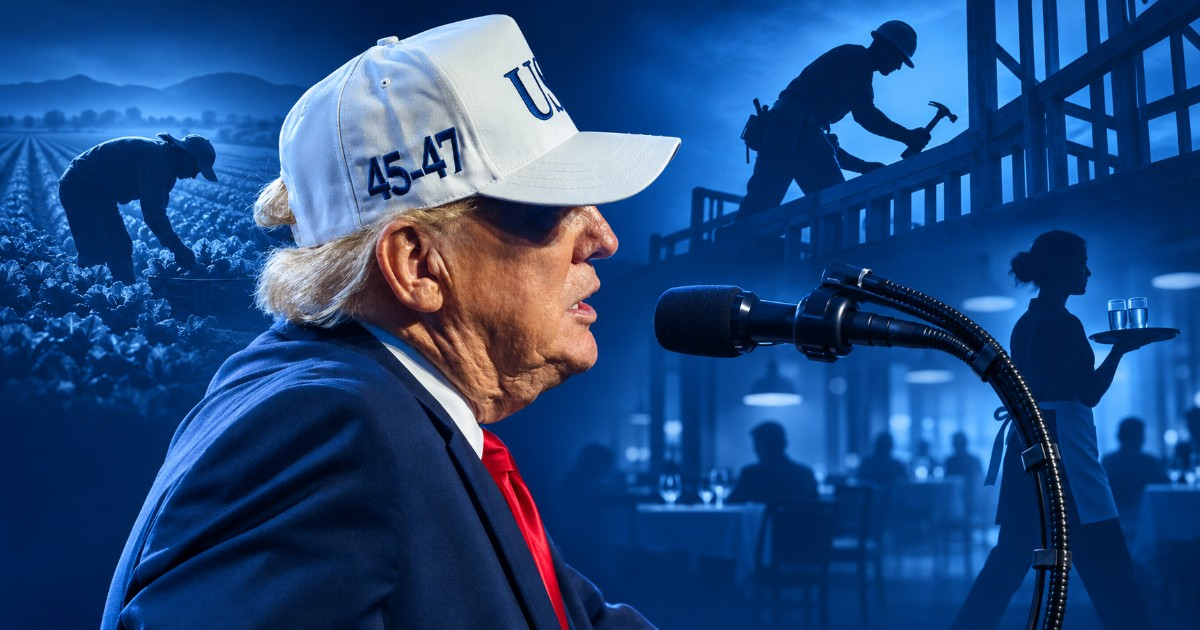
Trump highlighted the situation of workers in industries like landscaping, hospitality, and other service jobs who have been in the country for a decade or more. He acknowledged the deep divide on this issue, stating, "There's a significant portion of the country that thinks they should be deported, and another that believes they should stay if they're good people working in landscaping companies or hotels, and in some cases, paying taxes," he told correspondent Ross Douthat.
When asked by Douthat whether a deal with Democrats could establish some form of legal status for these workers, Trump affirmed the possibility, describing it as "achievable." He cited the example of a hotel employee who has worked as a waitress or cleaner for years: "Suddenly, they're being removed from the country. It's harsh. It's a tough situation."
The fate of thousands of undocumented people in the U.S. remains uncertain. Stay updated on all the changes in U.S. Immigration.
Trump also admitted that his deportation policy may have been overly aggressive in certain instances. "I think it might have been too harsh," he noted, pointing out that it affected individuals whose only immigration offense was entering the country illegally. He distinguished between three perspectives: those advocating for deporting everyone without exception, those supporting sanctuary cities, and a middle ground where he positioned himself: "Get the murderers out. Get the rapists out. Get the drug dealers out, but let people who have been here for 10 or 15 years reach an agreement."
He acknowledged that the immigration policy both "helped and hurt" Republicans in the recent elections, though he gave himself an "A+" for securing the southern border. He mentioned that several Democratic lawmakers had already reached out to discuss potential negotiations, citing Texas's new senator, James Talarico, as an example of someone open to working on the issue.
Despite Trump's words, the administration's actions tell a different story. On the same Monday the interview aired, Stephen Miller, known as the chief architect of mass deportations, assumed the role of White House Chief of Staff, replacing Susie Wiles. Just four days earlier, Homeland Security Secretary Markwayne Mullin had issued an unequivocal statement: "Deportations will continue."
The statistics support this hardline stance. The Department of Homeland Security reported nearly 1.2 million deportations since January 2025, with a Migration Policy Institute analysis revealing that eight out of ten deported individuals had no criminal records. The impact on the Cuban community has been particularly severe, with arrests by Immigration and Customs Enforcement rising by 463% between late 2024 and early 2026, and more than 42,000 Cubans facing pending deportation orders.
During the interview, Trump did not present any legislation, timeline, or specific eligibility criteria for workers who might benefit from a potential agreement. Senate Democratic Leader Chuck Schumer responded by noting that Trump had placed the architect of the strictest immigration policy at the head of the White House, calling it a "promotion," not a correction.
Trump's remarks on 60 Minutes echo a debate his administration had explored back in June 2025, when it considered creating a temporary pass for undocumented agricultural workers, which never materialized into law or a functional program.
Understanding Trump's Immigration Proposal
What potential immigration deal did Trump discuss on 60 Minutes?
Trump discussed the possibility of negotiating with Democrats to allow undocumented immigrants with stable jobs to remain in the U.S.
How did Trump describe the divide over immigration in the U.S.?
Trump noted a deep division in the country, with some believing undocumented workers should be deported and others believing they should stay if they contribute positively to society.
Who has been affected the most by Trump's deportation policy?
The Cuban community has been particularly impacted, with a significant increase in arrests and pending deportation orders.