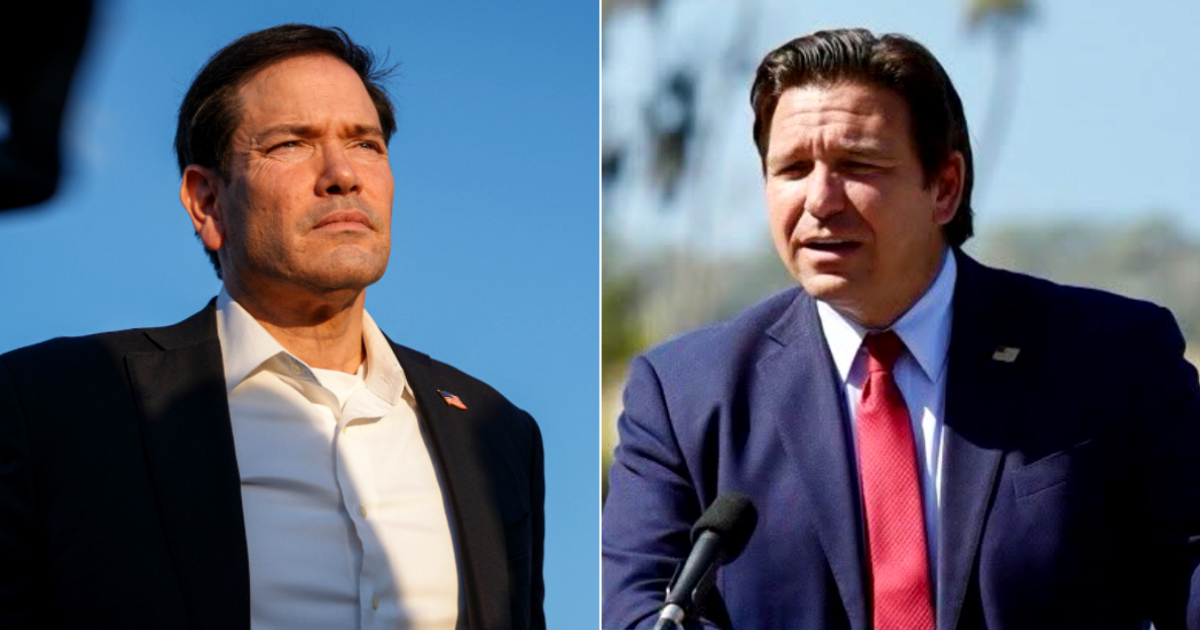
The recent collapse of the Republican Party in last Tuesday's midterm elections has reshuffled the internal dynamics within the party as it looks ahead to 2028. Two prominent figures from Florida, outgoing Governor Ron DeSantis and Secretary of State Marco Rubio, have become central figures in the conversation about who might succeed President Trump, according to an analysis by Axios.
Prior to the elections, the 2028 Republican primary seemed poised for an easy victory for Vice President JD Vance. However, the Democratic wave that swept through the Senate and House of Representatives has dramatically altered that outlook. Florida, standing firm as the only red state to withstand the tide, is now the natural stage for the GOP's future discussions.
"We were blown apart. Florida stands alone," declared DeSantis in a post-election interview. He also emphasized that the national results should serve as "a wake-up call" for Republicans.
As DeSantis prepares to conclude his term in January without the option for reelection, he has embarked on a media tour following the elections. He made appearances on Stephen A. Smith's podcast on election day and later on CNN with Jake Tapper.
Although DeSantis has denied reaching out to any consultants to prepare a bid, he hasn't explicitly ruled out running. A super PAC associated with him began fundraising efforts in the week following the elections. Prediction markets currently give him a 13% chance of securing the nomination.
Rubio's Potential Candidacy
The situation for Rubio is more nuanced. The Secretary of State has consistently stated his intention to serve his term until January 2029. Last May, he even described Vance as a "phenomenal candidate" whom he would support if he ran. Nevertheless, Rubio admits he is uncertain about his future plans given the current unpredictability.
On election night, Rubio's phone was "flooded with messages" from supporters urging him to reconsider, according to a source familiar with the White House scene. "There was a sentiment of 'we lost the Latino vote, you can win it back,'" the source explained. "For some, Rubio seemed to be considering the idea for the first time. Or he didn't dismiss it quickly enough."
Reports surfaced days later suggesting that Rubio might resign to prepare for a campaign. He denied these claims to the New York Times, and close aides labeled the reports as false.
Florida's Political Landscape
Despite the rumors, Rubio's standing in the polls is on the rise. A survey from Emerson College in May 2026 showed him virtually tied with Vance—35% to 36%—though an October poll from the New York Times and Siena placed him at 23% against the Vice President's 33%.
As the son of Cuban immigrants and the first Latino Secretary of State, Rubio is seen by major Republican donors as having the greatest potential to reclaim the Latino electorate lost during the midterms. Trump mentioned both Vance and Rubio as potential successors in late October, but did not formally endorse either.
A seasoned Republican consultant in Florida summed up the current situation with a local metaphor: "The alligator people are stirred up," referencing Florida's official reptile. A party insider was more direct about Rubio: "If Vance doesn't run or if the president asks him to step aside for Marco, would he? Maybe. I don't see it. But maybe."
Key Insights into GOP's Future Directions
Why are DeSantis and Rubio considered potential GOP leaders?
DeSantis and Rubio have emerged as prominent figures within the GOP due to their leadership in Florida, a state that resisted the Democratic wave, making them central to discussions about the party's future after the recent midterm losses.
What challenges do DeSantis and Rubio face in their potential campaigns?
DeSantis is wrapping up his tenure as governor, and while he hasn't ruled out running, he faces the challenge of gaining broader national recognition. Rubio, on the other hand, must clarify his intentions amid speculation and navigate the complexities of potentially splitting the GOP vote.
How does the GOP plan to regain the Latino vote?
The GOP sees Rubio, with his Cuban heritage and previous success in appealing to Latino voters, as a key figure in efforts to reclaim this critical demographic that was lost during the midterms.