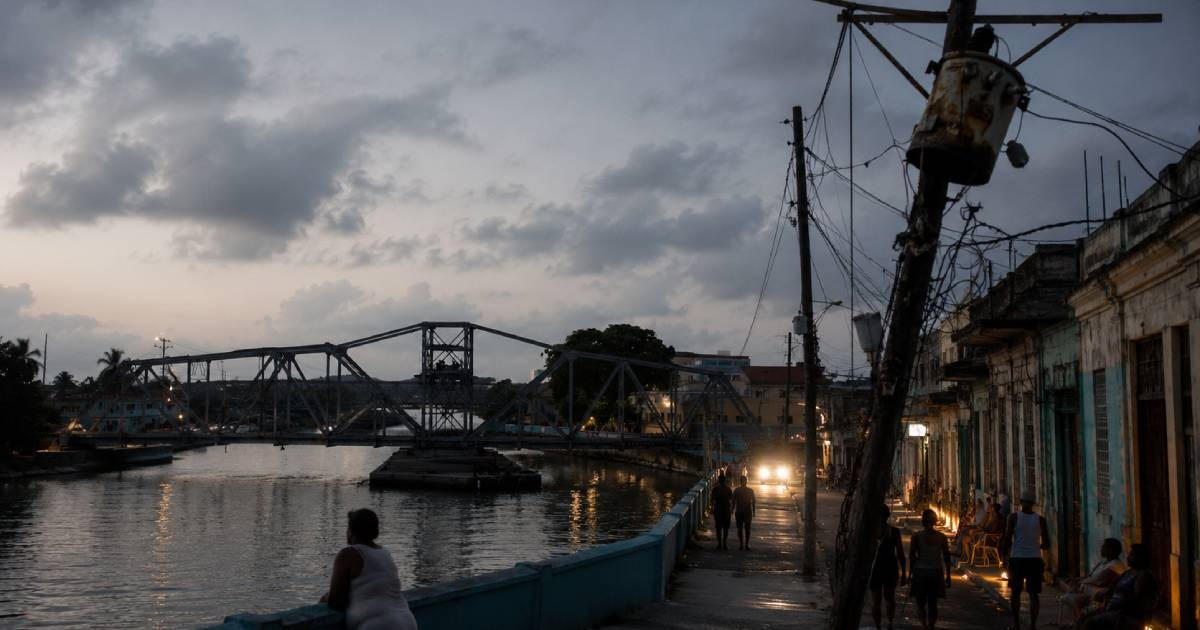
According to Alejandro Rodríguez Azpeitía, the director of the Provincial Electric Company in Matanzas, portable power stations, commonly referred to as "ecoflow," are contributing to the increased failure of transformers in the area. His statements were reported by the official newspaper, Girón.
The technical rationale provided by Rodríguez Azpeitía is that each portable station uses around 1,200 watts during its 40-minute charging period. If ten households in a neighborhood simultaneously connect these devices when the power returns, they add 12 kW to a transformer designed for 50 kW. "That's nearly 20% of the load it's built for, and that damages it," he explained.
Notably absent from the official narrative is a point Rodríguez Azpeitía himself acknowledged in the interview: the transformer factory has been "practically halted" for about 15 days due to a shortage of dielectric oil, and the province has not received new equipment. "They get damaged with no replacements," he admitted.
Social media reactions were filled with sarcasm and anger, as Cubans pointed out the government's attempt to shift blame onto the public for a structural crisis rooted in decades of underinvestment, rather than on the equipment sent by relatives abroad.
These ecoflow units are far from a luxury; they are mostly sent by the Cuban diaspora—primarily from the United States and Europe—costing between $549 and over $1,150 each. They serve as a direct response to the state's failure to ensure reliable electricity. Power outages in Matanzas often exceed 24 consecutive hours in many areas, with the town of Cantel having gone 109 days without electricity or running water since July 10.
The transformer breakdown in Matanzas is severe. As of October 27, 162 units were out of service: 37 of 19,000 kVA, 116 of 7,620 kVA, and nine of 2,400 kVA. These failures impact 5,687 customers and over 15,000 individuals, with the deterioration rate standing at three to four transformers daily.
The oldest unreplaced transformer failure dates back to July 23, leaving 70 homes in a settlement before the industrial zone of Matanzas without service for over three months. The next oldest failure occurred on August 3. By mid-October, the province had 132 damaged transformers with no prospects for new deliveries, according to Radio 26.
In light of equipment shortages, Matanzas authorities have proposed a drastic measure: installing 12 disconnectors to reallocate 19 MW currently safeguarding hospital circuits to the rest of the grid. This will effectively remove the assurance of continuous supply for hospitals. Similar crises have already led to dire consequences in other provinces; at the Regional Center for Neonatal Surgery in Holguín, nurses had to manually ventilate newborns when power outages disabled mechanical ventilators.
The systematic theft of dielectric oil exacerbates the situation. In Matanzas alone, 175 thefts have been reported, with over 55,950 liters stolen by the end of August, affecting 43 of its 98 substations.
Understanding the Transformer Crisis in Matanzas
What are "ecoflow" portable power stations?
"Ecoflow" portable power stations are compact, rechargeable energy devices used to provide power during outages. They are particularly popular in areas with unreliable electricity supply.
Why are transformers failing in Matanzas?
Transformers in Matanzas are failing due to an overload from devices like portable power stations, a lack of new equipment, and theft of essential materials like dielectric oil.
How are power outages affecting Matanzas residents?
Residents face prolonged power outages, with some areas experiencing over 24 hours without electricity. This has severe implications for daily life and essential services.