Elon Musk's ambitious vision for the Cybertruck, Tesla's bold electric pickup, is nearing its end at the Texas manufacturing facility.
Plans are underway for a gradual scale-down in production, allowing Tesla to prioritize the Cybercab, a project that has taken precedence after the Cybertruck failed to meet expected sales figures for several years.
On Friday, Musk announced this strategic shift, which was further analyzed by the EFE agency on Sunday, labeling the Cybertruck as one of Tesla's significant market letdowns.
The automaker aims to reduce Cybertruck production at its Texas gigafactory by mid-2027, reallocating resources toward its autonomous robotaxi initiative.
"Tesla will gradually decrease Cybertruck production at the Texas gigafactory by mid-next year to make room for increased Cybercab output," Musk declared on his X account.
This marks a pivotal shift for a vehicle once heralded as a cornerstone of Tesla's future, celebrated for its striking angular design, stainless steel body, and advanced tech features.
Musk later revealed that the Texas production line will be dismantled. On Saturday, he announced plans to add an extra production shift to fulfill outstanding orders before this dismantling occurs.
Despite a substantial order backlog, Tesla won't be able to manufacture enough Cybertrucks before shifting focus to the Cybercab, slated for mid-2027 production ramp-up.
"We're adding an additional shift to try to fulfill all orders on time," Musk noted, adding that production will continue for the next eight to nine months.
Responding to user comments on social media that called this move the end of an era, Musk agreed, while assuring that Cybertrucks will still be on the road for a long time.
Wes Morrill, the vehicle's chief engineer, reflected on the project in past tense: "The Cybertruck was an incredible platform for technological development and lives on through the Cybercab."
Introduced in November 2019, the Cybertruck faced production delays of nearly two years, with initial deliveries only beginning in late 2023.
Despite Musk's 2023 optimism for an annual production goal of approximately 250,000 units, this target was never achieved.
According to Cox Automotive estimates, Tesla sold 38,965 Cybertrucks in the U.S. in 2024, dropping to just 20,237 in 2025—a 48.1% decline.
This downward trend persisted into the first nine months of 2026, with sales reaching just 11,586 units, marking a 28% decrease from the previous year.
These numbers starkly contrast with the over 125,000 annual production capacity Tesla claimed for its Texas facility in October.
Price has been another significant barrier. Initially announced at a base price of $39,900 in 2019, by November 2026, the most affordable model was priced at $92,490, per Electrek.
Tesla increased prices across multiple versions and halted orders for the budget-friendly Dual Motor AWD version, listed at $82,490 but unavailable for new orders.
Adding to pricing and demand issues were manufacturing and safety defects. The Cybertruck faced 11 recall campaigns in the U.S., documented by the National Highway Traffic Safety Administration (NHTSA).
Problems ranged from accelerator issues to exterior components, electrical systems, and brakes, requiring both physical repairs and software updates.
Its design has also limited international expansion, lacking European certification due to pedestrian safety regulations, and Tesla abandoned plans to enter the Australian and New Zealand markets in October, refunding deposits to reservation holders.
Analyst Dan Ives of Yorkville Ives & Co. saw this outcome as predictable, citing high prices and weak demand.
Investor Gary Black echoed the sentiment, lamenting it as a "missed opportunity."
As the Cybertruck fades, Tesla is channeling more resources into the Cybercab, a two-seater, autonomous electric vehicle aimed at providing driverless transportation services.
This project is part of Musk's strategy to pivot Tesla towards autonomous driving and robotics, though the commercial viability of robotaxis on a large scale remains to be proven.
The disparity between Tesla's models was underscored by Musk's Saturday post on X.
"Most people don't know that the world's best-selling car is the Tesla Model Y. And the second and third best are much cheaper," Musk stated.
While Musk's claim refers to global sales, international rankings vary based on different sources and methodologies.
In 2023, JATO Dynamics confirmed the Model Y as the world's top-selling car. However, their 2024 ranking placed the Toyota RAV4 slightly ahead.
Other firms, like Focus2Move, also ranked the Model Y first in 2024, highlighting how leadership depends on the period and criteria of each ranking.
The Cybertruck's situation contrasts sharply with the Model Y's commercial success. Despite its media buzz, distinctive design, and initial hype, the Cybertruck never achieved its intended production volumes.
The model even sparked curiosity recently in Cuba.
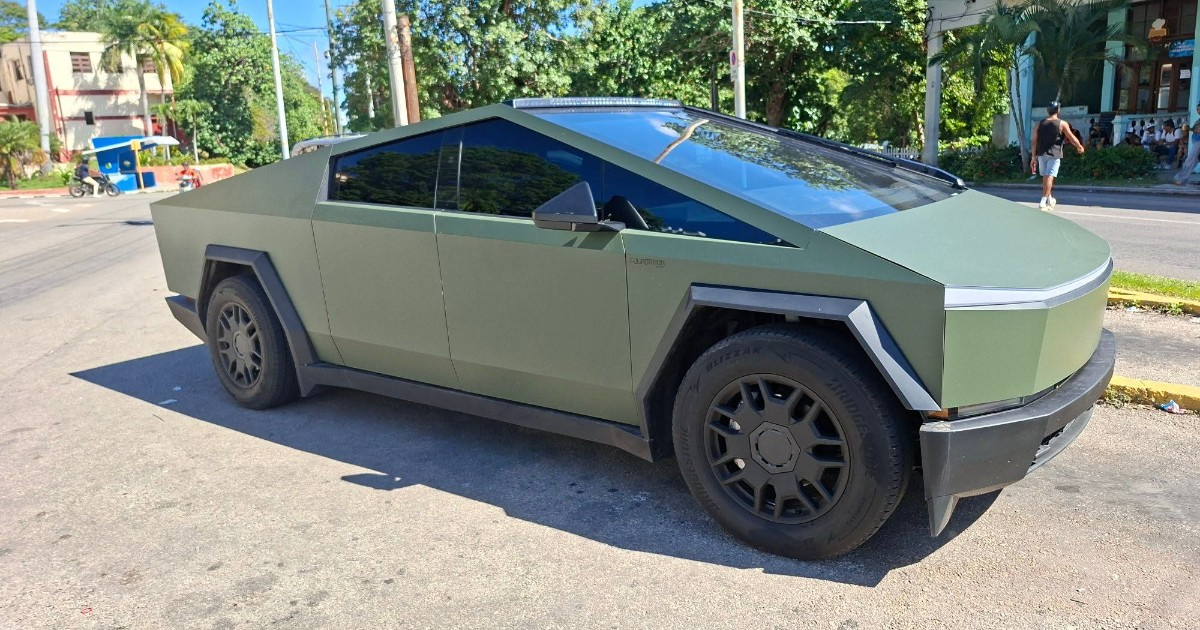
On October 30, a green Cybertruck was spotted in Havana, stirring discussions about its high price, futuristic design, and how such a U.S. vehicle found its way to the island.
Key Insights on Tesla's Cybertruck and Cybercab Transition
Why is Tesla shifting production from Cybertruck to Cybercab?
Tesla is refocusing its efforts on the Cybercab due to the Cybertruck's underwhelming sales and the company's strategic move towards autonomous vehicles.
What issues led to the Cybertruck's poor sales performance?
The Cybertruck faced several challenges, including high pricing, manufacturing defects, safety recalls, and limited international marketability.
How did the Cybertruck's pricing change over time?
Initially priced at $39,900 in 2019, the Cybertruck's cost rose significantly, with the cheapest model available in 2026 costing $92,490.
What impact did the Cybertruck have on Tesla's global sales performance?
While the Cybertruck struggled, Tesla's Model Y emerged as the world's best-selling car, showcasing the brand's strong global presence despite the Cybertruck's setbacks.