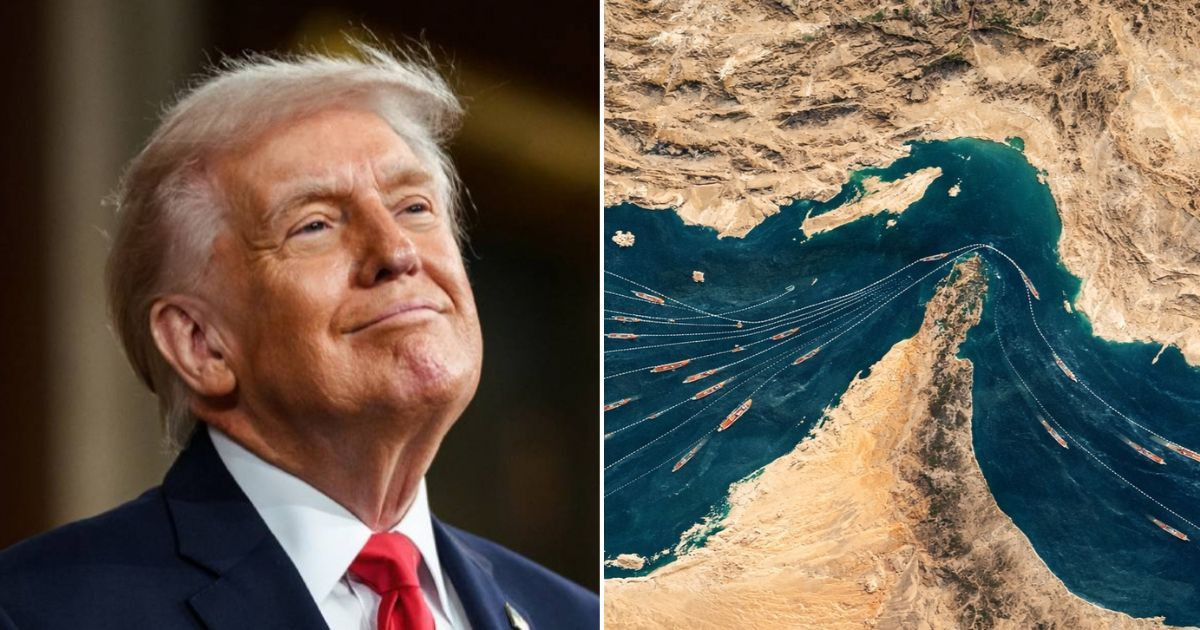
On Sunday, President Donald Trump indicated that authorizing further military strikes against Iran is "highly unlikely" if Tehran agrees to a strong nuclear agreement and reopens the Strait of Hormuz. However, he emphasized that the United States still has its military forces at the ready.
In a 20-minute phone interview with CNN, Trump reiterated five times that a new offensive could be bypassed if both sides reach an accord. "It hinges on whether they sign a very solid deal," he explained to reporter Jim Sciutto.
"The likelihood is minimal that it will be necessary. They're a failing nation. I'd take action if required, but we've hit them hard. They have no idea how hard," he added.
Despite this message, Trump insisted that Washington retains significant strike capabilities in the region. "We're prepared for that. I have three aircraft carriers here. Another just arrived. We have three. They're fully equipped and armed," he stated.
The president also disclosed that U.S. forces have identified 38 Iranian bridges that could be destroyed "literally in an hour," although he expressed a preference to avoid such an outcome. "I don't like destroying bridges. And the toughest thing to build is a bridge. It takes years, and I'm a great builder," he remarked.
Regarding Iran's military capabilities, Trump asserted that their air defenses have been dismantled and that the country retains just 10% of its missile capacity and 15% of its drones, due to the destruction of much of their manufacturing infrastructure.
"All they can operate at is about 10%: producing a few missiles and some drones. Drones are at about 15% because many of their factories are gone," he stated.
Trump concluded the interview by reiterating, "It’s most likely not necessary. They're desperate to make a deal."
These comments come on the heels of Tuesday's midterm elections, in which Democrats regained control of both chambers of Congress. The unpopularity of war among American voters was one factor in the Republican defeat, something Trump himself acknowledged.
In Iran, hardline factions interpreted the election results as a sign of Washington's weakness and believe the U.S. administration might be more willing to soften its demands concerning the Persian nation's nuclear program.
Meanwhile, diplomatic efforts continue without significant breakthroughs, eight months after the conflict began. On Friday, Trump had a telephone conversation with Qatar's emir, Sheikh Tamim bin Hamad Al Thani, regarding reducing tensions. The day before, Iranian Foreign Minister Abbas Araghchi spoke with counterparts from nine regional countries.
Qatar plays a mediating role between Washington and Tehran. However, positions remain distant. Iran demands the lifting of the naval blockade and the release of frozen assets before discussing its nuclear program, while tankers passing through the Strait of Hormuz continue to face Iranian attacks.
The war began on February 28 with Operation Epic Fury, a joint offensive by the United States and Israel against Iranian nuclear and military facilities.
In the days leading up to the interview, Washington conducted limited strikes on Iran's Qeshm Island after the Islamic Revolutionary Guard Corps fired at a U.S. military aircraft. Additionally, the United States Central Command (Centcom) established a special task force to curb the supply of weapons to Iran.
Despite Trump's expressed willingness to negotiate, the threat of additional attacks remains until a deal that includes Washington's conditions is finalized.
Key Questions on U.S.-Iran Tensions
What conditions has the U.S. set for avoiding further attacks on Iran?
The U.S. has indicated that it will avoid further military strikes if Iran agrees to a strong nuclear deal and reopens the Strait of Hormuz.
How has the U.S. demonstrated its military readiness in the region?
The U.S. has positioned three fully armed aircraft carriers in the region and has identified targets within Iran that can be rapidly neutralized if necessary.
What role does Qatar play in the U.S.-Iran negotiations?
Qatar serves as a mediator between the United States and Iran, facilitating discussions to reduce tensions and reach a potential agreement.
What impact did the recent U.S. elections have on the conflict with Iran?
The Democratic win in Congress is seen as a sign of Washington's potential willingness to soften its stance, given the unpopularity of war among voters.