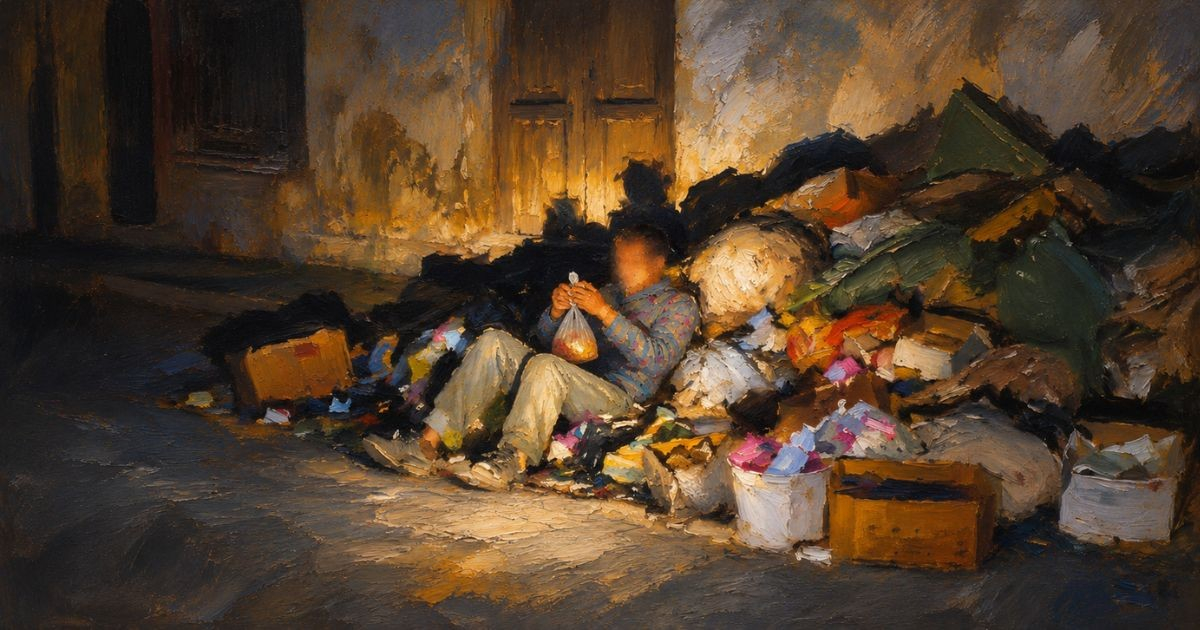
A poignant photograph recently circulated on social media, capturing an elderly individual sitting in utter darkness, encircled by heaps of trash, cardboard, bags, and waste materials on a street corner in Camagüey.
The image was shared by independent journalist José L. Tan Estrada through his platform #TanteandoCuba. "A painful image that also reflects a reality many Cubans face daily. This is Camagüey, but it could be anywhere in Cuba," Tan Estrada commented upon posting it. Several online users suggested that the location is Onda Street.
To the journalist, the scene is emblematic of more than mere accumulated filth: "Behind this image lies far more than just piled-up garbage. It signifies poverty, vulnerability, institutional neglect, and people enduring conditions no human should have to face."
Tan Estrada also highlighted the stark contrast between official rhetoric and the harsh reality faced by the most vulnerable: "While authorities speak of achievements, priorities, and social commitments, some citizens are aging without the basic conditions needed for dignified living."
The Ongoing Waste Management Crisis
This situation is part of a broader issue, as Camagüey has been struggling with a long-standing waste collection crisis, which worsened in 2026. Independent outlet El Toque reported in April that the city generates about 220 tons of waste daily, but sources from the Empresa de Servicios Comunales indicated that only 35% to 40% of this is collected, leaving tens of tons uncollected each day.
Officials attribute the shortfall to fuel shortages and the deterioration of the state’s vehicle fleet. By late October, Tan Estrada had already reported a massive garbage dump on Finlay Avenue, near a 12-story building in the José Martí district, and later documented waste piling up next to the provincial headquarters of Hygiene and Epidemiology.
Institutional Neglect and Its Impact on the Elderly
The abandonment depicted in the photograph underscores an institutional dimension that especially affects the elderly. Recently, it emerged that seniors in the La Gloria district complained about being excluded from the food distribution list for those over 65, with the Social Work office remaining closed, unmarked, and without posted hours. A 72-year-old woman from the Lenin district summed up the situation with a stark remark: "I have never seen the face of a social worker."
This pattern repeats across other provinces. In Bayamo, a retired cardiology patient was marked as vulnerable but was missing from the list when collecting his food package. On November 6, a woman named Zoila was reported living alone on the outskirts of Sancti Spíritus, in a decaying home without any official support.
Demographic Challenges and Their Implications
The demographic landscape intensifies the urgency. As of late 2025, Cuba had 2,519,823 people aged 60 and over, making up 26.7% of its total population of 9,434,593, positioning it as the most aged nation in Latin America and the Caribbean.
The dependency ratio reached 733 potentially dependent individuals per 1,000 of working age. A union survey of 506 retirees across five provinces revealed that 99% found their pensions insufficient for food, housing, and medicine, with 90.7% continuing to work post-retirement to make ends meet.
Comments on Tan Estrada's post expressed outrage from those living this reality firsthand. One user noted that two individuals were residing at the Lenin bus stop in Camagüey. Another remarked, "The situation is dire; a solution must be found to address this widespread neglect."
In August 2026, the Cuban Observatory for Human Rights estimated that individuals over 70 years old make up 44% of the homeless population in Cuba, based on interviews with more than 1,300 people across 79 municipalities.
"A nation's crisis is also gauged by how it treats its elderly and those most in need of protection," Tan Estrada concluded in his report.
Understanding the Crisis of Elderly Care in Cuba
What are the main factors contributing to the waste management crisis in Camagüey?
The waste management crisis in Camagüey is primarily attributed to fuel shortages and the deteriorating condition of state-owned vehicles, which hampers the effective collection and disposal of waste.
How does the demographic shift impact Cuba's elderly population?
With a significant portion of the population aged 60 and over, Cuba faces increased pressure to provide adequate care and support, which is challenging due to limited resources and institutional neglect.
What are the living conditions like for Cuba's elderly?
Many elderly individuals in Cuba endure poor living conditions, often lacking access to basic services and sufficient support, as highlighted by their exclusion from food distribution programs and inadequate social services.