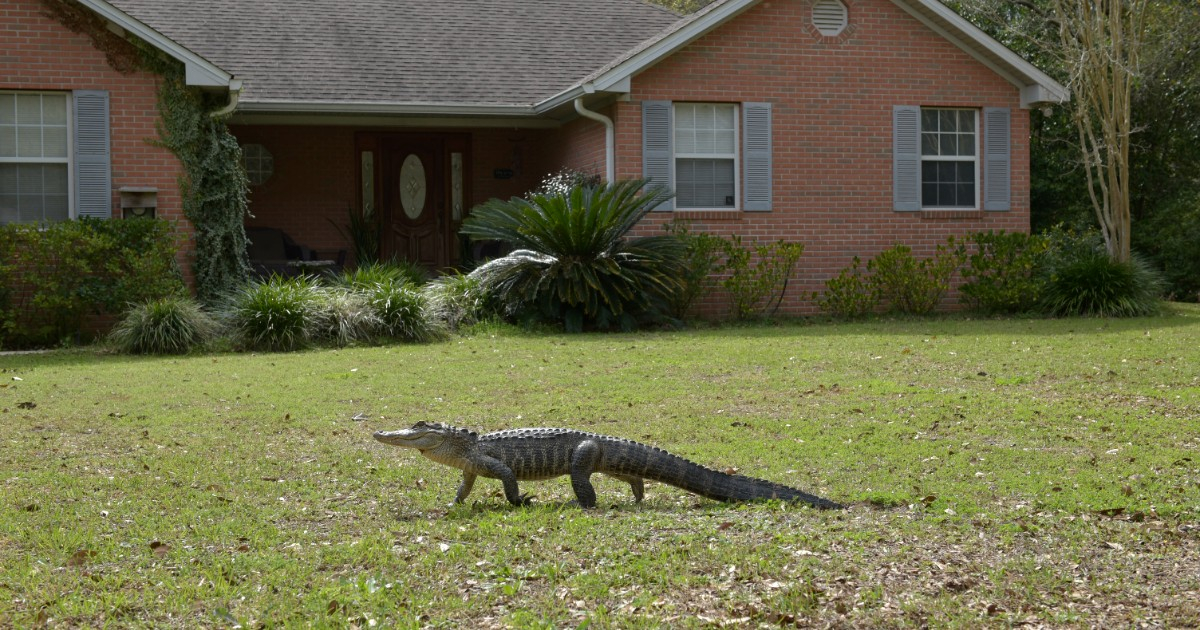
Recent alligator attacks in Florida, including two fatal incidents in 2026, have reignited concerns among both residents and wildlife experts.
A seasoned hunter warns that people's overconfidence and the habit of feeding these reptiles can turn seemingly harmless encounters into dangerous situations.
Speaking to WESH 2, AJ, a skilled hunter from DNA Outdoors, stressed that many individuals have grown so accustomed to living alongside alligators that they have neglected basic precautions when encountering them near homes, lakes, and ponds.
"We've become too familiar with alligators and fail to give them the respect they deserve. People don't realize what they're truly capable of," he cautioned.
The expert pointed out that one of the most hazardous behaviors is feeding alligators, as it can lead them to lose their natural fear of humans and start associating human presence with the opportunity for a meal.
His warning carries a dual aspect: an alligator that becomes used to receiving food may venture closer to people, increasing the likelihood that authorities will have to capture and euthanize it as a threat.
The Florida Fish and Wildlife Conservation Commission (FWC) reminds the public that feeding these animals is prohibited by state law and can lead to dangerous encounters for both the feeder and others who later visit the area.
AJ further explained that relocating a problematic alligator to another pond typically doesn't eliminate the danger, as the animal may attempt to return to the capture site or continue approaching people in search of food.
The FWC operates a state-wide program to capture alligators deemed dangerous, stepping in when these reptiles pose a threat to humans, pets, or property.
Generally, an alligator at least four feet long, roughly 1.2 meters, may be considered problematic if there's reason to believe it poses a danger. Smaller specimens may also be removed if they are found in swimming pools, garages, or other inappropriate locations.
Official records highlight the frequency with which these animals trigger alerts from residents. For instance, FWC data indicates that in 2025, Orange County recorded 807 reports of problematic alligators, with 527 being removed.
The agency provides a program for reporting and capturing dangerous alligators, allowing residents to report animals threatening people, pets, or property.
In Volusia County, there were 386 reports, and 249 alligators were removed, equating to about 64% of the alerts.
Environmental Changes and Alligator Behavior
Another factor identified by specialists is the alteration of natural habitats. In 2026, the FWC explained that severe drought had reduced water availability for alligators, forcing them to migrate and gather in lakes, canals, and ponds where humans are also active.
Summer's high temperatures similarly boost these reptiles' activity, while their reproductive cycles affect their movements and territorial behaviors.
During mating season, beginning in spring and peaking between May and June, alligators travel further in search of mates and may appear in residential areas, roads, golf courses, and backyards.
While the FWC notes that mating rarely directly relates to attacks on humans, it does increase alligator activity and thus the chances of encounters.
Heavy rain and flooding can also temporarily alter alligator locations. In October, the FWC warned that these reptiles and snakes might frequently be seen in flooded areas after major storms, due to habitat disruption and water displacement.
Authorities then recommended avoiding any approach to wild animals found outside their usual zones, especially when flooding blurs the boundaries between ponds, canals, and human-frequented spaces.
Fatal Attacks Highlight Growing Concerns
Current worry also stems from this year's fatal attacks.
The latest occurred on October 16, when 71-year-old fisherman Steven Hamilton was killed by a nearly 12-foot alligator while by a pond at Dr. Bradford Memorial Park in Winter Garden, near Orlando.
The animal, measuring approximately 3.56 meters, attacked him and dragged him underwater. Authorities recovered his body two hours later, and the alligator was captured and euthanized.
Human behavior also plays a role in many of these encounters. A University of Florida study released in 2025 identified risk behaviors in 96% of the attacks studied, including swimming in alligator-inhabited waters or getting too close to the animals.
Professor Frank Mazzotti, one of the researchers, stated that many bites could be prevented if people better understood their surroundings and avoided risky behaviors.
Understanding Alligator Behavior and Safety Measures
Why are alligator attacks increasing in Florida?
The increase in attacks is attributed to factors such as human feeding habits, habitat changes due to drought, and alligator mating seasons causing them to venture into human-populated areas.
What precautions should residents take to avoid alligator attacks?
Residents should avoid feeding alligators, stay away from water bodies known to have alligator presence, and be cautious during mating seasons when alligator activity is heightened.
How does the FWC handle dangerous alligators?
The Florida Fish and Wildlife Conservation Commission operates a program to capture and remove alligators deemed a threat to humans, pets, or property, especially those over four feet in length.
What role does climate play in alligator behavior?
Climate factors like drought and high temperatures can alter alligator behaviors by reducing water sources and increasing their activity, leading them to seek new habitats closer to human areas.