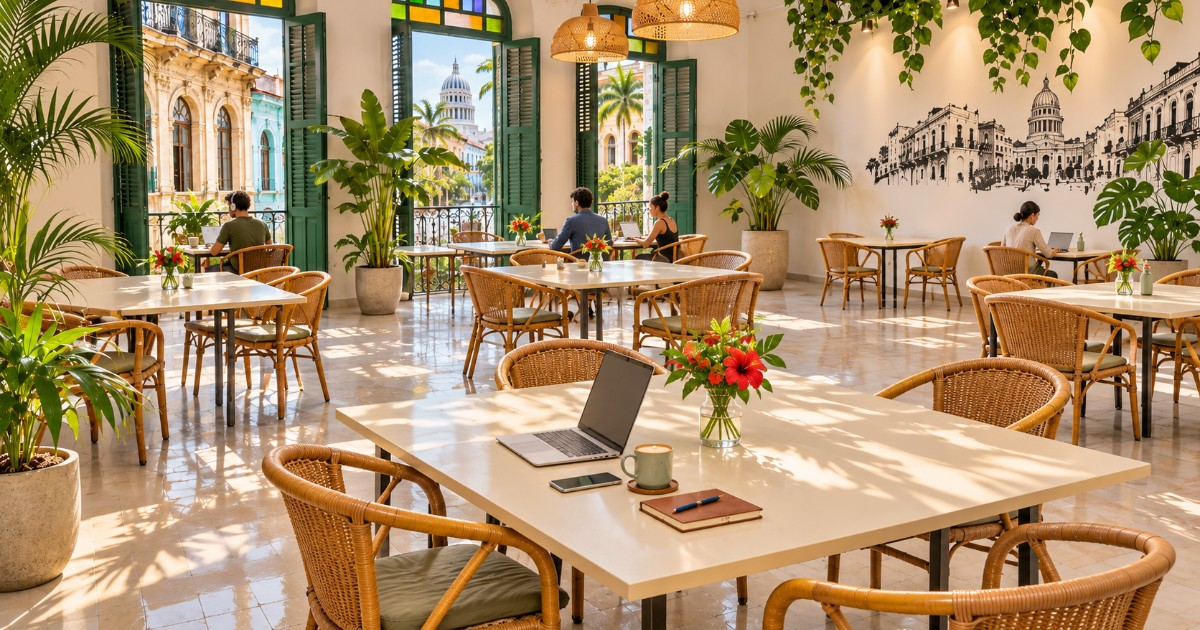
In Havana, cafes, hostels, and private businesses have transformed into makeshift offices for numerous Cuban professionals who find themselves unable to work from home due to the government's failure to provide reliable electricity and internet access, as reported by IPS Cuba.
This trend is not a fashionable entrepreneurial venture but rather a response to the electrical collapse. The primary clientele of these spaces includes social media managers, programmers, designers, journalists, and freelancers offering services to foreign companies and earning in foreign currency.
Elizabeth Cuesta, a social media manager, encapsulates the daily struggle: "I would be better off if I didn’t have to constantly leave my home to work, since I lack an internet connection or my battery runs out. It’s an obstacle, even if it’s profitable, because I don’t live nearby."
Economic Challenges in Using Coworking Spaces
The pricing of these coworking spaces highlights who can afford them and who cannot.
Claudia Terry's establishment, Residence Albero Dulce, charges 700 CUP per hour, offering monthly plans up to 80,000 CUP. With the average state salary sitting at 7,354 CUP per month—approximately nine dollars at the informal exchange rate—just one hour in this hostel consumes nearly 10% of a state worker's monthly salary. The monthly plan exceeds it by almost 11 times.
Kerida Habana hostel sets its price at one euro per hour, which equates to about 1,010 CUP at the informal exchange rate as of this past Sunday. The state-owned microenterprise La Quinta SURL began testing this service in August at the Botanic Garden La Quinta de los Molinos, offering a rate of 500 CUP per hour with renewable energy support.
Adapting to Crisis: An Innovative Solution
Other venues like Restaurante Grados, which houses a space supported by the community project Vive el Vedado, and Café Coworking Avenida Italia, launched by the Italian Agency for Development Cooperation, offer various membership levels.
"In searching for what to do with the business, we noticed that such spaces exist elsewhere in the world. In Europe, they have them, and they have internet," Terry explained. The influx of clients to her business began to surge in February 2026, as the energy crisis worsened.
The collapse of tourism—only 450,000 visitors between January and August, a 64.4% decrease compared to the same period in 2025—has forced many hostels to pivot to survive.
The new Labor Code (Law 189), effective since September 2026, expands telework regulation, a modality already included in Resolution 71/2021. However, ongoing power outages and internet access issues continue to compel numerous professionals to seek alternatives outside their homes to work effectively.
Ernesto Asen, founder of the project Vive el Vedado, describes the goal behind these spaces: "to create a circular economy with local talent, reinvesting everything... creating a small ecosystem."
The costs of these spaces pose an economic barrier for those reliant on a state salary. The average Cuban continues to work in the dark and without internet access, even in the 21st century.
Frequently Asked Questions About Coworking Spaces in Havana
What is driving the growth of coworking spaces in Havana?
The growth of coworking spaces in Havana is largely driven by the failure of the government to provide reliable electricity and internet access, forcing professionals to seek alternative work environments.
Who primarily uses these coworking spaces?
The primary users of these spaces are social media managers, programmers, designers, journalists, and freelancers who offer services to foreign companies.
How do the costs of coworking spaces compare to the average state salary?
The costs of coworking spaces can consume a significant portion of the average state salary, with some spaces charging almost 10% of a monthly salary for just one hour of use.