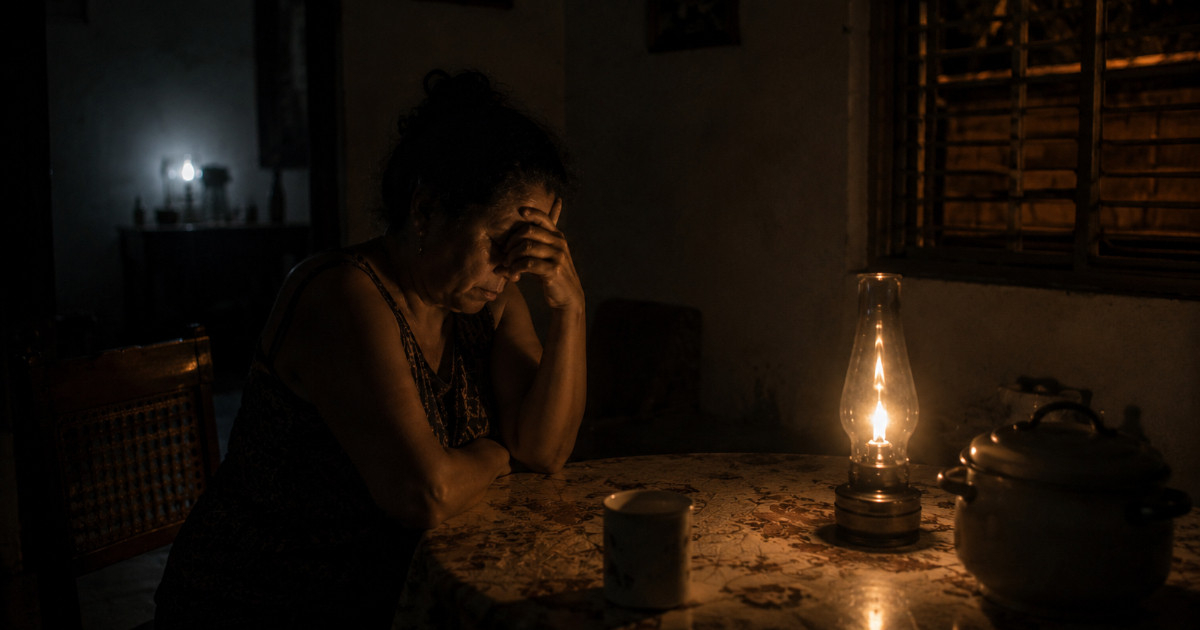
This past Saturday, NPR, a major public radio broadcaster in the United States, aired a report depicting Havana cloaked in darkness, with deserted streets and citizens worn out by an escalating energy crisis, a dearth of fuel, and declining living conditions.
The Shadow Over Havana
NPR correspondent Eyder Peralta wandered through the streets of Old Havana, painting a picture reminiscent of a post-hurricane landscape. "Cuban life today is increasingly defined by darkness," he remarked during his segment on All Things Considered.
Peralta described pitch-black streets, residents navigating with flashlights, and the iconic Capitol building standing unlit. "It's astonishing how much life light brings to a city, and this feels like a zombie movie," he stated. Summing up his observations, he declared, "This is by far the worst I've seen in Havana."
Navigating Daily Challenges
During his stay, Peralta faced numerous challenges. He worked from an Airbnb outfitted with a battery to power fans, a necessity given the U.S. restrictions that prevent citizens from staying in many large, generator-equipped hotels, many of which remain closed.
Beyond the pervasive darkness, Peralta noted a growing frustration among the populace, directed both at the U.S. embargo and the Cuban authorities. A man in his sixties, interviewed in a park, described the embargo as "inhumane" while also calling for political change on the island. "You have to join the world. You can't keep thinking you can do things your way and survive," he insisted, also advocating for the release of political prisoners, elections, and the lifting of U.S. sanctions.
Voices of Discontent
Peralta frequently heard a straightforward plea directed at the Cuban government: "Please, Cuban government, just do what the U.S. says so this ends." He relayed this sentiment to a Cuban deputy foreign minister, who, while unnamed, dismissed the possibility of a political system change as a non-negotiable "red line" for Cuba.
He also noted a shift in citizens' willingness to express dissatisfaction. "Frustration now means people are more willing to cross a red line that they wouldn't have before," Peralta observed.
Everyday Struggles
One poignant story highlighted the economic struggles faced daily. In Old Havana, a woman sold five blouses on the street, using her earnings to buy a carton of eggs. "Cubans keep telling you: I live day by day," Peralta summarized.
In the coming weeks, he will release a series of reports for NPR, continuing the international coverage of Cuba's crisis.
U.S. Pressure Intensifies
Peralta's work comes amidst a renewed wave of pressure from Washington on Havana. Just two days prior, U.S. Secretary of State Marco Rubio announced sanctions against eight entities and two individuals linked to Cuba's maritime and oil networks, along with restrictions on five vessels.
The energy crisis has worsened since January, following U.S. actions to curb Cuba's fuel supply. This Saturday, the Unión Eléctrica reported a meager availability of 1,070 MW against a demand of 2,830 MW, with some circuits in Havana enduring over 52 hours without power.
NPR's report adds to other international coverage highlighting the deterioration of life on the island. Italy's Domani featured a story from Havana titled "Now this looks like hell," while Russia's official newspaper, Rossiyskaya Gazeta, described October blackouts exceeding 20 hours and informal market gas prices nearing three dollars per liter.
Understanding Cuba's Current Crisis
What are the main causes of the current energy crisis in Cuba?
The energy crisis in Cuba is primarily due to fuel shortages exacerbated by U.S. sanctions aimed at limiting Cuba's fuel supply, along with the country's deteriorating infrastructure and lack of resources.
How are ordinary Cubans coping with the blackouts?
Many Cubans have resorted to using flashlights and alternative power sources like batteries to manage daily life during extended blackouts. Economic struggles are also prevalent, with some selling personal items to afford basic necessities.
What is the Cuban government's stance on U.S. demands?
The Cuban government has firmly rejected U.S. demands for a change in the country's political system, considering it a "red line" that they are unwilling to cross.