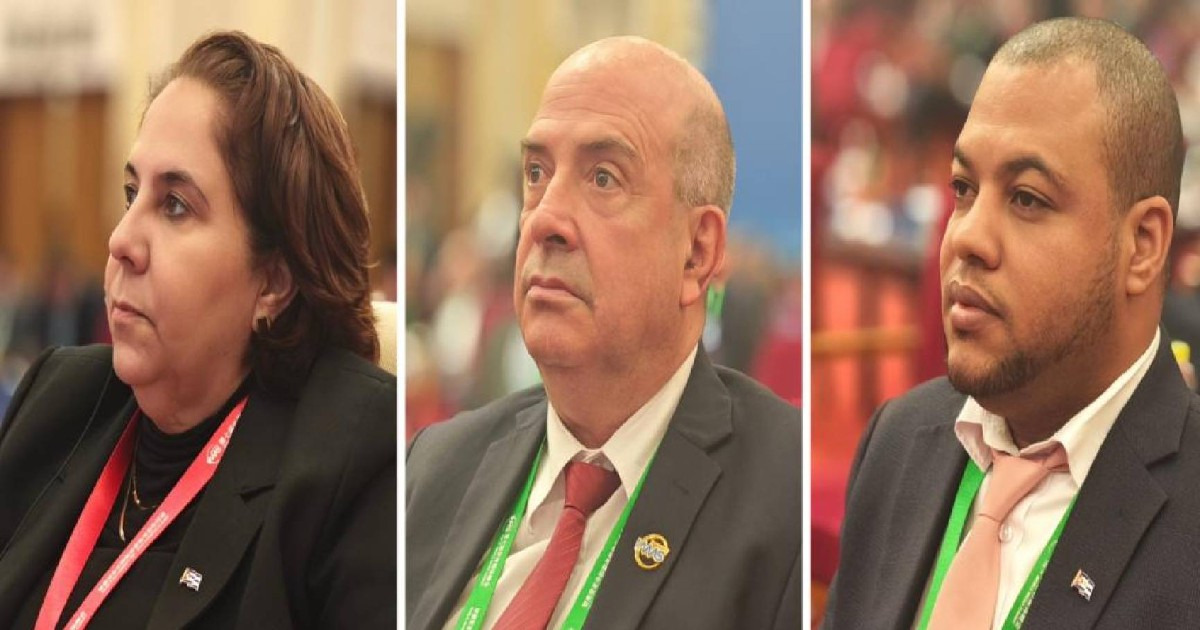
A delegation from Cuba's state-run media, led by Liudmila Álamo Dueñas, identified by the state agency Prensa Latina as the deputy head of the Ideological Department of the Central Committee of the Communist Party of Cuba (PCC), made a case in Beijing this past Saturday for equitable access to artificial intelligence and combating disinformation. This stance stands in stark contrast to the political control the single-party exerts over the island's state media.
The event was the 7th World Media Summit, organized by China's Xinhua agency and the municipal government of Beijing, under the theme "Media in the Intelligent Era: From Consensus to Action."
Approximately 500 delegates from around 330 media organizations, think tanks, and institutions from 112 countries attended the summit.
Traveling with Álamo Dueñas were executives from several Cuban state media outlets. Alejandro Gómez, vice president of Prensa Latina, emphasized that "it is crucial to prevent technological gaps from widening further and to promote AI development that brings societies closer and places humans at the center." He also stressed the need for the Global South nations to be equipped with the necessary infrastructure, training, and digital tools.
Randy Alonso, director of Ideas Multimedios, asserted that "access to AI should be equal and not limited to wealthy countries or the owners of major media outlets," adding that technology "cannot replace human emotions or the role of journalists."
José C. Zaragoza, director of Cuban Television, warned that AI "can also be used as a tool for information manipulation" and urged the maintenance of "vigilance, data verification, and the dissemination of truthful and objective information."
None of the remarks highlighted by Prensa Latina addressed editorial independence, media pluralism, or the restrictions on independent journalism in Cuba.
The contradiction is evident. The Ideological Department of the PCC's Central Committee is precisely the entity that guides the editorial line of Cuba's state newspapers, radio stations, and television channels. Their leadership of the delegation in Beijing underscores the organic relationship between the party apparatus and official media.
The legal framework bolsters this control: the 2019 Constitution prohibits private ownership of mass media, and the Social Communication Law, effective since June 2024, only recognizes as legal those media linked to the State, the PCC, and mass organizations. At least 23 independent press sites remain blocked on the island.
The immediate context is particularly revealing. According to Reporters Without Borders (RSF), in the four days leading up to the Beijing summit, three Cuban independent journalists were arrested: Adelth Bonne Gamboa on November 2, Camila Acosta the following day, and Yoani Sánchez on November 5, who was released after about nine hours.
In its 2026 press freedom index, RSF ranks Cuba 160th out of 180 countries, with 29.22 points, making it the second-worst country in the Americas, only behind Nicaragua.
The Cuban Institute for Freedom of Expression and Press documented 1,188 violations of freedom of expression and press in 2025, representing a 54.7% increase from the previous year, according to a report published in October 2026.
Understanding Media Control and Press Freedom in Cuba
What is the role of the Ideological Department of the PCC in Cuba?
The Ideological Department of the PCC's Central Committee guides the editorial line of state newspapers, radio stations, and television channels in Cuba, ensuring media content aligns with the party's objectives.
How does the 2019 Cuban Constitution affect media ownership?
The 2019 Cuban Constitution prohibits private ownership of mass media, reinforcing state control over media outlets and limiting independent journalism.
What are the implications of Cuba's Social Communication Law?
Enacted in June 2024, the Social Communication Law only recognizes media linked to the State, PCC, and mass organizations as legal, further restricting independent media operations.