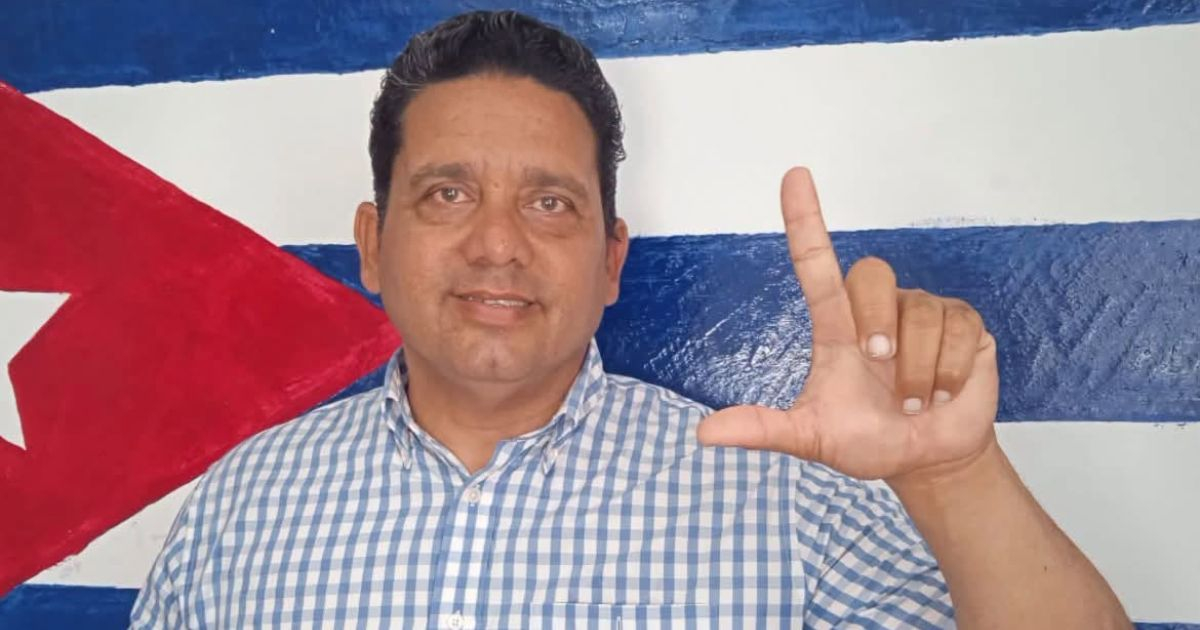
Evangelical pastor and activist Rolando Fidel Pérez Lora, widely recognized as the "Herald of Christ," has been forcibly relocated from Havana to his hometown of Las Tunas. This development was shared on Facebook by fellow Christian activist David Espinosa.
Espinosa wrote, "He left at 7:00 a.m. His wife managed to speak with him. We have no further updates at the moment." This confirmation aligns with an urgent alert issued on Friday by content creator Iván Daniel Calás Navarro, who cited family sources confirming that the regime had threatened Pérez Lora with deportation.
Calás Navarro's statement also highlighted that Pérez Lora was warned of potential imprisonment should he persist with his activism. The enforced return to his place of origin was presented as a supposed alternative to jail time.
Background and Activism
Pérez Lora is a member of the Alliance of Christians of Cuba and the founder of the YouTube channel "Herald of Christ." Originally from Las Tunas, he formerly led a church affiliated with the Evangelical League of Cuba before relocating to Matanzas and later to Havana. His activism has brought him into contact with the group Out of the Box Cuba and activist Anna Bensi, making him a frequent target of State Security.
The incident on Friday marks at least the fourth repressive action against Pérez Lora this year. In March, he was detained in a park in Peñas Altas, Matanzas, after recording and posting a biblical teaching on YouTube, and was held for nearly three hours. On July 2, he was detained for almost 12 hours in Alamar alongside Anna Bensi and other members of Out of the Box Cuba. On October 1, he was arrested en route to the East Havana Municipal People's Court to support Bensi and her mother, Caridad Silvente, during their trial; agents subdued, handcuffed, and transported him in a police vehicle.
Legal Justifications and Broader Repression
The so-called "internal deportation" mechanism threatening Pérez Lora is grounded in Decree-Law 217 of 1997, which mandates administrative approval for residents from other provinces to establish residence in Havana. Those without this authorization can face fines and be compelled to return to their original location.
Human rights organization Cubalex has pointed out that authorities selectively enforce this decree to dismantle networks of support for dissidents and journalists.
Journalist Yoani Sánchez, following her own nine-hour detention on Wednesday, reported hearing the terms "illegal" and "deportation" repeatedly at the Cerro police station, where individuals without authorized residence were forcibly removed from the capital.
The case of the "Herald of Christ" is part of a particularly intense week of repression. Journalist Camila Acosta was detained for over eight hours when she attempted to attend a veterinary appointment; her phone was destroyed. Political police conducted simultaneous operations outside the homes of several activists and journalists to prevent them from attending an event at the United States Embassy.
On Friday, Karel Daniel Hernández Bosques from Out of the Box Cuba was released after approximately 12 hours of questioning at a Havana police station. On Saturday, Christian activist Anthony Martínez was freed after more than 20 hours of arbitrary detention in Guanajay, Artemisa.
Mauro Reigosa Pérez, spokesperson for Out of the Box Cuba, expressed the situation clearly: "We're experiencing a wave of repression against all Cubans engaged in content creation or political activism. Everyone telling the political truth about this country is being harassed."
The Cuban Observatory for Human Rights (OCDH) documented at least 387 repressive actions in October 2026, exceeding the 344 recorded in September. The yearly total has already reached 3,438 actions, surpassing the entire count for 2025, which stood at 3,179.
Yaxys Cires, the OCDH's Director of Strategies, warned that "the regime increases repression to drive activists out of the country, intimidate the populace, and pressure the United States and the European Union. None of this will resolve the critical structural crisis or the distrust within the elite itself. Cuba is on the brink of a political, economic, and social transition."
Understanding the Repression in Cuba
What is the significance of Decree-Law 217 of 1997 in Cuba?
Decree-Law 217 of 1997 requires administrative approval for residents from other provinces to establish residence in Havana. Without this authorization, individuals can be fined and forced to return to their original province. This law is used selectively by authorities to disrupt the activities of dissidents and journalists.
Who is Rolando Fidel Pérez Lora?
Rolando Fidel Pérez Lora is an evangelical pastor and activist known as the "Herald of Christ." He has been targeted by the Cuban regime for his activism, which includes founding the YouTube channel "Herald of Christ" and engaging with groups like Out of the Box Cuba.
How does the Cuban regime respond to activism and dissent?
The Cuban regime often responds to activism and dissent through repressive measures, such as detentions, threats of imprisonment, and forced relocations. These actions aim to intimidate activists and dismantle networks of opposition.