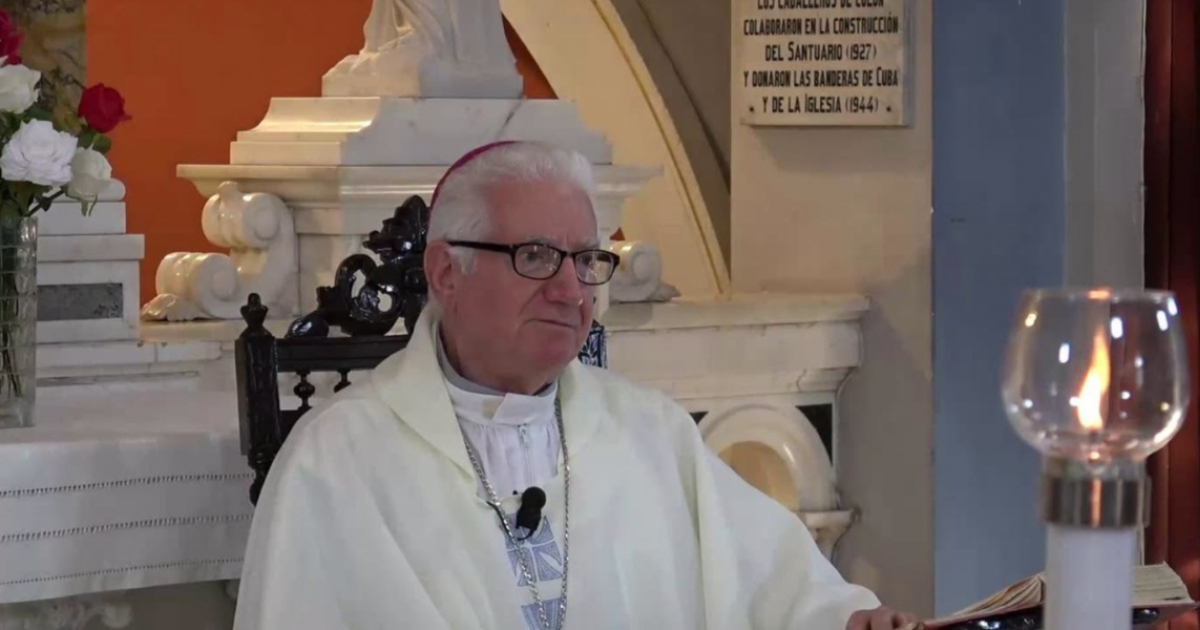
This past Saturday, Pope Leo XIV accepted the resignation of Archbishop Dionisio Guillermo García Ibáñez from his role as metropolitan archbishop of Santiago de Cuba. Replacing him is Monsignor Juan Gabriel Díaz Ruiz, who has been serving as the bishop of Matanzas, as announced by the Archdiocese of Santiago de Cuba on their social media platforms.
At 81 years old, García Ibáñez had been at the helm of the archdiocese for nearly two decades since being appointed by Pope Benedict XVI in February 2007.
The archbishop had initially submitted his resignation in 2020, upon reaching the age of 75, the age at which canon law mandates bishops to offer their resignation. However, he continued to lead the eastern see until the Pope's recent decision.
Impact of García Ibáñez's Leadership
The change in leadership follows closely on the heels of a powerful homily delivered by García Ibáñez, in which he starkly addressed Cuba's ongoing crisis. Speaking at the Basilica Sanctuary of Our Lady of Charity of El Cobre, he captured the nation's plight with the striking statement: "We are in trouble, and we don't know how to get out of it."
Throughout 2026, the outgoing archbishop became more vocal in his criticism of life on the island, emerging as a candid voice within the Cuban Church against the regime. In May, he asserted that "Cuba must change" and called for concrete steps to alter the nation's circumstances. By September, he was demanding "urgent structural transformations," asserting that "no people deserve this situation."
Humanitarian Efforts and New Leadership
In July, acknowledging the widespread exhaustion among the populace, García Ibáñez spoke candidly about the crisis's magnitude: "So many people are asking for help. And the help is not enough." Under his leadership, Caritas Cuba directed approximately three million dollars in humanitarian aid since late 2025, with plans to double this assistance.
Juan Gabriel Díaz Ruiz, the newly appointed archbishop, was born on November 14, 1960, in Céspedes, within the Archdiocese of Camagüey. His pre-ecclesiastical life included studying Civil Engineering at the University of Camagüey, followed by Philosophical and Theological studies at the seminaries of San Basilio Magno in Santiago de Cuba, and San Carlos and San Ambrosio in Havana. He earned a licentiate in Sacred Scripture from the Pontifical Biblical Institute in Rome and was ordained as a priest on August 5, 1989.
His episcopal journey includes three assignments within a decade: appointed by Pope Francis as bishop of Ciego de Ávila in July 2017, then transferred to the Diocese of Matanzas in April 2022. Now, Pope Leo XIV has elevated him to Santiago's metropolitan see, the oldest in Cuba, founded in 1522.
The Cuban Conference of Catholic Bishops, where Díaz Ruiz served as vice president, declared in January 2026 that the nation requires "increasingly urgent" changes and warned of the potential for "social chaos" if profound transformations are not made.
Key Insights on Church Leadership Change in Cuba
Why did Archbishop García Ibáñez resign?
Archbishop García Ibáñez resigned upon reaching the age of 75, as required by canon law, although he continued serving until the Pope's recent acceptance of his resignation.
Who is Juan Gabriel Díaz Ruiz?
Juan Gabriel Díaz Ruiz is the newly appointed archbishop of Santiago de Cuba. Prior to this, he served as the bishop of Matanzas and has a background in Civil Engineering, Philosophy, and Theology.
What has been the role of Caritas Cuba under García Ibáñez?
Under García Ibáñez, Caritas Cuba has channeled approximately three million dollars in humanitarian aid since late 2025, with plans to increase this support to meet the growing needs.