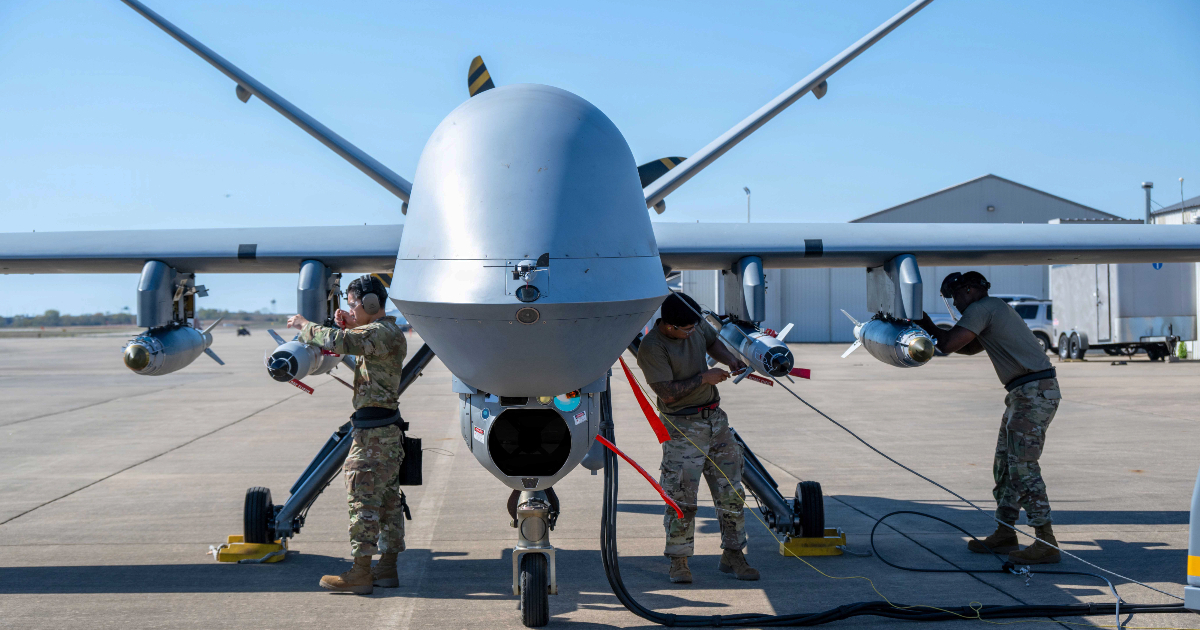
This past Saturday, two missiles struck the Suza area on Iran's Qeshm Island, as reported by the semi-official Tasnim news agency and picked up by Reuters.
The agency noted that there was no official information available regarding potential damage, and further details would be released once the relevant authorities confirmed the incident.
Adding to the report, Iran's state news agency IRNA mentioned that witnesses in the area heard an aircraft overhead before observing the impact of the two missiles in Suza, located in the southern part of the country.
This latest attack comes after eleven consecutive nights of U.S. military operations targeting Iranian locations. On November 6th, President Donald Trump confirmed what he described as "minor" attacks on an air defense installation on the same island, stating that the target was neutralized within a span of five to fifteen minutes.
Qeshm, Iran's largest island, spanning approximately 1,200 square kilometers, has a strategic location about 22 kilometers south of Bandar Abbas, Iran's main port. It oversees the maritime routes of the Strait of Hormuz, through which a significant portion of the world's oil is transported.
The island hosts naval facilities of the Islamic Revolutionary Guard Corps (IRGC), including anti-ship missile batteries, bases for fast attack craft, and an extensive network of underground tunnels.
The conflict between Washington and Tehran began on February 28, 2026, with the so-called "Operation Epic Fury," a joint U.S.-Israeli offensive against Iranian nuclear and military facilities. A ceasefire agreed upon in June was broken in July when Iran launched ballistic missiles and drone attacks on U.S. bases in Bahrain, Jordan, Kuwait, and Oman, sparking a new round of reprisals.
Amid the conflict, diplomatic negotiations are still ongoing. This Saturday, Qatar's International Media Office firmly denied circulating social media claims that U.S.-Iran talks had collapsed, labeling such reports as "false and misleading."
Qatar accused fake accounts of distorting the words of Prime Minister Mohammed bin Abdulrahman Al Thani in an attempt to undermine diplomatic efforts and promote escalation.
According to the official Qatari statement, Al Thani emphasized that "both parties continue to work towards an agreement" and that Doha's mediation remains "in close coordination with Washington and Tehran." Qatar and Pakistan are mediating negotiations that have stalled over the dispute regarding who should make the first concessions.
The draft under discussion includes the lifting of the U.S. naval blockade and the partial release of frozen Iranian assets in exchange for International Atomic Energy Agency (IAEA) inspectors' access to the targeted facilities, along with the subsequent reopening of the Strait of Hormuz.
Trump recently stated he would "soon" decide whether the U.S. should expand operations to prevent Iran from rebuilding its nuclear program, while his national security team considers three options: resuming large-scale attacks, intensifying sanctions and the maritime blockade, or negotiating an agreement with verifiable Iranian concessions.
Frequently Asked Questions About the Qeshm Island Missile Strikes
What is the significance of Qeshm Island's location?
Qeshm Island is strategically located about 22 kilometers south of Bandar Abbas, overseeing key maritime routes in the Strait of Hormuz, through which a large portion of global oil passes.
What recent events have escalated the conflict between the U.S. and Iran?
Tensions rose following the joint U.S.-Israeli offensive "Operation Epic Fury" against Iranian facilities, and further escalated when Iran attacked U.S. bases in July, leading to retaliatory measures.
What are the current diplomatic efforts between the U.S. and Iran?
Diplomatic negotiations are ongoing with Qatar and Pakistan mediating talks, focusing on lifting the U.S. blockade and releasing frozen Iranian assets in exchange for access to nuclear sites.