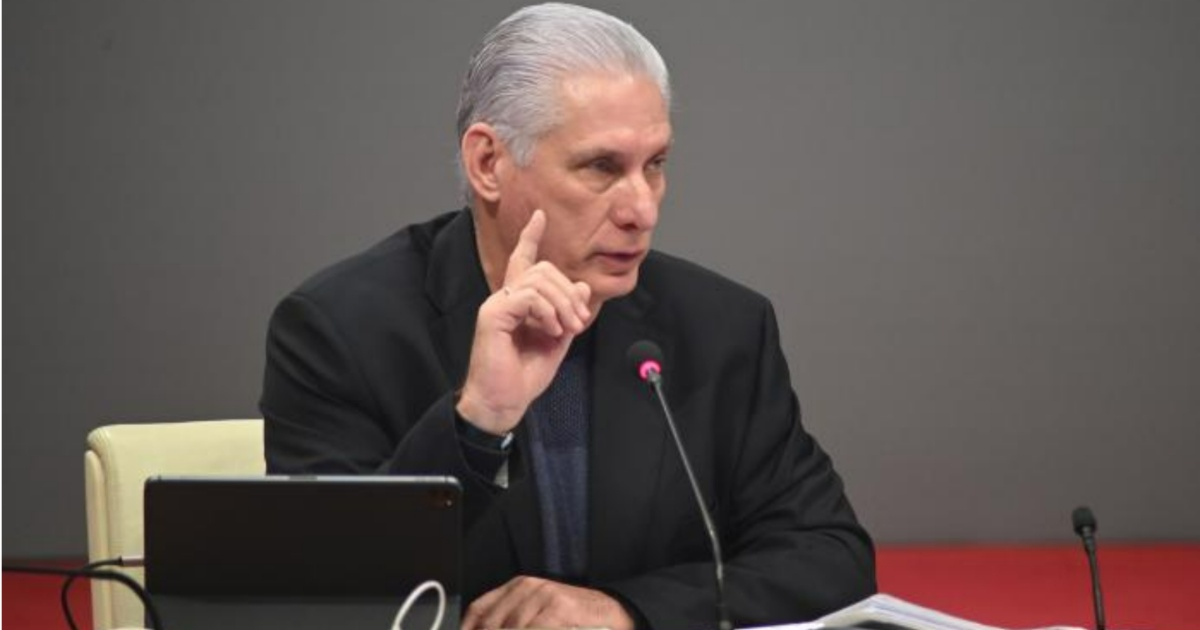
It took Cuban leader Miguel Díaz-Canel two days to publicly address the sanctions announced by Secretary of State Marco Rubio on Thursday.
On Saturday, Díaz-Canel took to social media platform X, releasing a two-part statement where he dismissed the measures and vowed resilience.
"The U.S. is once again targeting the Cuban people with fresh coercive actions against Cuban companies, vessels, and foreign firms responsible for ensuring essential services and goods for our economic and social development," he stated.
In the continuation of his post, Díaz-Canel condemned the sanctions as "part of the same economic suffocation strategy and collective punishment aimed at subjugating an entire nation, with deceitful and absurd justifications that neither the world nor U.S. citizens believe," concluding with, "We will not be defeated!"
The sanctions Díaz-Canel responded to were announced by Rubio on November 5 and represent the most comprehensive international sanctions since the Trump Administration's Executive Order 14404 was signed on May 1, 2026.
This package identified eight entities and two individuals, and designated five ships, including Esperanza, Gloria C, Maria Cristina, Emilia, and Lourdes, as blocked properties.
The sanctioned individuals include Guillermo Faustino Rodríguez López-Calleja, brother of the deceased former GAESA chief, accused of involvement in a maritime crude oil transport network, and Any Rodríguez Lastres, daughter of GAESA president Ania Guillermina Lastres Morera.
The sanctions also targeted two Chinese companies, China National Electronic Import and Export Company (CEIEC) and Beijing H&C Technologies Co., Ltd., for supplying military equipment to Cuba, allegedly operating through intermediary Duna S.A.
On Thursday, while announcing the measures, Rubio remarked, "Cuba's ruling elite monopolizes the island's energy, maritime, and technological resources for their own gain, leaving the Cuban people to deal with power outages, shortages, and a stagnant economy."
Díaz-Canel’s remarks echoed the narrative already presented by Foreign Minister Bruno Rodríguez Parrilla at the Ibero-American Summit in Madrid, where he decried an economic suffocation war and an "energy blockade" akin to a naval blockade.
China, meanwhile, formally opposed the sanctions on Friday through spokesperson Guo Jiakun, warning that Beijing would take "all necessary measures" to safeguard its companies' interests.
Since May 2026, the Trump Administration has executed multiple rounds of sanctions against the Cuban regime, affecting GAESA, the Mariel Container Terminal, Tecnoimport, Tecnotex, and now maritime oil networks and technology suppliers with ties to China.
Understanding the Impact of U.S. Sanctions on Cuba
What are the main objectives of the U.S. sanctions against Cuba?
The U.S. sanctions aim to weaken the Cuban regime by restricting its access to resources and financial networks, hoping to pressure the government into enacting democratic reforms.
How has the Cuban government responded to these sanctions?
The Cuban government, led by Díaz-Canel, has condemned the sanctions as unjustified economic aggression and has vowed to resist them, claiming they harm the Cuban people.
Who are the key individuals targeted by the recent sanctions?
Key individuals targeted include Guillermo Faustino Rodríguez López-Calleja and Any Rodríguez Lastres, both linked to GAESA and accused of facilitating maritime crude oil transport.