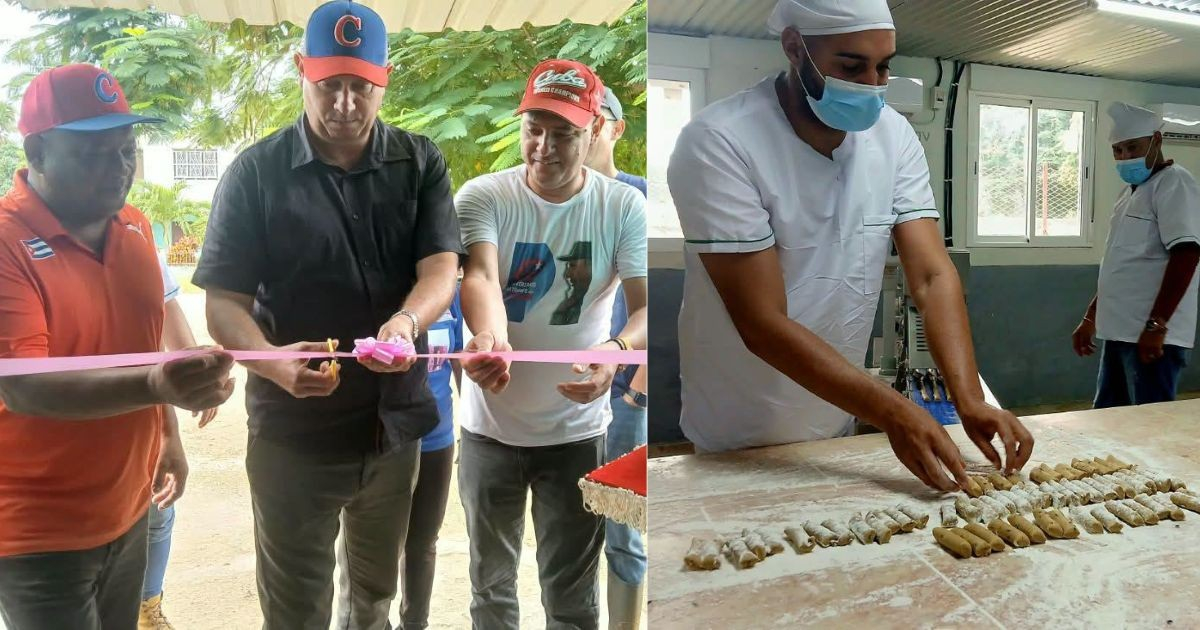
In what the Cuban government is touting as a significant achievement, a new dairy farm and food processing center have been inaugurated in Chambas, a town in the province of Ciego de Ávila. This facility aims to produce croquettes, sausages, ground meat, and other assorted food products.
Julio Gómez Casanova, the First Secretary of the Communist Party in the province, announced the opening with much fanfare, including flag displays and a ribbon-cutting ceremony, as befits such a "monumental" accomplishment.
According to Gómez Casanova's statement, which references information from Radio Surco, these new facilities are part of the municipal agro-industrial company's efforts under the Economic and Social Transformations (TES) initiative. The goal is to diversify and expand food offerings, bolstering local production and making products more accessible to the public.
The words sound promising. Unfortunately, reality often doesn’t align with official statements.
The TES initiative is one of 176 measures approved by the Cuban government in June of this year, aimed at reviving an economy on life support. The majority of these measures are directly or indirectly related to agriculture.
Just a day prior to the inauguration, Radio Surco reported that officials were in Ciego de Ávila monitoring the implementation of these measures in agricultural entities. Everything appeared thoroughly checked and verified, as usual.
Challenges Facing Dairy Production
Ciego de Ávila's track record in dairy production is less than encouraging. In June, the province's dairy industry was producing a mere 4,800 to 5,000 liters daily, far short of the planned 33,700 liters—only about 15% of the target.
Nationally, milk production plummeted by 58% between 2018 and 2023, and the cattle population has decreased by over 900,000 since 2019. Yet, they have a new dairy in Chambas, which is presumably a step in the right direction.
Public Skepticism and Economic Realities
The Cuban public, however, responded with sharp irony. "How much for the croquettes? 2,500 each?" one user quipped online. "Are we going to have milk for everyone?" another asked, to which a third replied, "There's none for medical diets, imagine for everyone."
Suggestions to list how many retirees can afford ground meat and sausages were met with comments that expanded this concern to active workers as well. The harsh reality is that "Prices when they reach consumers are unaffordable."
The arithmetic is clear. With a minimum wage of 3,210 pesos a month—just over three dollars in the informal exchange market—even basic food needs range from 50,000 to 90,000 pesos monthly, according to independent estimates. Many Cubans are replacing rice with yucca due to the unaffordability of essential foods.
Concerns Over Product Quality
Beyond cost, there's skepticism about product quality. In August 2025, reports surfaced of croquette dough being placed directly on the floor in a Havana packaging unit, and spoiled croquettes from power outages being mixed with new dough to mask foul odors.
As one user humorously noted, "Those croquettes, if they don't send you to the bathroom, they'll send you to the hospital."
Meanwhile, as the regime continues to open facilities with triumphant hashtags, a survey by the Food Monitor Program and Cuido60 in May 2026 revealed that 33.9% of Cuban households had at least one member who went to bed hungry in the previous 30 days.
"Another achievement, blah blah blah, all lies," commented a Cuban online. It's hard to argue against that sentiment.
Frequently Asked Questions About Cuba's New Dairy and Food Processing Center
What is the purpose of the new dairy and food processing center in Chambas?
The new center aims to produce croquettes, sausages, ground meat, and other food products to diversify and expand food offerings, strengthen local production, and make products more accessible to the Cuban public.
Why is there skepticism about the effectiveness of the new facilities?
Skepticism arises from historical underperformance in dairy production, economic challenges, unaffordable prices for consumers, and concerns over product quality, as highlighted in recent reports about improper handling and storage of food items.
How does the economic situation in Cuba affect the accessibility of basic food items?
With a minimum salary of just over three dollars monthly in the informal exchange market, and basic food costs ranging from 50,000 to 90,000 pesos per month, many Cubans are unable to afford essential food items, leading to substitutions like yucca for rice.