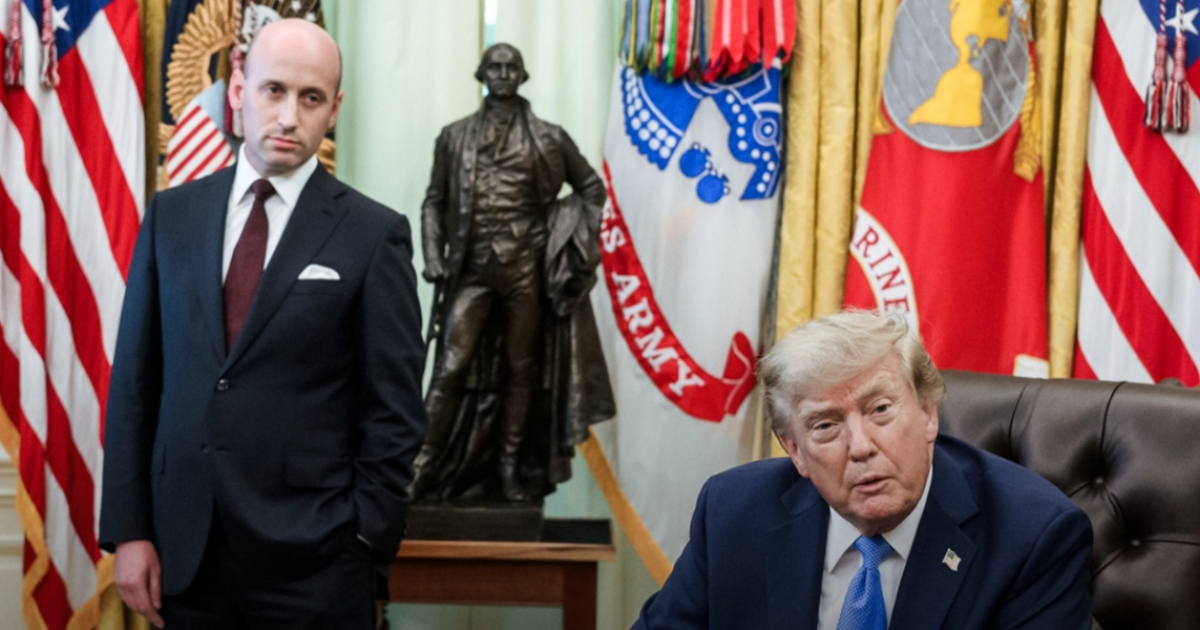
Donald Trump announced on Friday that Stephen Miller, the chief architect behind his hardline immigration policies, will assume the role of White House Chief of Staff starting Monday, November 9, 2026. He replaces Susie Wiles in the position.
The announcement was made via Trump's account on Truth Social, where he praised Miller as “one of my most trusted advisors” and expressed gratitude to Wiles—who made history as the first woman to hold the Chief of Staff position in the United States—by saying she “has done a great job.” Wiles will transition to leading Trump's political operations.
This appointment comes just three days after the Republican Party suffered a significant defeat in the midterm elections, where the Democrats regained control of both chambers of Congress.
Implications of Miller's Appointment
Within the Republican Party, some factions have begun to blame Miller for the political fallout from the administration's radical policies. However, Trump has chosen to elevate him rather than soften his approach.
Miller, 41, previously served as Deputy Chief of Staff for Policy and National Security Advisor. He has been a key figure alongside Trump since the 2016 presidential campaign and is recognized as the principal force behind the most controversial immigration measures of the first term, including the ban on travelers from predominantly Muslim countries and the “zero tolerance” policy that led to family separations at the border.
In December 2025, Miller publicly advocated for the mass deportation of immigrants without judicial hearings, including asylum seekers. He stated in a widely circulated video, “There are 15 million illegal immigrants. If each of them had the trial you ask for, it would take us centuries to expel them!”
Miller's Stance on Cuba
Regarding Cuba, Miller has been one of the administration's harshest critics. In May 2026, he described the island as an “operational hub for America's adversaries” and “the last bastion of communism” during an interview with Fox News.
Shortly after, he directly warned the Cuban regime, stating, “Ultimately, your fate is in your own hands,” alluding to the possibility for Havana to reform or choose a different path under Washington's pressure.
Future Direction Under Miller's Leadership
As Chief of Staff—the most operationally powerful position in the White House, responsible for coordinating the entire presidential agenda—Miller will now have the direct ability to intensify both deportations and pressure on Cuba and other governments deemed adversarial by Washington.
According to an analysis by EFE, Miller's rise is seen as a signal that Trump intends to double down on his agenda in the latter half of his term, rather than pivot to the center after the electoral setback.
Over 42,000 Cubans reportedly have final deportation orders in the United States, a figure that gains new significance given the profile of the official now controlling the levers of power in the White House.
Impact of Stephen Miller's Appointment on Immigration and Foreign Policy
Who is Stephen Miller?
Stephen Miller is a senior advisor to Donald Trump, known for being the chief architect of the administration's strict immigration policies. He has been working with Trump since the 2016 presidential campaign.
What are some of the controversial policies Miller has supported?
Miller has supported policies such as the travel ban on citizens from predominantly Muslim countries and the "zero tolerance" policy leading to family separations at the border.
How might Miller's appointment affect US-Cuba relations?
Miller's appointment could lead to increased pressure on Cuba, as he has been a vocal critic of the Cuban regime and could push for more stringent measures against it.