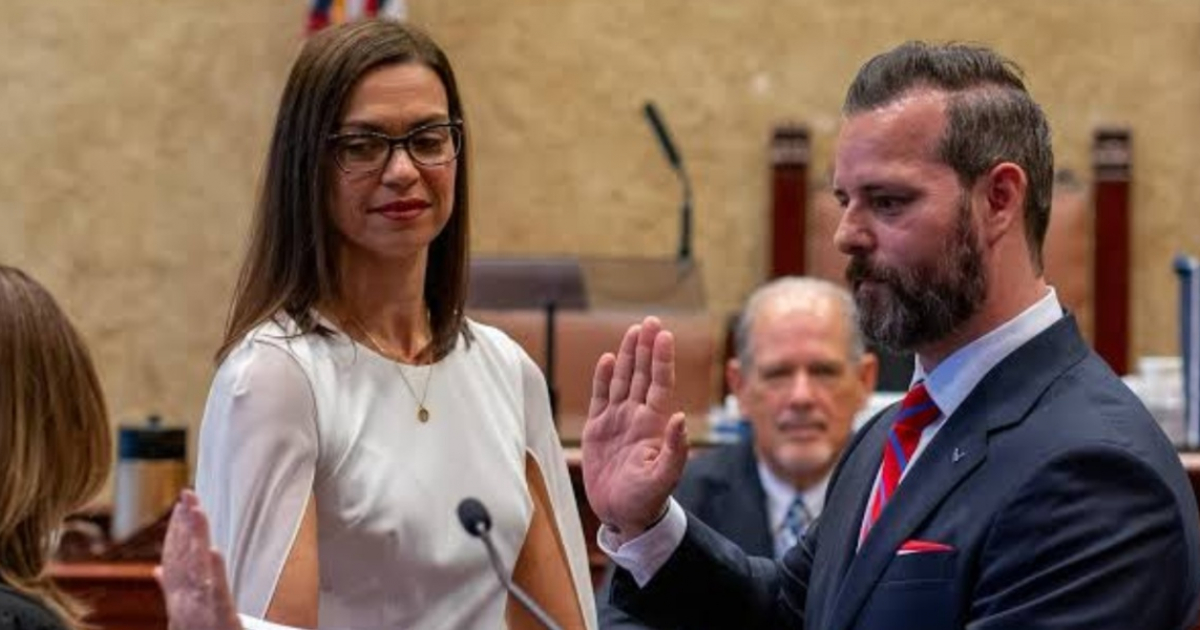
Jason Reding Quiñones, the United States Attorney for the Southern District of Florida and the individual responsible for the indictment against former Cuban dictator Raúl Castro, has resigned effective immediately. His resignation, submitted to President Donald Trump, marks the third high-ranking departure from the Department of Justice within two days following the Republican setback in the midterm elections.
Sources quoted by CNN suggest that Quiñones did not leave voluntarily. He was reportedly pressured to resign by the Justice Department leadership, despite having led some of the most controversial investigations that President Trump supported.
In a post on X, Quiñones did not elaborate on the reasons behind his resignation but expressed gratitude for the president's trust. "Serving the public has been the honor of my life. Leading the U.S. Attorney's Office in my hometown has been especially meaningful," he wrote. "I leave with immense pride in our accomplishments and profound gratitude for the chance to serve our great nation."
Quiñones' Impactful Tenure
Attorney General Todd Blanche acknowledged Quiñones' significant contributions upon announcing his departure. "We are grateful for Jason's leadership in combating violent crime, drug trafficking, human trafficking, and transnational crime, including the indictment of Raúl Castro," Blanche wrote on X.
One of Quiñones' most notable achievements was the historic federal indictment against Castro for the shooting down of two aircraft belonging to the Brothers to the Rescue organization on February 24, 1996, which resulted in the deaths of four individuals. The charges included conspiracy to murder U.S. citizens, destruction of aircraft, and four counts of homicide. Additionally, a Miami judge issued a state arrest warrant in October against Castro for conspiracy to commit first-degree murder, denying him bail.
Failed Prosecution and Resignation Fallout
However, Quiñones faced setbacks as well. According to a CNN report, he led the "grand conspiracy" investigation using a grand jury in Fort Pierce, Florida, aiming to prosecute former officials from the Obama and Biden administrations for allegedly conspiring against Trump. Despite promising to file charges within months, Quiñones failed to deliver, diminishing the Justice Department leadership's confidence in him.
Frequent trips to Washington, outside his district, served as reminders of this failure, catching many in the Miami federal prosecutor's office off guard when his resignation was announced.
A Miami native and a 2008 graduate of the Florida International University College of Law, Quiñones was appointed by Trump in February 2025, while serving as a trial judge in Miami-Dade County. The Justice Department described him as a "decorated veteran with over 23 years of military service" in both the U.S. Air Force and Army.
Broader Implications for the Justice Department
His resignation follows those of Harmeet Dhillon, head of the Civil Rights Division, who left on Thursday, and John Eisenberg, head of the National Security Division, who also announced his departure on Friday. These resignations come just days after Democrats regained control of the Senate—with at least 54 seats—and the House of Representatives in Tuesday's elections.
The simultaneous exit of these three officials significantly hampers the Trump administration's ability to fill these positions through the confirmation process, especially with the Senate now under opposition control. The White House might have to consider appointing interim leaders for the remainder of the presidential term.
Key Questions Surrounding Quiñones' Resignation
Why did Jason Reding Quiñones resign?
Jason Reding Quiñones was reportedly pressured to resign by the Justice Department leadership following the Republican defeat in the midterm elections.
What was Quiñones' major achievement as a federal prosecutor?
His most notable achievement was the federal indictment of Raúl Castro for the 1996 shooting down of two aircraft from the Brothers to the Rescue organization.
Who else resigned from the Justice Department at the same time?
Along with Quiñones, Harmeet Dhillon, head of the Civil Rights Division, and John Eisenberg, head of the National Security Division, also resigned.