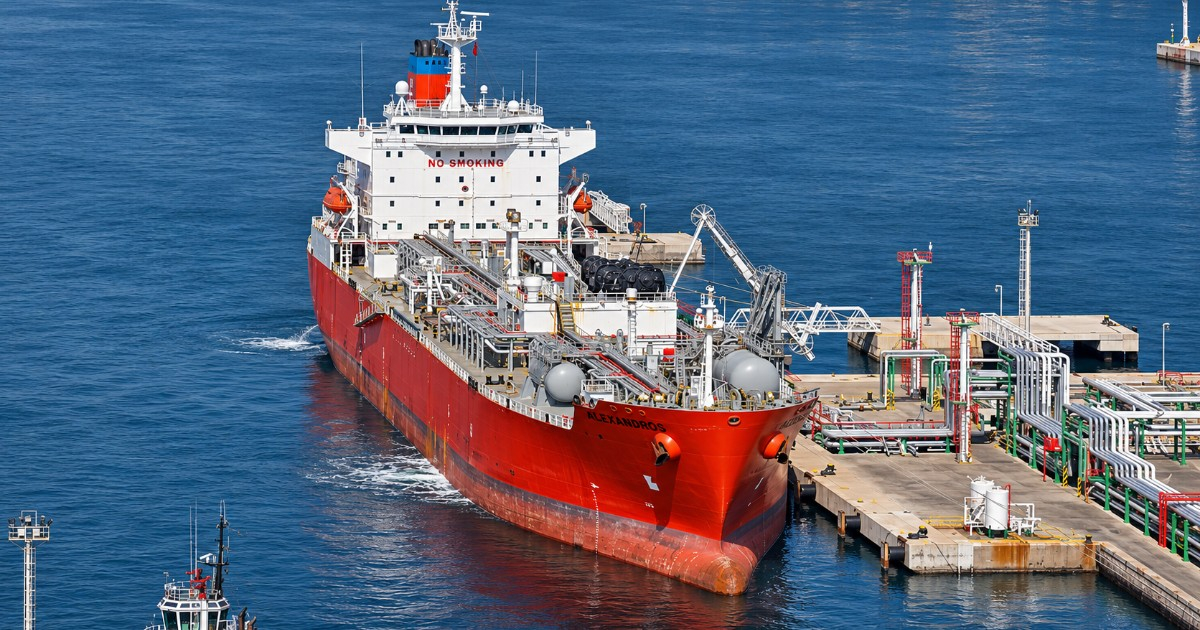
The U.S. Department of the Treasury announced on Thursday that five Cuban-flagged vessels are now classified as blocked property under a fresh wave of sanctions targeting Havana's regime. This move aims to dismantle an offshore shipping network responsible for transporting crude oil to and from the island.
The vessels in question include the Esperanza (IMO 9289166), the Gloria C (IMO 9540273), the Maria Cristina (IMO 9502453), the Emilia (IMO 9242209), and the Lourdes (IMO 9259692). All are flying the Cuban flag and are connected to four shipping companies simultaneously sanctioned by the Treasury's Office of Foreign Assets Control (OFAC).
The four operators identified are CAROIL Transport Marine Ltd. (Cyprus), TENTACOOL Commercial Inc. (Panama), Internacional Marítima S.A. (Cuba), and Petróleos Marítimos del Caribe S.A. —PETROMARCA— (Cuba).
Among these, CAROIL is responsible for the commercial management of the Esperanza, Gloria C, and Maria Cristina; TENTACOOL is the registered owner of Gloria C; Internacional Marítima S.A. owns Esperanza; and PETROMARCA operates the Emilia and Lourdes.
Each vessel serves a specific role: the Gloria C, built in 2010, is a chemical and oil products tanker; the Emilia, constructed in 2002, is a liquefied gas carrier; and the Lourdes, also from 2002, is a crude oil tanker.
Background on Sanctioned Vessels
Previously, three of these vessels—Esperanza, Maria Cristina (formerly Carlota C), and Lourdes (previously known as Giralt)—were already on the U.S. sanctions list under Executive Order 13850, which pertains to Venezuela. The latest update by OFAC on November 5 adds these vessels to the list under Executive Order 14404, related to Cuba, without lifting the existing sanctions tied to Venezuela.
Involvement of Key Figures
CAROIL was initially designated in September 2019 for its activities in the Venezuelan oil sector, and its current redesignation underscores its ongoing crude oil transport operations for the Cuban regime.
The same sanctions package by the State Department has also named Guillermo Faustino Rodríguez López-Calleja, linked to the maritime transport network, and Any Rodríguez Lastres, daughter of GAESA's president.
Guillermo Faustino Rodríguez López-Calleja, a brother of the late General Luis Alberto Rodríguez López-Calleja—former head of GAESA—and uncle to Raúl Guillermo Rodríguez Castro, known as "El Cangrejo," is a graduate of Cuba's Naval Academy and reportedly resides in Athens, managing shipping companies.
Any Rodríguez Lastres, daughter of Ania Guillermina Lastres Morera, GAESA's president, previously designated by Washington, had served as commercial director of the Mariel Container Terminal S.A.
Secretary of State Marco Rubio criticized Cuba's ruling elite for monopolizing the island's resources for their personal gain. "The Marxist regime in Havana relies on a network of state-owned enterprises, joint ventures, and offshore intermediaries to sustain this system," he stated.
He further declared, "The Trump Administration will not stand idle while the Cuban regime channels the island's resources to its military elite."
Key Questions on U.S. Sanctions Against Cuban Oil Trade
What is the purpose of the recent U.S. sanctions on Cuban vessels?
The recent sanctions aim to dismantle the offshore shipping network that transports crude oil to and from Cuba, targeting the regime's economic lifelines.
Which companies are involved in operating the sanctioned vessels?
The companies involved include CAROIL Transport Marine Ltd., TENTACOOL Commercial Inc., Internacional Marítima S.A., and Petróleos Marítimos del Caribe S.A. (PETROMARCA).
What are the implications of these sanctions on Cuba's economy?
These sanctions could significantly impact Cuba's ability to trade oil, thereby affecting the island's economy and the regime's control over resources.