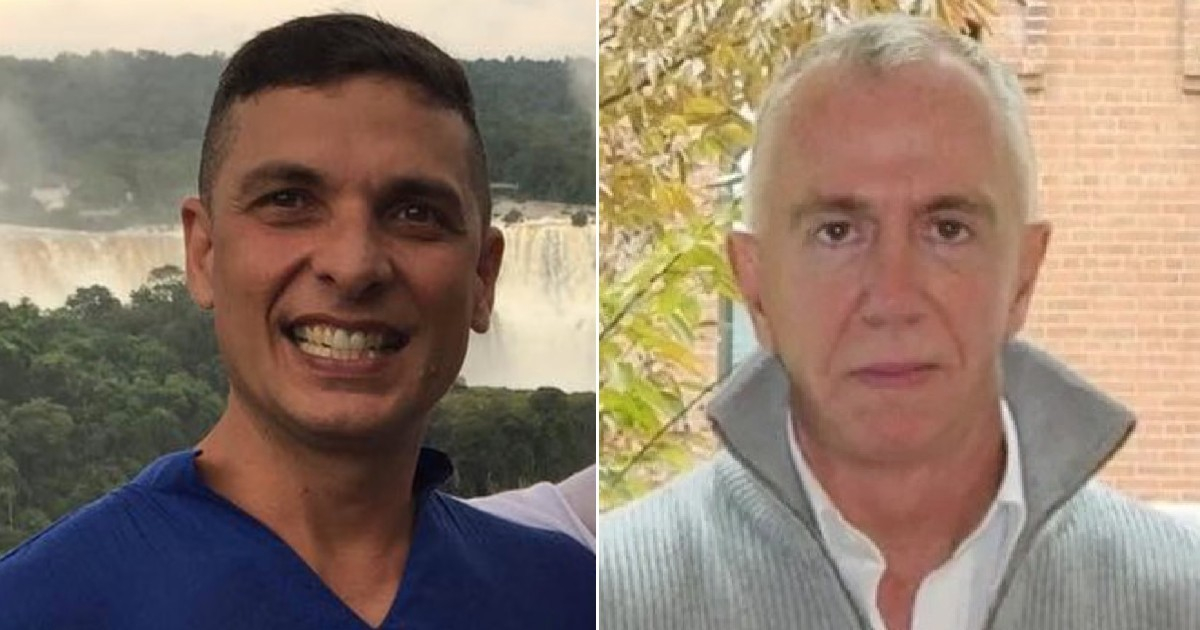
A federal judge in New York handed down a life sentence on Wednesday, November 4, to Cuban national Daniel García Carrera, also known as Daniel Sikkema, for orchestrating a murder-for-hire plot against his husband, the esteemed American art dealer Brent Sikkema, amid a contentious divorce.
Judge Edgardo Ramos of the Southern District of New York issued the sentence, as disclosed by the U.S. Department of Justice. The defendant, aged 56, was also sentenced to five years of supervised release.
García Carrera was found guilty on May 22, after a two-week trial, of murder-for-hire, conspiracy to commit that crime, and conspiracy to kill a person abroad.
The crime took place on January 14, 2024, when Alejandro Triana Prevez, a fellow Cuban and former bodyguard of the victim, broke into the art dealer's Rio de Janeiro residence and stabbed him 18 times.
Evidence presented during the trial revealed that shortly after the murder, Triana made several calls to García Carrera on a secret line they had arranged to discuss the plot.
Soon after, Daniel transferred $5,000 to Triana and promised further payments.
The investigation revealed that García Carrera began planning the murder in 2023 during a divorce and custody battle over the child he shared with Brent.
Prosecutors argued that financial motives drove the crime: the gallerist had cut García Carrera out of his will and rejected a $6 million separation settlement. Daniel believed he would receive more as a widower than through divorce.
To fund the assassination, he made 11 transfers to the hitman and an individual with whom Triana was romantically involved in Cuba, using the identities of friends, family, and employees who were unaware of the true purpose of the funds.
Investigations indicated that García Carrera had promised $200,000 for the murder, though actual payments totaled around $9,000.
During the trial, recordings were played in which García Carrera voiced his dissatisfaction with the separation process.
"It won't be over until this man is dead," he said in one recording. In another, he stated, "I'm still fighting with this old bastard who refuses to die."
Federal prosecutor Jamie McDonald described the case as a premeditated murder-for-hire driven by greed, noting that the accused spent months manipulating those around him to carry out the plan.
García Carrera, born in Esmeralda, Camagüey, in 1970, emigrated to Spain in 1998 after several failed attempts to leave Cuba, eventually settling in the United States, where he married Brent Sikkema in 2013.
His husband was a prominent figure in New York's contemporary art scene, founding a gallery in 1991 and representing artists such as Kara Walker and Vik Muniz. After his death, the gallery was renamed Sikkema Malloy Jenkins.
Meanwhile, Triana Prevez was arrested on January 18, 2024, in Brazil's state of Minas Gerais. His trial is ongoing in Brazil, with proceedings set to commence on February 25, 2027, for charges of aggravated homicide and robbery.
At the sentencing hearing, Judge Ramos acknowledged the possibility of genuine love between the couple but deemed the evidence of García Carrera's culpability in his husband's murder compelling, according to The New York Post.
Despite the conviction, García Carrera maintains his innocence and plans to appeal the verdict, as reported by The New York Post. During the trial, his defense argued that Brent Sikkema died during a robbery and denied sufficient evidence proving their client's involvement in orchestrating the murder.
FAQs about the Daniel García Carrera Case
What was the motive behind the murder-for-hire plot?
The motive was primarily financial. Brent Sikkema had excluded García Carrera from his will and rejected a $6 million separation settlement, leading García Carrera to believe he would benefit more financially as a widower than through divorce.
Who carried out the murder of Brent Sikkema?
Alejandro Triana Prevez, a former bodyguard of the victim, carried out the murder by stabbing Brent Sikkema 18 times in his Rio de Janeiro residence.
What evidence was used to convict García Carrera?
The evidence included recorded conversations where García Carrera expressed his desire for Brent's death, as well as financial transactions and communications with the hitman regarding the murder plot.