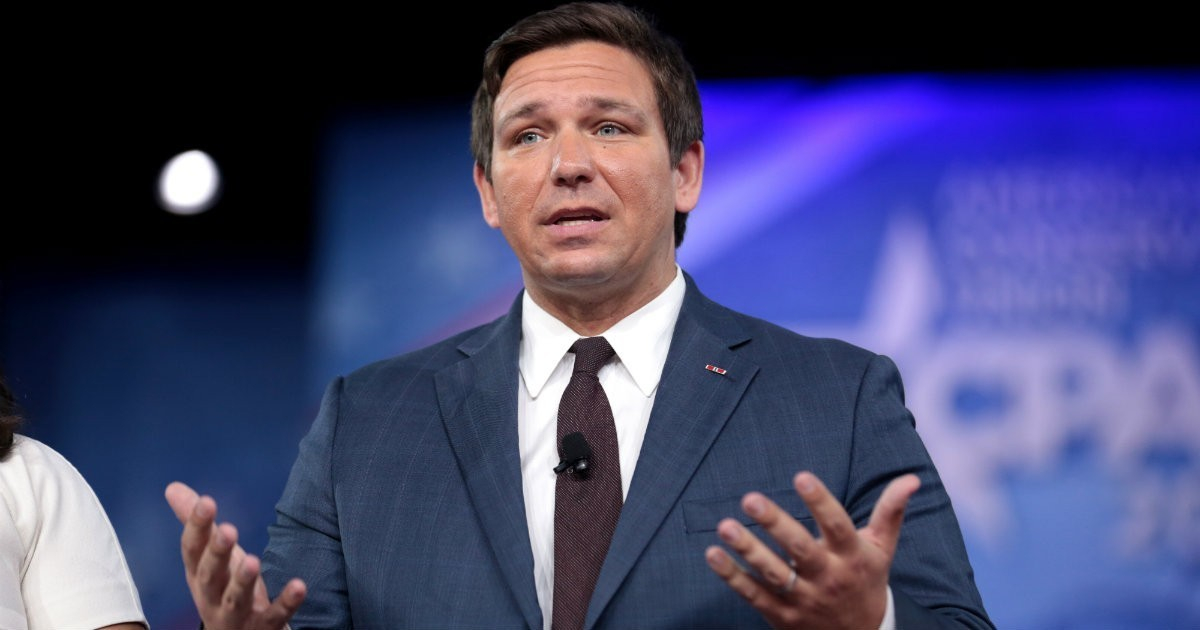
The Council on American-Islamic Relations (CAIR), a leading civil rights organization advocating for Muslim Americans, has ceased its Florida operations following its designation as a domestic terrorist group by state authorities. This controversial move was spearheaded by Republican Governor Ron DeSantis.
Florida's Attorney General, James Uthmeier, confirmed the suspension in a terse statement on X: "CAIR has officially suspended its operations in Florida."
CAIR responded with a public announcement on its official website, directly attributing the halt to DeSantis and state officials, accusing them of creating an unconstitutional environment with unprecedented new state laws targeting domestic terrorist organizations.
"We've had to suspend our Florida operations due to the baseless application of these laws by Governor DeSantis and other state officials," CAIR stated.
The organization is preparing to challenge the designation legally, with support from the American Civil Liberties Union (ACLU), the Southern Poverty Law Center (SPLC), and other attorneys, questioning the measure's constitutionality as it potentially violates the First Amendment rights of free speech and association, as well as due process guarantees.
Background on CAIR's Mission and Florida Activities
CAIR, dedicated to combating discrimination and fostering religious tolerance, also provides legal representation in civil rights cases. Its Florida chapter focused on legal aid, community education, and advocacy against discrimination, particularly benefiting the Muslim community.
Despite the accusations, the ACLU asserts that neither CAIR nor its Florida chapter faces criminal charges or convictions for terrorist activities. The organization contests the allegations set forth by Florida authorities.
Legislative Actions and Legal Battles
The conflict with DeSantis predates the new legislation. In December 2025, DeSantis issued an executive order labeling CAIR and the Muslim Brotherhood as terrorist organizations, restricting certain state-level support. A federal judge partially blocked this order in March 2026, citing constitutional concerns.
On April 6, DeSantis signed HB 1471 into law, effective July 1, establishing a state procedure for designating terrorist organizations, independent of federal classifications. This law empowers the governor and cabinet to make designations based on recommendations from the state's Homeland Security chief.
Restrictions include the use of public funds, government contracts, and support activities for designated organizations, with criminal penalties for knowingly providing material support.
In September, Florida finalized procedures to create its own terrorist organization list with mechanisms for notification, objection, and review of decisions by the governor and cabinet.
DeSantis's administration defends the law, arguing it's necessary for Florida to have its own tools to prevent public resources from aiding organizations deemed security threats.
Consequences and Ongoing Legal Efforts
On September 29, state authorities added over 90 groups to this list, including CAIR, the Muslim Brotherhood, Antifa, and criminal organizations like the Aragua Train and the Sinaloa Cartel.
The formal designation of CAIR and CAIR-Florida was set to take effect on November 5, a timeline the organization attempted to delay through legal action.
The ACLU warned that if the courts did not intervene, the organizations would be forced to close their Florida operations due to the law's expansive and severe penalties.
Ashley Gorski, an attorney with the ACLU's National Security Project, emphasized that CAIR provides free legal representation, engages in community and educational activities, and contributes to public debates on civil rights—actions protected by the U.S. Constitution.
Gorski criticized the process by which Florida approved the designation, noting that CAIR's legal representatives were denied the opportunity to speak at the governor's meeting to defend the organization, which she argues violates due process.
CAIR and CAIR-Florida sought a federal injunction to prevent the designation's implementation or at least suspend certain penalties while the case is examined. However, a federal judge denied the urgent request, allowing the state measure to stand for now, though the constitutional challenge continues.
The suspension of CAIR-Florida does not indicate the national organization's dissolution or a federal terrorist designation. The classification is solely a state-level action and remains contested in court.
Frequently Asked Questions about CAIR's Florida Suspension
What led to CAIR's suspension of operations in Florida?
CAIR suspended its Florida operations following its designation as a domestic terrorist organization by state authorities, a decision driven by Governor Ron DeSantis.
How is CAIR challenging the terrorist designation?
CAIR is contesting the designation through legal channels, with the ACLU and other organizations questioning its constitutionality concerning free speech and due process rights.
What impact does the designation have on CAIR's activities?
The designation restricts CAIR's ability to operate in Florida, potentially leading to the closure of its offices and hindering its community and legal services.