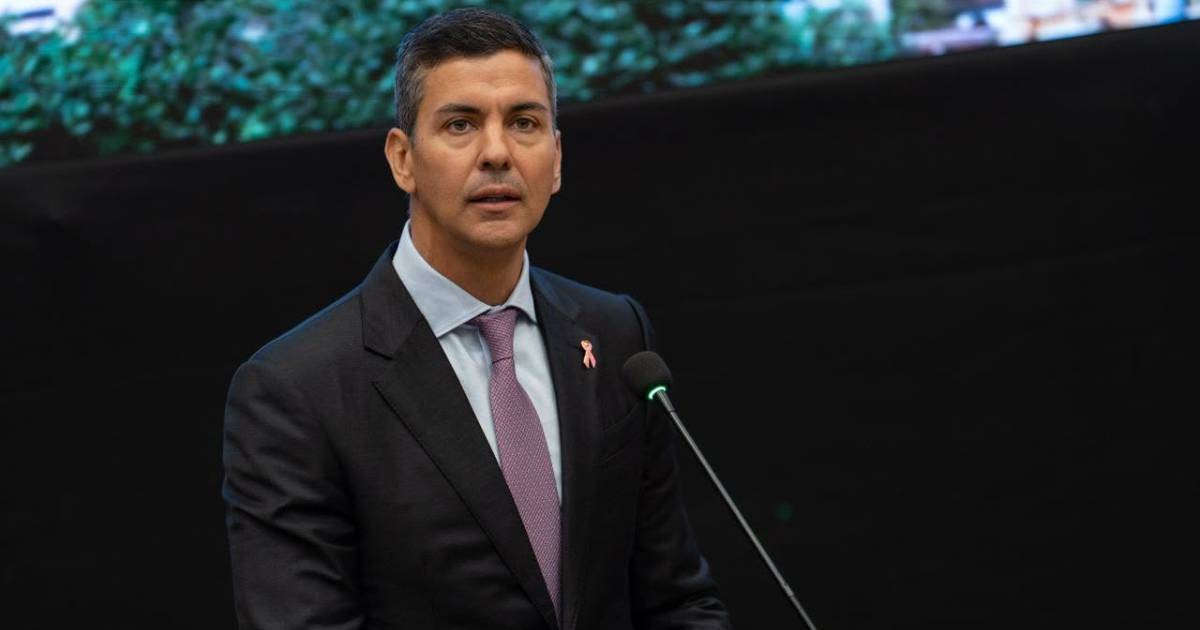
Amid a turbulent financial crisis that led to the closure of Ueno Bank, a major financial institution with approximately 2.9 million customers, Paraguay's President Santiago Peña announced his resignation on Thursday. This crisis has not only left many depositors without access to their funds but also sparked street protests and resulted in the withdrawal of political support from his own party.
The resignation of Peña, known for his close ties with former U.S. President Donald Trump, comes just over a week after his administration cast a vote at the United Nations against a resolution calling for the end of the U.S. embargo on Cuba.
According to reports from EFE, Peña made his resignation announcement through a video posted on X, coinciding with Congress deliberating the possibility of impeaching him.
"I have decided to submit my resignation from the Presidency of the Republic," the leader stated, expressing his intention to maintain the country's stability and offering apologies to the citizens.
Banking Crisis Sparks Public Outcry
The turmoil began with the intervention of Ueno Bank, which managed hundreds of millions of dollars of public institution funds, including pension funds. The Central Bank of Paraguay identified severe solvency issues and ordered the intervention, which left countless depositors unable to access their savings, igniting widespread protests.
Peña, who held shares in a group linked to the bank until 2025, faced accusations from the opposition of having conflicts of interest and favoring the bank. These allegations are subject to ongoing investigations to determine any accountability.
The scandal's scope extends to the public funds deposited in Ueno Bank. As detailed by the Associated Press, the bank managed around $850 million from state entities, including about $380 million from the Social Security Institute (IPS), responsible for managing retirement and health funds for Paraguayan workers.
Political and Judicial Repercussions
The judicial inquiry led to the arrest of eight top executives and directors of the bank, including its president, Juan Manuel Gustale, and its CEO, Miguel Vázquez. The Prosecutor's Office is examining alleged financial irregularities, such as potential breaches of trust, associated with transactions that jeopardized the institution's solvency.
The crisis also permeated the political arena, with the House of Representatives debating charges to initiate impeachment proceedings against Peña. While the Associated Press reported a unanimous vote in favor of the process, the Paraguayan newspaper ABC Color indicated that a recess was declared without a formal vote on the charges against the president.
Vice President Pedro Alliana is expected to assume the presidency to fulfill the constitutional term, which lasts until August 2028.
Diplomatic Ramifications and Shifts in International Policy
Peña's departure holds significance in the regional diplomatic context due to his alignment with Washington and his stance on the Cuban government. On March 7, he participated in the "Shield of the Americas" summit in Miami, hosted by Donald Trump, aimed at bolstering regional security cooperation.
Moreover, on September 23, Peña publicly called for a "democratic transition" for Cuba, Venezuela, and Nicaragua during a Martí Noticias interview on the sidelines of the United Nations General Assembly.
The former president advocated for Paraguay's active role in facilitating political change in the region, stating that the democratic transition desired for Venezuela was "the same as we want for Cuba."
Most recently, on October 28, Paraguay voted against the United Nations resolution urging the lifting of the U.S. embargo on Cuba for a second consecutive year, aligning with Washington's stance. The resolution was supported by 130 countries, with 17 opposing and 25 abstaining.
Key Questions on Paraguay's Political Crisis
What led to Santiago Peña's resignation as President of Paraguay?
Santiago Peña resigned due to a financial crisis involving Ueno Bank, which left millions of depositors without access to their funds, sparking protests and withdrawing political support from his party.
How is Donald Trump connected to Santiago Peña's presidency?
Santiago Peña was considered an ally of Donald Trump, reflecting close ties through his participation in regional security summits and aligning with U.S. foreign policy on issues like the Cuban embargo.
What were the implications of the Ueno Bank crisis?
The Ueno Bank crisis led to a loss of access to deposits for millions, prompted investigations into financial misconduct, and triggered political instability, including calls for impeachment.