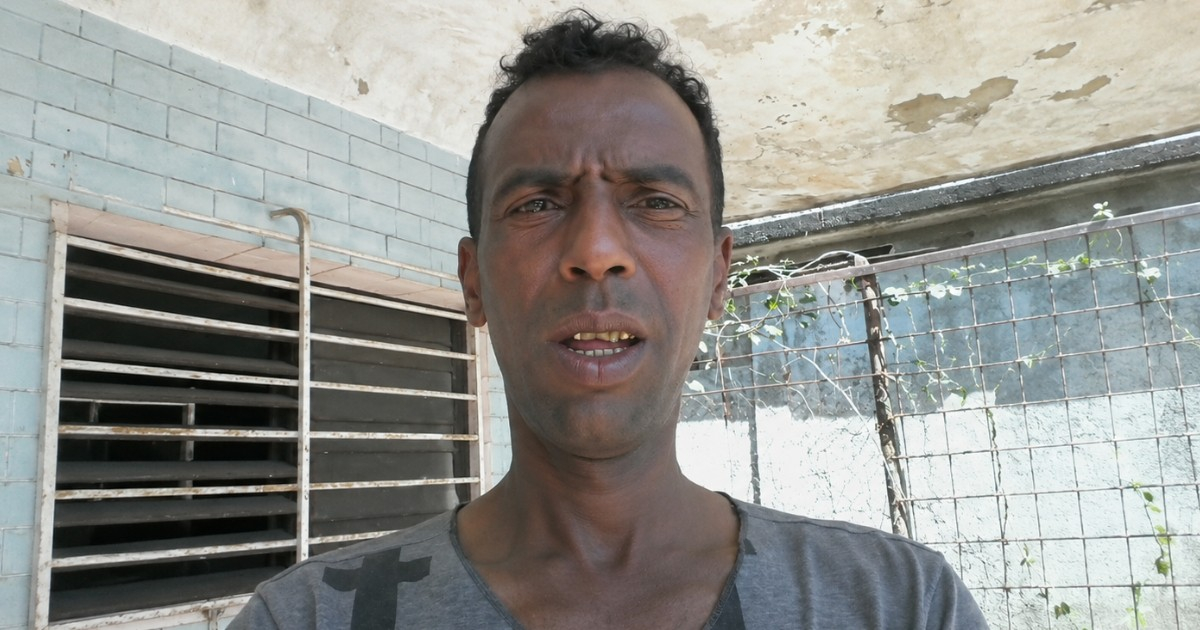
Gonzales Angel, a Cuban resident, took to Facebook this week to share the physical and psychological toll he suffers from receiving electricity solely during the early hours of the morning. This is part of the Cuban regime's rotating power outage schemes.
"I have no idea whose idea this was or what psychology manual it came from, but having power only at night is affecting me neurologically. When my brain senses the electricity is on, I can't sleep. Knowing there's light keeps me awake," Gonzales Angel expressed in his post.
Beyond insomnia, he highlights another direct result of these prolonged power cuts: the challenge of preserving food.
"What's really killing me is having to buy food daily because you never know when there will be three or four consecutive days of outages. I've lost food more than once. It turns me into a slave to food. Everything I earn goes to food and charcoal," he lamented.
On Wednesday, Havana experienced 157 circuits affected and 389 MW of interrupted load by 9:13 PM, with some circuits facing over 52 continuous hours without power.
By Thursday, national electricity availability hovered around 1,000 MW, compared to a demand of 2,350 MW, with a peak hour forecast of a maximum 1,770 MW shortage, according to the national electrical system's daily report.
The nighttime power supply pattern has been observed across all provinces throughout 2026. In August, blackouts exceeded twenty daily hours, leading people to sleep on Havana's Malecón during what was described as a collective insomnia episode.
A study published in 2026, involving 415 Cuban adults and cited by the journal Social Science & Medicine, reported extremely severe depression in 55.4% of participants, severe anxiety in 66%, and extreme stress in 65.8%. The study identified the impact of blackouts on sleep and nutrition as the strongest predictor of these symptoms, surpassing any sociodemographic variable.
The testimony further underscores the failure of the regime's economic promises. Gonzales Angel recalled that at the end of 2025, the government announced measures to boost the economy, including the Central Bank of Cuba's floating exchange rate, which was supposed to lower the dollar price and, consequently, food costs.
"What I see is that everything, especially food, costs more than double, some even triple, from one year to the next, and the dollar is close to costing a thousand pesos," he wrote.
His observation is backed by data. The floating rate started at 410 Cuban pesos per dollar in December 2025; by Wednesday, the informal dollar rate was around 915 pesos, more than doubling in less than a year. Official food inflation surpassed 42% year-on-year in September 2026, while in informal markets, rice costs between 330 and 400 pesos per pound, chicken up to 920 pesos per pound, and four oranges reached 10,000 pesos this Thursday.
Gonzales Angel concluded his post with a sentiment that encapsulates the mood of those enduring this triple crisis of electricity, food, and economy: "Anyone who survives this will go crazy."
Understanding the Impact of Cuban Power Outages
What are the psychological effects of nighttime electricity supply?
Receiving electricity only at night can lead to insomnia and neurological issues, as people struggle to sleep when the power comes on. This can contribute to severe anxiety, depression, and stress.
How do power outages impact food preservation in Cuba?
Frequent and prolonged power outages make it difficult to store food, forcing residents to purchase groceries daily. This can result in food spoilage and increased financial strain.
What economic promises has the Cuban regime failed to fulfill?
The regime promised to boost the economy with measures like a floating exchange rate to reduce the dollar's price. However, food prices have more than doubled, and the dollar's value has drastically increased, failing to meet these promises.