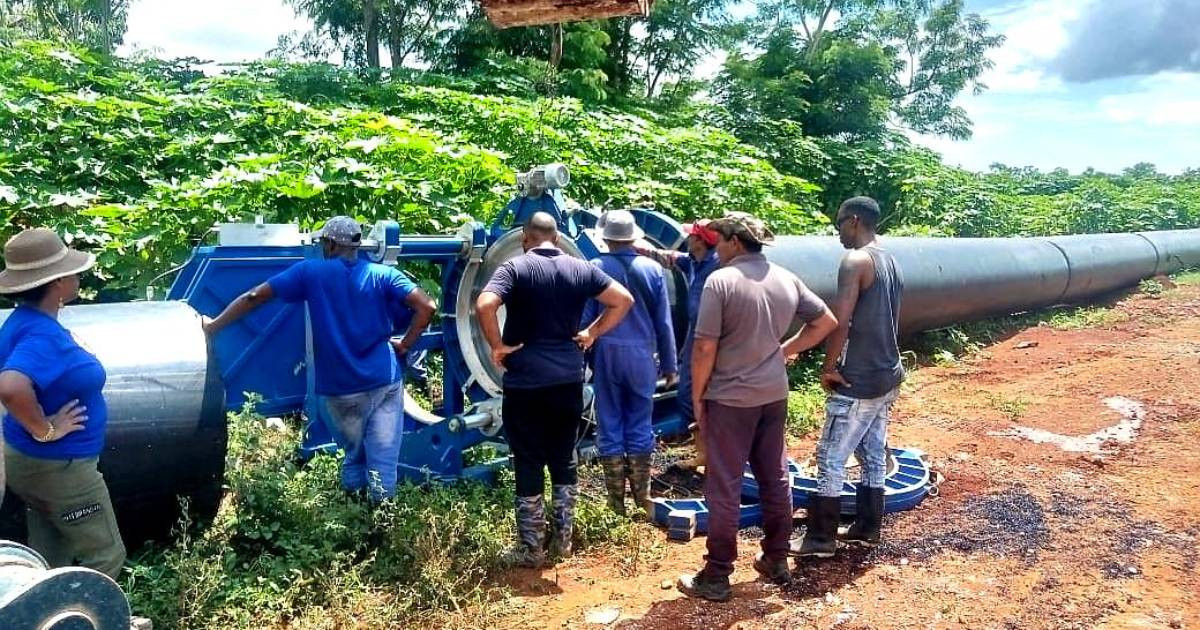
The ongoing water crisis in Havana extends beyond the usual culprits of power outages, equipment breakdowns, and deteriorating infrastructure. Cuban authorities have acknowledged that illegal tampering with water valves is disrupting the distribution system, adversely affecting entire communities.
On the radio show "Shared Criteria," broadcasted on Wednesday, November 4, Yosvany Rubí Bazail, the director of Aguas de La Habana, announced that legal actions are underway against two individuals for irregularities discovered in Arroyo Naranjo.
"In the case of Arroyo Naranjo, we are already prosecuting two individuals for the unauthorized operation of valves," Rubí stated in the presence of Miguel Díaz-Canel.
Impact of Unauthorized Valve Manipulation
Rubí emphasized the critical role these valves play in water distribution: "A valve essentially acts as a local pumping station, because opening it supplies water to an entire sector."
He warned that unauthorized interference can disrupt scheduled water supply cycles, affecting many consumers. However, he did not disclose the identities of those involved or clarify whether they face administrative or criminal proceedings.
Corruption Allegations in Water Distribution
During the program, journalist Bárbara Betancourt suggested that public complaints about valve manipulation might indicate underlying corruption practices.
"When we talk about valve manipulation, it seems like a euphemism because many people know that something is happening behind these actions," she remarked, highlighting discrepancies in water supply between nearby buildings and communities.
Díaz-Canel acknowledged that Cuba's water crisis is severe, stemming from "structural issues, decades-old networks, and insufficient investments and maintenance." He also pointed out that the U.S. embargo and the energy crisis worsen the situation.
He mentioned a report from residents in La Coronela, who accused officials of redirecting water to other areas through unauthorized valve operations.
Institutional Management Issues
The president admitted that water supply issues also stem from institutional management problems, in addition to material limitations. In Mantilla, a resident reported facing water shortages for more than six months without any response from authorities.
Díaz-Canel revealed that the investigation identified two problematic valves: one was fully closed, and another had been tampered with by locals. A technical solution could have resolved one of the issues within hours.
"Imagine the cost of silence, what could have been fixed in hours takes much longer due to institutional silence," he criticized.
Rubí also shared that Havana has over 3,000 valves, and monitoring them requires community cooperation to identify unauthorized actions.
Current Water Crisis Statistics
This revelation comes amid a severe water supply crisis. According to official data presented during the program, as of November 3, approximately 2,681,770 residents were affected by supply issues, including 536,000 in Havana alone.
Antonio Rodríguez, the president of the National Institute of Water Resources, attributed 66% of these issues to electrical problems and 25% to equipment failures. These challenges are now compounded by recognized irregularities from within the water management system itself.
Incidents of illegal connections and bribery have been documented across various provinces. Sector employees have reportedly charged up to 50,000 Cuban pesos for illicit connections and between 10,000 and 15,000 pesos for diverted water deliveries.
Understanding the Water Crisis in Havana
What are the main causes of the water crisis in Havana?
The water crisis in Havana is mainly due to power outages, equipment breakdowns, and deteriorating infrastructure. Additionally, illegal manipulation of water valves and corruption contribute significantly to the problem.
How are authorities addressing illegal valve manipulation?
Authorities have initiated legal proceedings against individuals involved in unauthorized valve tampering. They also emphasize the importance of community cooperation in monitoring over 3,000 valves in Havana.
What role does corruption play in the water supply issues?
Corruption is suspected to be a factor behind discrepancies in water distribution, with reports of bribery and illegal connections affecting supply in certain areas.
What solutions are being suggested to address the crisis?
Solutions include addressing structural issues, enhancing investments in infrastructure, and improving institutional management. Community engagement is also crucial for detecting and preventing unauthorized valve operations.