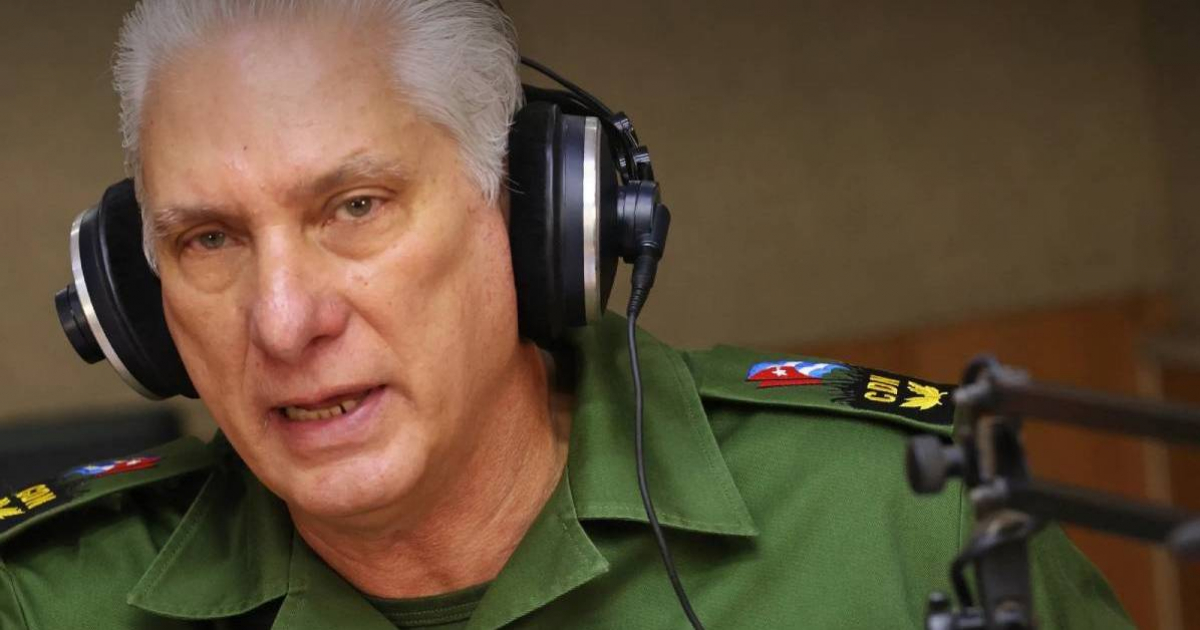
On Wednesday, Cuban leader Miguel Díaz-Canel openly acknowledged that the nation is facing a significant water crisis, impacting millions of citizens who experience disruptions in their water supply. He emphasized that this issue won't be resolved quickly.
During the radio show Shared Criteria, Díaz-Canel described the water crisis as "real, severe, and complex," stressing that a solution will require substantial investment and a long-term commitment. He stated, "This problem cannot be solved with mere speeches or singular actions."
He attributed the crisis to structural issues, including outdated infrastructure and insufficient maintenance over the decades. The Cuban leader pointed to two main aggravating factors: the U.S. embargo and the ongoing energy crisis. Additionally, he criticized local authorities for their "negligence and lack of coordination" in certain areas.
Antonio Rodríguez Rodríguez, head of the National Institute of Hydraulic Resources (INRH), reported that as of Tuesday, November 3, 2,681,770 people were experiencing water supply interruptions nationwide.
Rodríguez highlighted that the primary cause of these disruptions is power outages, which account for 66% of the issues, while equipment failures contribute to another 25%. Together, these factors make up 91% of the reported problems.
The capital city, Havana, faces the greatest impact, with approximately 536,000 residents lacking consistent water access. Other affected regions include Santiago de Cuba, Holguín, Matanzas, Artemisa, and Pinar del Río, each with around 200,000 individuals affected.
In many areas, Cuban families go weeks or even months without receiving water through domestic pipelines, forcing them to rely on costly private water trucks. In Pinar del Río, a single truck delivery can exceed 15,000 pesos—nearly five times the minimum monthly wage—while in Havana, prices range from 18,000 to 50,000 pesos.
As early as May 2026, the INRH had acknowledged that 2.7 million people were affected, and the UN's Office for the Coordination of Humanitarian Affairs estimated in September that the actual number could reach 3.5 million.
Between 2022 and 2024, the Cuban government allocated roughly 95,801 million pesos to tourism compared to just 5,934 million for water supply programs.
The INRH has announced that 853 pumping units are now operational as part of an energy transition plan, with ten solar parks generating 200 megawatts designated for Havana's three main water sources, anticipated for completion by August 2027. However, authorities did not specify when these measures would significantly reduce water shortages.
In response to the crisis, Cubans abroad have launched a solidarity campaign, "Safe Water for Cuba," organized by the Humanitarian Aid Network. This initiative aims to send water purification tablets, filters, and ozonizers to the Zamora neighborhood in Marianao, where residents have resorted to collecting rainwater for drinking and cooking for over six months.
Understanding Cuba's Water Crisis
What are the main causes of Cuba's water crisis?
The primary causes include outdated infrastructure, lack of maintenance, the U.S. embargo, and the energy crisis, leading to power outages that affect water pumping stations.
How many people are affected by the water crisis in Cuba?
As of November 3, approximately 2.7 million people are affected by interruptions in the water supply across Cuba.
What measures are being taken to address the water crisis in Cuba?
The Cuban government has initiated an energy transition plan with 853 pumping units and solar parks, but a significant reduction in water shortages is not expected until at least 2027.