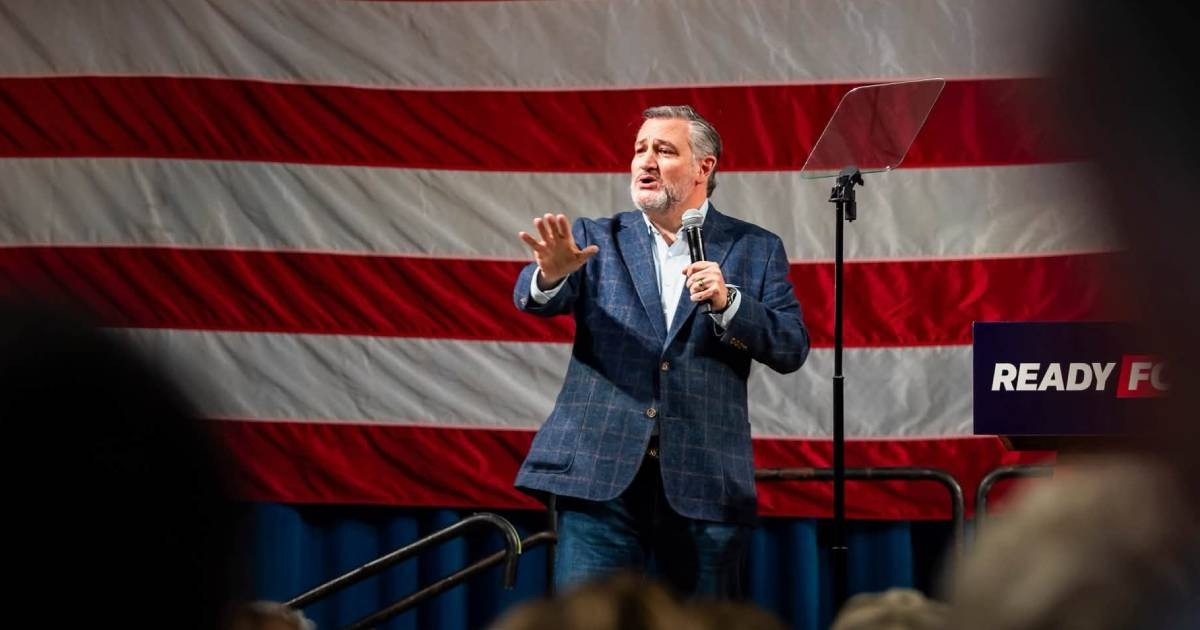
Republican Senator Ted Cruz described his party's defeat in the U.S. midterm elections as a "drubbing," acknowledging the decline in Hispanic support for Republicans in Texas and questioning the tariffs and economic policies of the Donald Trump administration.
"2026 wasn't just a blue wave; it was a blue tsunami. It was a drubbing," Cruz stated in a detailed analysis shared on social media following Tuesday's elections.
The Texas lawmaker compared the results to a historically significant defeat, noting the Republicans lost control of the House of Representatives, the Senate, and several key state governments.
"We've lost the House. We've lost the Senate," he declared.
These comments follow the Democrats regaining the House of Representatives and achieving significant victories in traditionally Republican states.
Texas Turns Blue: A Stark Reality for Republicans
According to Cruz, one of the most challenging setbacks occurred in Texas, a state that had consistently maintained a strong Republican hold in state elections for more than three decades.
"Texas is blue. That's a tough sentence to say. But Texas, at least today, is blue," he lamented.
The election results confirmed James Talarico's victory over Republican Ken Paxton in the Senate race and Gina Hinojosa's win against Governor Greg Abbott.
Hispanic Vote Slips Away from Republicans
Cruz recognized the need to regain support from key demographics, including workers, young people, rural residents, and Hispanic voters.
"In 2024, just two years ago, I was proud to carry Hispanics at the state level in Texas by six points," he recalled.
However, he admitted that in this week's elections, these voters "overwhelmingly returned to the Democratic Party."
The data supports his observation. An Associated Press survey indicated that approximately six in ten Hispanic voters in Texas supported Democrat James Talarico in the Senate race, while only three in ten backed Republican Ken Paxton. In 2024, this electorate was much more evenly divided between Donald Trump and Kamala Harris.
Economic Concerns and Political Priorities
Cruz argued that his party must reassess its priorities and focus more on the economic concerns of Americans.
"Food is too expensive, gas is too expensive, diesel is too expensive, insurance is too expensive, life is too expensive," he asserted.
His assessment aligns with an NBC News exit poll, which reported that 79% of voters mentioned inflation as affecting their family economy, and 65% believed tariffs were harming the country.
The senator also directly criticized some of Trump's economic and foreign policy decisions.
"Tariffs have made everything too expensive, and the Iran war has dragged on too long," Cruz stated.
He believes too many Republican politicians failed to grasp the economic realities facing families, despite highlighting positive financial market indicators.
Cruz cautioned that the party needs to rebuild its relationship with the voters it lost and focus on policies that can improve workers' living conditions.
Despite his criticisms, he pledged to continue championing conservative positions and anticipated confrontations with the new Democratic majorities in Congress.
The lawmaker also mentioned reaching out to James Talarico to congratulate him on his Texas victory and expressed his willingness to collaborate on matters beneficial to the state.
"We'll bring Texas back," he promised, confident that Republicans can regain electoral ground.
Understanding the Republican Election Loss
What was Ted Cruz's reaction to the election results?
Ted Cruz described the election results as a "drubbing" and acknowledged the significant challenges faced by Republicans, including losing control of both the House and Senate.
How did the Hispanic vote impact the election results?
The Hispanic vote significantly impacted the election results, with a majority of Hispanic voters in Texas supporting Democrats, which was a shift from previous elections where Republicans had more Hispanic backing.
What economic concerns did Ted Cruz highlight?
Ted Cruz pointed out that the cost of living, including food, gas, diesel, and insurance, has become too expensive, and criticized tariffs for exacerbating these issues.