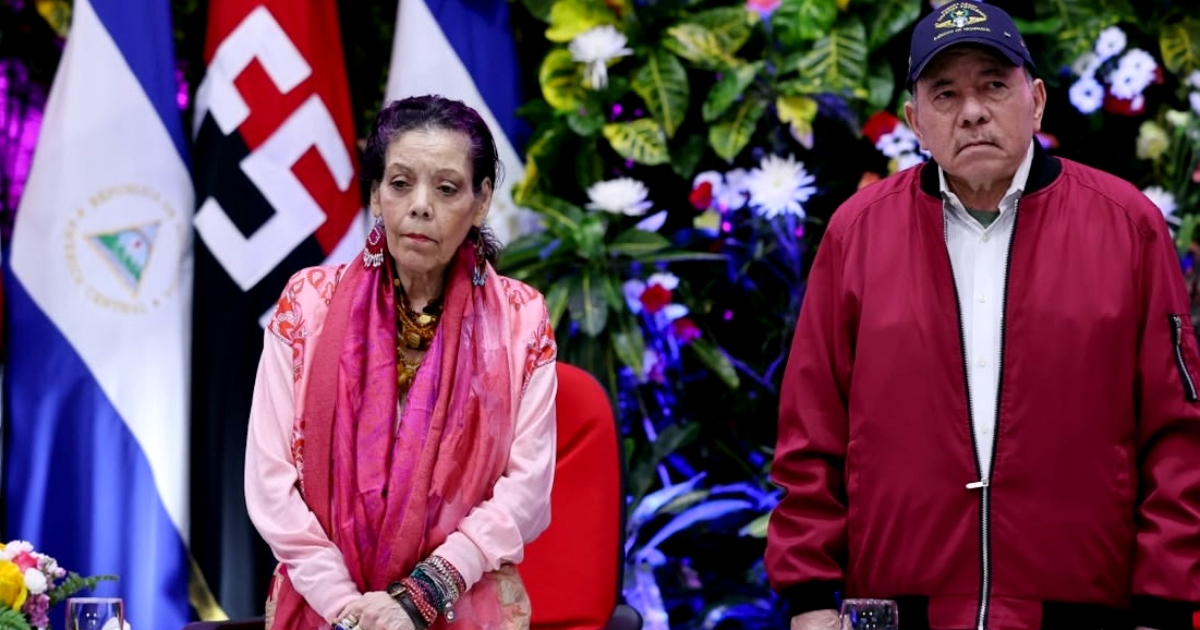
The regime led by Daniel Ortega and Rosario Murillo has, for the first time since 2020, omitted Cuba and Venezuela from the list of countries authorized to send foreign military troops, vessels, and aircraft to Nicaragua in the first half of 2027. This decision was revealed in presidential decree 13-2026, as reported by Confidencial, an independent Nicaraguan media outlet operating in exile.
Issued on October 29 in La Gaceta of Nicaragua, the decree continues to allow military cooperation with Russia, China, the United States, Mexico, and four Central American nations—Guatemala, El Salvador, Honduras, and the Dominican Republic—while notably excluding Havana and Caracas from the roster of permitted states.
This decision not only halts the entry of Cuban and Venezuelan military personnel into Nicaragua but also stops the dispatch of Nicaraguan troops to these countries, a biannual exchange that had been ongoing since 2020.
The decree does not provide any rationale for excluding these two historically allied nations of the Ortega regime.
Reasons Behind the Exclusion
A security expert, speaking anonymously to Confidencial, suggested that the change is due to "special internal conditions" in both nations. "It's not a voluntary decision by the governments of Cuba or Venezuela. Both countries are dealing with unique internal issues. Economically, Cuba is in dire straits," the analyst commented.
Regarding Venezuela, the expert dismissed any notion of a formal split: "This isn't about a rupture; there must be internal elements in Venezuela preventing troops from being sent to Nicaragua." This was linked to the political climate following the capture of Nicolás Maduro by U.S. forces on January 3, 2026.
Historical Military Exchanges
Between 2020 and 2026, presidential decrees show Cuba sent 700 military personnel to Nicaragua, with 50 troops per semester assigned to humanitarian tasks. Venezuela, on the other hand, dispatched at least 2,190 troops over the same period.
The analyst also warned that Cuba might need to redirect its security forces to address potential domestic unrest. "If conditions in Cuba remain unchanged, widespread unrest could erupt. They need as many military and Interior Ministry forces as possible to prepare for potential widespread agitation or direct U.S. intervention," the expert noted.
Strengthening Ties with Russia
While ties with Havana and Caracas weaken, Russia's role as a key military ally to Managua strengthens. Between 2020 and the first half of 2027, decrees have authorized the presence of at least 2,280 Russian troops, with decree 13-2026 maintaining a 180-troop contingent for the first six months of the next year.
The expert highlighted that Russian forces are involved in training Nicaragua's Special Operations Command at the Xiloá base, a mission that extends beyond the humanitarian aid mentioned in official documents.
Adding to Nicaragua's distancing from Cuba was the February 2026 withdrawal of visa-free entry for Cuban citizens, replaced by a requirement for a consulted visa after years of unrestricted access.
Nicaragua's distancing isn't the only sign of Cuba's growing isolation among regional partners. On November 3, Belize announced the termination of a state medical cooperation agreement with Cuba, in effect since 1990, though it did offer individual contracts to about 92 Cuban healthcare professionals involved in the mission.
No official statements have been made by any of the governments involved regarding the exclusion of Cuba and Venezuela from decree 13-2026, further cementing the pattern of distancing without any party declaring a formal break.
Understanding Nicaragua's Military Alliances
Why were Cuba and Venezuela excluded from Nicaragua's military authorization decree?
The decision appears to be influenced by internal conditions in both Cuba and Venezuela, rather than a voluntary political decision. Economic hardships in Cuba and internal issues in Venezuela are key factors.
What implications does this have for Cuba's international relations?
The exclusion signifies a growing isolation for Cuba among regional partners, as seen in Nicaragua's distancing and Belize's termination of a longstanding medical cooperation agreement.
How has Russia's military involvement in Nicaragua evolved?
Russia has solidified its role as a primary military ally in Nicaragua, with ongoing troop deployments and training operations at the Xiloá base, indicative of a deepening military partnership.