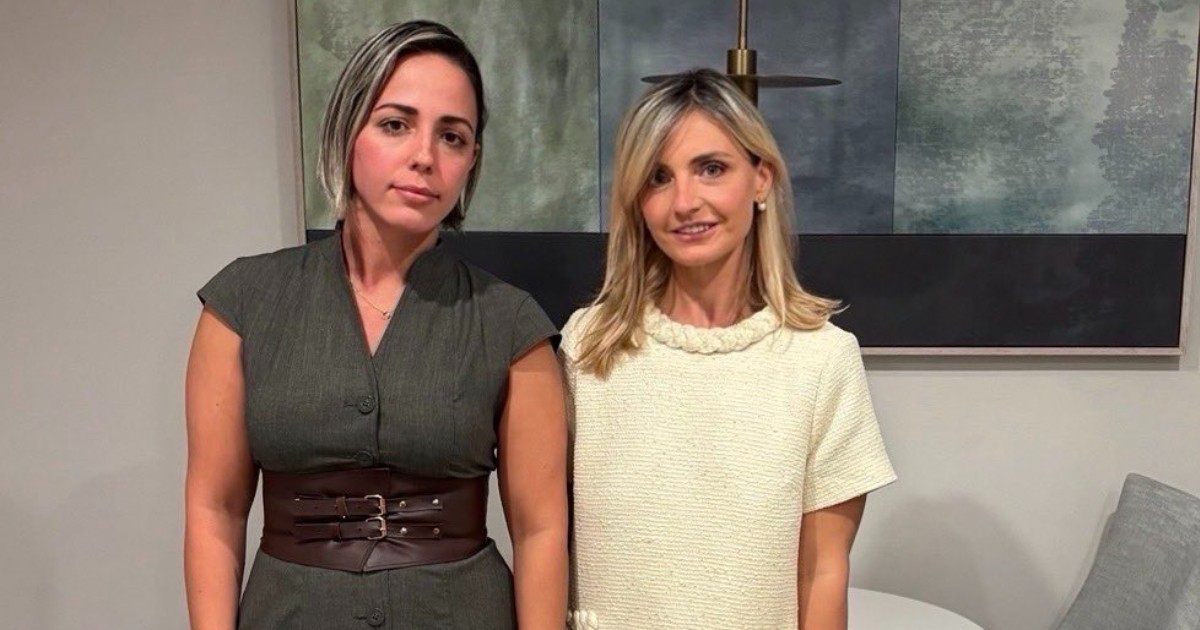
Sarah B. Rogers, the U.S. Under Secretary of State for Public Diplomacy and Public Affairs, highlighted the harrowing case of Johanna, a Cuban sent abroad under the regime's medical brigades who weighed just 80 pounds when she was "rescued."
Rogers, a lawyer and senior official in the Trump administration, shared Johanna's story on her official X account, featuring a photograph of herself with Johanna, confirming their personal meeting.
According to Rogers, Johanna received only ten months of medical training before the Cuban regime labeled her a "doctor" and dispatched her overseas as part of its mission program. Rogers described this program as "a mechanism for forced labor, fund-raising, and propaganda for the Cuban regime."
Johanna's family never saw the promised salary from Havana, and after Johanna's escape, they faced direct threats from the Cuban government.
"After just ten months of medical training, Johanna was called a doctor by Cuba and then trafficked abroad as part of their 'medical brigades.' Her family never received the promised salary, but they did receive threats from the government after she escaped. When she was rescued, she weighed 80 pounds," Rogers stated.
Rogers also inquired about Johanna's perception of the United States before fleeing, considering she grew up in a media environment saturated with propaganda. Johanna's reply was clear: she always knew America was "the only hope."
"For many who grow up under totalitarian rule, the United States remains a standout beacon of freedom. There simply is no other place to turn," Rogers reflected in her post.
This case is part of a sustained campaign by the Trump administration against Cuba's worker export program. In July 2026, Washington sanctioned the Minister of Public Health, José Ángel Portal Miranda, along with the director of the Central Unit for Medical Cooperation and the entities managing the program.
International pressure has had an impact: according to the 2026 Trafficking in Persons Report by the State Department, the number of Cuban workers on foreign missions dropped from approximately 24,000 at the start of 2025 to between 15,000 and 18,000 during 2026, a decrease of 6,000 to 9,000 individuals. Four countries ended their bilateral agreements with Cuba in 2025, and Cuban missions have lost thousands of workers this year.
The regime retains between 50% and 95% of the salaries paid by host countries to its workers, while they receive much lower stipends. The State Department estimates that the export of Cuban professional services generates between $6 billion and $8 billion annually, with healthcare professionals making up 75% of this workforce.
In a move reflecting a shift in international stance, Uruguay has begun paying Cuban doctors directly at the José Martí Eye Hospital in Montevideo, bypassing the Cuban brigade's financial structure.
Johanna's severe malnutrition upon being taken in by the U.S. and the threats endured by her family align with a documented pattern in numerous testimonies. A report based on over 1,100 statements indicated that nearly 90% of participants claimed they were forced into the mission or did so under coercive circumstances.
FAQs on Cuban Medical Missions and Forced Labor
What is the Cuban medical mission program?
The Cuban medical mission program involves sending Cuban healthcare professionals abroad as part of brigades, allegedly for humanitarian aid, but is criticized as a form of forced labor and revenue generation for the Cuban regime.
How does the Cuban regime benefit from these missions?
The Cuban regime retains a significant portion of the salaries paid by host countries to the healthcare professionals, which generates substantial revenue for the government.
What actions has the U.S. taken against the Cuban medical missions?
The U.S. has imposed sanctions on Cuban officials and entities involved in the medical missions program as part of a campaign to pressure the Cuban government to end these practices.