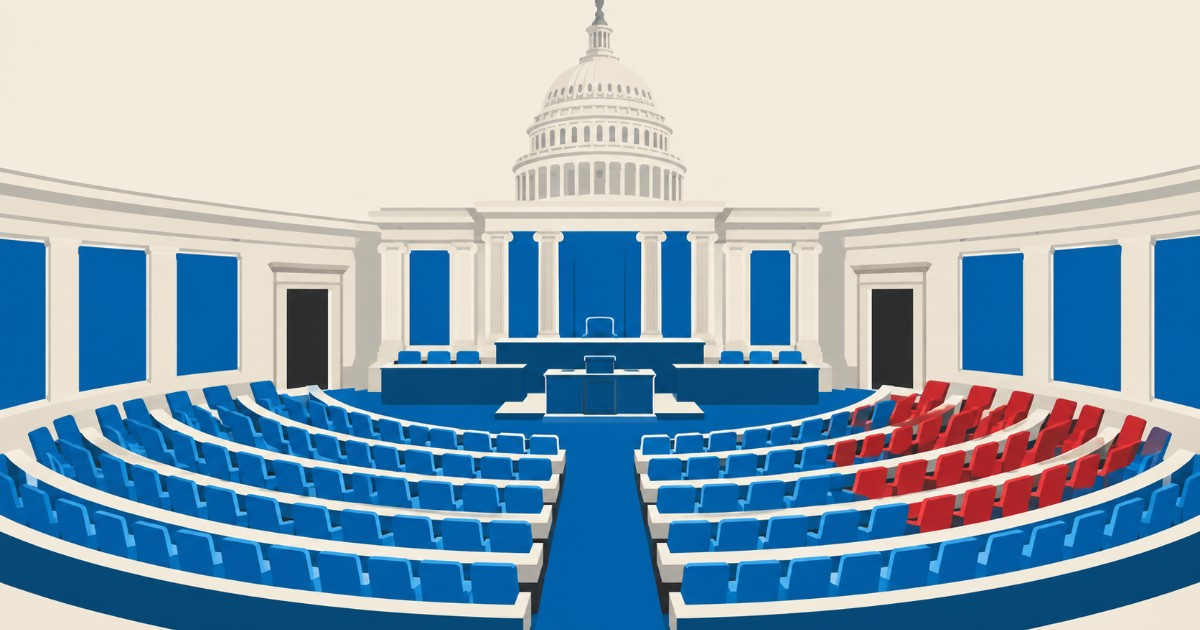
The Democratic Party successfully wrested control of the U.S. Senate from the Republicans in the midterm elections held on Tuesday, November 3, according to projections reported by CBS News during the election night. Victories in traditionally conservative states like Texas, Kansas, and South Carolina, along with wins in North Carolina and Ohio, shifted the balance in a chamber that was previously dominated by the Republican Party.
Election night also saw a projected Democratic win in Iowa, marking a significant political setback for President Donald Trump, who had personally campaigned for several losing Republican candidates. As of the close of this report, vote counting continued in other races, with results pending certification by election officials.
Historic Victories Transform the Senate
Republicans entered the election with a majority of 53 seats compared to the 47 seats held by the Democratic bloc, which includes two allied independents. Thus, the opposition required a net gain of four seats to reach the 51 needed to control the Senate without relying on Vice President JD Vance's tie-breaking vote.
The most symbolic victory took place in Texas, where state legislator James Talarico defeated Republican Attorney General Ken Paxton, who had Trump's backing. This marked the first time since 1988 that a Democrat won a federal Senate seat in Texas. The outcome, first reported by Associated Press and CiberCuba, delivered a substantial blow to the Republican establishment.
In South Carolina, pediatrician Annie Andrews triumphed over Republican Senator Darline Graham, the sister of the late Lindsey Graham, whom she had succeeded by appointment. Trump personally endorsed the Republican candidate. South Carolina had not elected a Democrat to the Senate since 1998, according to Associated Press.
Unexpected Wins in Kansas and Beyond
Another extraordinary result emerged from Kansas: Methodist Pastor Adam Hamilton defeated Republican Senator Roger Marshall, as projected by AP and CBS News. Kansas had not elected a Democratic senator since 1932, 94 years ago. Hamilton's campaign focused on living costs and presented him as a moderate alternative in a state where Trump had won decisively in 2024.
In North Carolina, former Democratic Governor Roy Cooper prevailed over Michael Whatley, former chairman of the Republican National Committee and a Trump-endorsed candidate. This victory secured a seat vacated by Republican Senator Thom Tillis, according to Reuters projections.
In Ohio, former Democratic Senator Sherrod Brown defeated Republican Jon Husted, reclaiming a seat in the Senate after losing reelection in 2024. Husted had filled the seat left by JD Vance upon assuming the vice presidency.
Adding to these five victories was Iowa, where Democratic State Representative Josh Turek defeated Republican Congresswoman Ashley Hinson, as projected by CBS News at 11:32 p.m. Eastern Time. Turek, a former Paralympic athlete, won a race initially considered favorable to Republicans. Iowa had not elected a Democratic senator since 2008.
Factors Contributing to Republican Losses
The Democratic bloc also managed to defend two significant seats: Jon Ossoff was reelected in Georgia against Republican Mike Collins, and Chris Pappas won in New Hampshire. Not all races were settled: Michigan remained a contested battleground, with votes still being counted in other states. The majority projected by CBS News is an electoral projection, not the official certification of results.
Economic concerns took center stage in the voter backlash. An Associated Press national voter survey found that approximately two-thirds of participants believed Trump's policies had worsened the country's economic conditions. A similar proportion felt that tariffs had negatively impacted the national economy or their communities.
The rising cost of gasoline and other goods, the repercussions of the war with Iran, and dissatisfaction with government operations became crucial issues for many voters. Democrats capitalized on this discontent, while Republican candidates struggled to defend White House policies without fully associating themselves with its less popular aspects.
Trump Acknowledges Democratic Gains
In light of the significant defeats, Trump expressed his willingness to accept the results and collaborate with the opposition. In an interview with The New York Times, also reported by AP, he stated, "I am absolutely willing to accept those results." He added that he looked forward to working with Democrats to reach agreements.
Later, in a phone interview with CBS News, Trump congratulated the victors, though he attributed his party's losses to his absence from the ballots. This explanation contrasted with his campaign strategy, during which he repeatedly urged voters to cast ballots as if he were a candidate. CiberCuba previously reported his assertion that Republicans would have swept the elections had he been on the ticket.
Implications for Washington and Developments in Florida
The new Democratic majority will begin exercising control of the Senate when the next Congress convenes in January 2027. They will have the authority to lead committees, hold hearings, initiate investigations, and exert greater influence over Trump's appointments and legislative priorities. However, a simple majority does not eliminate Senate procedural rules or the president's veto power, so it does not guarantee automatic passage of laws.
In the House of Representatives, projections also indicated a Democratic victory, as previously reported by CiberCuba. The final distribution of the 435 seats remained subject to the scrutiny of competitive districts.
Florida stood out as a notable exception to the Democratic wave. Republican Ashley Moody managed to retain the Senate seat previously held by Marco Rubio before he became Secretary of State, while fellow Republican Byron Donalds won the governorship. Florida's contests and those of Cuban-American candidates continue to hold particular significance for Miami and the southern part of the state.
Readers can follow state results, races in Florida, and updates on the vote count in CiberCuba's special coverage of the 2026 U.S. elections.
Understanding the 2026 U.S. Senate Elections
What led to the Democratic takeover of the Senate?
Key victories in traditionally Republican strongholds like Texas, Kansas, and South Carolina, along with wins in North Carolina and Ohio, contributed to the Democratic Party's ability to secure control of the Senate.
How did economic concerns influence the 2026 midterm elections?
Economic concerns, such as rising costs and dissatisfaction with government policies, were central to voter discontent. Many believed that Trump's policies had negatively impacted the economy, influencing the election outcome.
What impact will the new Democratic majority have on U.S. politics?
The Democratic majority will allow them to lead Senate committees, hold hearings, and influence legislative priorities, though they will still face procedural rules and the president's veto power.