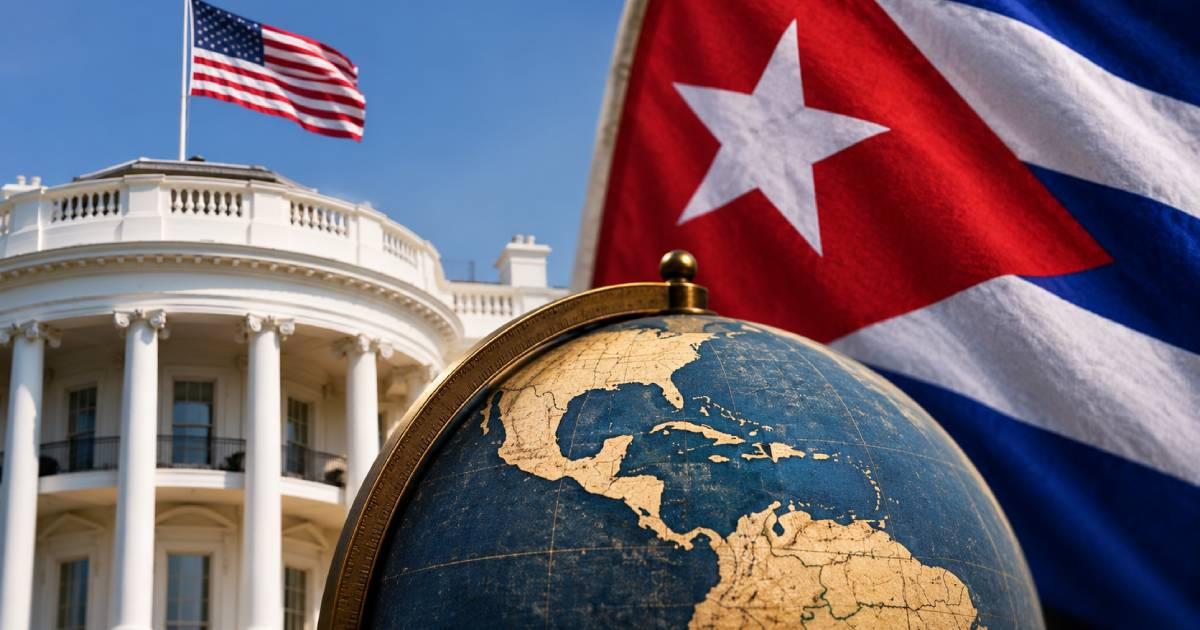
On Tuesday, the U.S. State Department shared a report from the New York Post regarding the so-called Donroe Doctrine—President Donald Trump's strategy to bolster American influence in Latin America. A senior administration official emphasized that Washington remains committed to focusing on Cuba following the operation that led to the capture of Nicolás Maduro in Venezuela.
"We are actively addressing the situation in Cuba. We have maintained full momentum throughout the Western Hemisphere," the unnamed official told the American newspaper.
The State Department also posted the report on its official X account, underscoring the strategic priorities of the U.S. administration in the region.
The message stated, "Trump and Secretary of State Marco Rubio have prioritized up to 20 countries in the Americas to counter threats, secure supply chains, and curb the flow of illicit drugs and migration, according to a senior administration official."
Although the institutional publication does not explicitly mention Cuba, the shared report does discuss Washington's pressure on Havana and its connection to political shifts in Venezuela.
The Impact on Cuba Following Maduro's Capture
The New York Post describes the January 3, 2026, U.S. military operation that resulted in the capture of Nicolás Maduro and his wife, Cilia Flores, as a pivotal event in the new hemispheric policy.
The newspaper notes that subsequent negotiations over oil agreements between Washington and the interim Venezuelan government, led by Delcy Rodríguez, have had direct repercussions for Cuba.
For decades, the Cuban regime relied on Venezuelan oil supplied under preferential conditions—a relationship disrupted after Maduro's fall.
The report highlights that the loss of subsidized Venezuelan oil, coupled with tougher U.S. sanctions, has intensified economic pressure on Havana.
Additionally, the paper recalls Trump's assertion that he is confident the Cuban communist government will collapse before his term ends.
The senior official consulted by the newspaper reiterated that Middle Eastern events have not distracted the U.S. from its regional priorities.
"We executed the entire Venezuela project while dealing with Iran, and we are focusing on Cuba," the official stated.
Understanding Trump's Donroe Doctrine
The so-called Donroe Doctrine blends the name of Donald Trump with the historic Monroe Doctrine, articulated in 1823 to oppose further European colonial interventions in the Americas.
The U.S. administration's reinterpretation aims to curtail the influence of powers like China and Russia, enhance military and economic cooperation with allied governments, and secure access to strategic resources across the continent.
A senior U.S. official told the newspaper that China is encountering increased challenges in maintaining its influence in the region.
"China is on the defensive. For the first time, it is forced to compete fairly and face the reality that this is our hemisphere," the official asserted.
The report discusses trade and security agreements with Latin American countries, actions against drug trafficking organizations, and measures to reduce Chinese influence on strategic infrastructure.
Anna Kelly, spokesperson for the White House National Security Council, defended the administration's approach.
"After years of neglect, President Trump established the Donroe Doctrine to restore American preeminence in the Western Hemisphere," she told the newspaper.
State Department's Ongoing Promotion of the Donroe Doctrine and Cuba
The dissemination of the report is not the first time the State Department has used official channels to promote messages related to the Donroe Doctrine and Cuba.
On October 24, the department amplified three posts about the U.S. strategy toward the Island, including a TV commentary describing Washington's actions as an application of the Donroe Doctrine.
Those posts were associated with Marco Rubio's call for Cubans interested in political change to discreetly engage with the Central Intelligence Agency (CIA).
A day later, the CIA itself released messages in Spanish directed at Cuban citizens, while the U.S. Southern Command also referenced opportunities for political change on the Island.
Earlier, in August, the State Department had published a video reclaiming the Monroe Doctrine, featuring Cuba among the historical contexts used to illustrate U.S. influence in the continent.
In June, during a visit to the Guantánamo Naval Base, Secretary of War Pete Hegseth also defended the Donroe Doctrine and warned that the U.S. was prepared to respond to various scenarios related to the Cuban government.
The release of this new report by the State Department strengthens the presence of this strategy in U.S. official communications.
As of now, no new operation against Cuba has been announced. However, the statements collected by the New York Post demonstrate that the Trump administration continues to view the Island as a hemispheric priority following U.S. intervention in Venezuela.
Frequently Asked Questions About U.S. Strategy in Latin America
What is the Donroe Doctrine?
The Donroe Doctrine is a strategy by President Donald Trump aimed at reinforcing U.S. influence in Latin America by limiting the reach of countries like China and Russia and promoting cooperation with allied governments.
How has the U.S. intervention in Venezuela impacted Cuba?
The U.S. intervention in Venezuela disrupted the supply of subsidized oil from Venezuela to Cuba, increasing economic pressure on Havana alongside stricter U.S. sanctions.
Why is China mentioned in the context of the Donroe Doctrine?
China is mentioned because the Donroe Doctrine seeks to reduce its influence in Latin America, positioning the U.S. as the dominant power in the region.