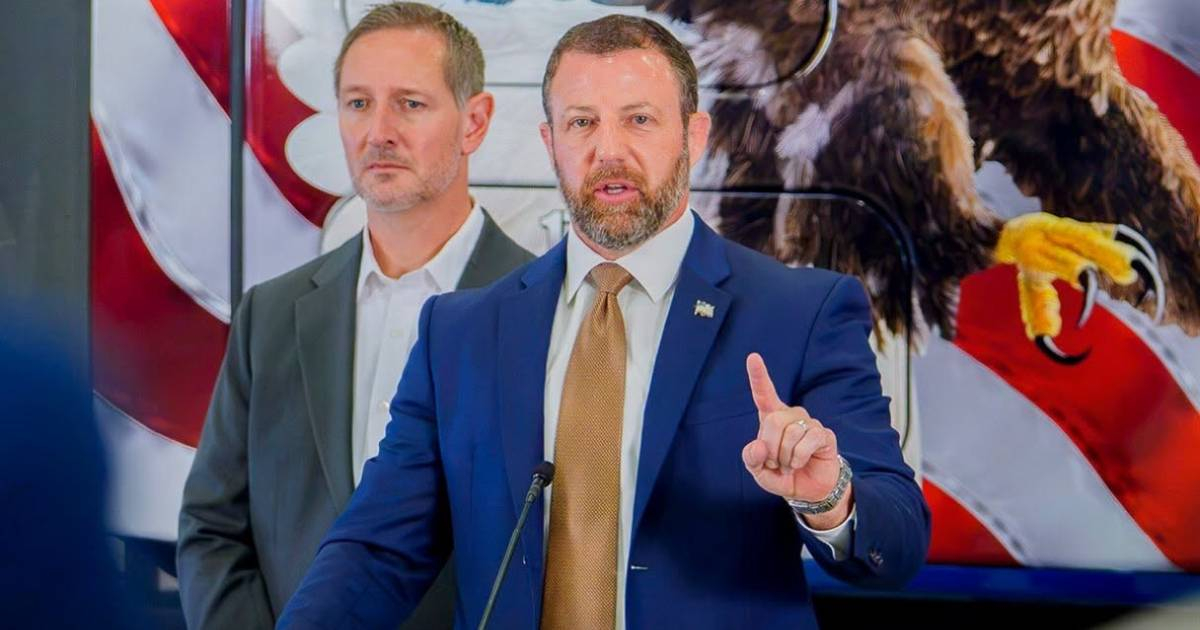
On Tuesday, November 3, U.S. Homeland Security Secretary Markwayne Mullin issued a stern warning about the criminal and immigration repercussions of casting illegal votes. These consequences include potential prison sentences, fines, and possible deportation proceedings for non-citizens, even those holding legal residency in the United States.
"If you vote illegally, we will find you," Mullin declared on his official social media account, X, as millions of Americans were heading to the polls to elect their congressional representatives, as well as various state and local officials.
Severe Penalties for Illegal Voting
Mullin emphasized the serious legal ramifications of registering or voting illegally. "Illegal voter registration and illegal voting carry significant penalties of up to five years in prison and a maximum fine of $250,000," he pointed out.
The secretary specifically cautioned immigrants who are legally residing in the U.S. but have not yet obtained citizenship. "Even with legal immigration status, non-citizens who vote illegally are at risk of deportation," Mullin stated.
His message concluded with a clear stance on electoral participation: "Americans alone should decide U.S. elections."
Implications for Cuban Residents
This warning holds particular significance for Cuban immigrants holding permanent residency, or a Green Card, in the U.S. but have not yet become citizens. According to official guidelines from USAGov, permanent residents cannot vote in federal elections, irrespective of how long they have lived in the country.
Federal election prohibitions also extend to other non-citizens, whether they have work or residency permits. Legal consequences depend on the nature of the violation. Voting illegally as a non-citizen in a federal election can result in up to a year of imprisonment, while falsely claiming U.S. citizenship to register as a voter can lead to a maximum of five years in prison and fines up to $250,000.
Moreover, immigration authorities may initiate deportation proceedings for non-citizens who have voted illegally, including permanent residents, depending on the circumstances and applicable legal provisions. This does not automatically imply maximum penalties or guaranteed deportation in every case.
Cubans Among Those Accused of Election Crimes
Mullin's remarks follow intensified legal action by the Department of Justice against individuals accused of illegal participation in previous elections. On October 26, four Cuban nationals were among 48 non-citizens charged with alleged electoral crimes across various states.
The four Cubans, aged 60 to 73, reportedly voted in the 2022 and 2024 federal elections without U.S. citizenship. Three held permanent residency, while the fourth was in an irregular immigration status.
In another case, a 64-year-old Cuban was arrested in Kansas City, Missouri, accused of illegal voting in federal elections. The prosecution alleged involvement in at least 15 electoral processes over two decades, with charges specifically tied to the 2022 and 2024 elections.
Recently, on November 2, the Department of Justice announced charges against 63 individuals for various alleged electoral violations. Among them was Juan Florencio Ramos, a Cuban permanent resident in North Carolina, accused of falsely claiming U.S. citizenship to vote.
These proceedings represent criminal charges that must be proven in court and do not constitute evidence of widespread fraud.
Government Warnings and Judicial Controversy Amidst Elections
Mullin's message aligns with one from U.S. Attorney General Todd Blanche, who also warned that those responsible for electoral fraud would be identified and prosecuted. Blanche urged reporting any potential irregularities to the FBI, including non-citizen voting, double voting, and fraudulent ballot submission.
However, the government's crackdown on illegal voting has sparked judicial controversies. A federal appeals court upheld restrictions on certain election-related operations by the Department of Homeland Security in nine states, citing concerns that federal agents' interrogations and investigations might intimidate or deter U.S. citizens from voting.
The measure does not prohibit investigating electoral crimes but sets limits on certain federal actions during the voting period.
FAQs on Illegal Voting and Deportation
Can permanent residents be deported for voting illegally?
Yes, non-citizens, including permanent residents, who vote illegally can face deportation proceedings, depending on the circumstances and legal provisions applicable to their case.
What are the penalties for non-citizens voting in federal elections?
Non-citizens voting in federal elections can face up to a year in prison, while falsely claiming U.S. citizenship to register can lead to up to five years in prison and fines up to $250,000.
Are all illegal voting cases subject to maximum penalties?
Not necessarily. Each case is assessed individually, and not all infractions result in maximum penalties or automatic deportation.