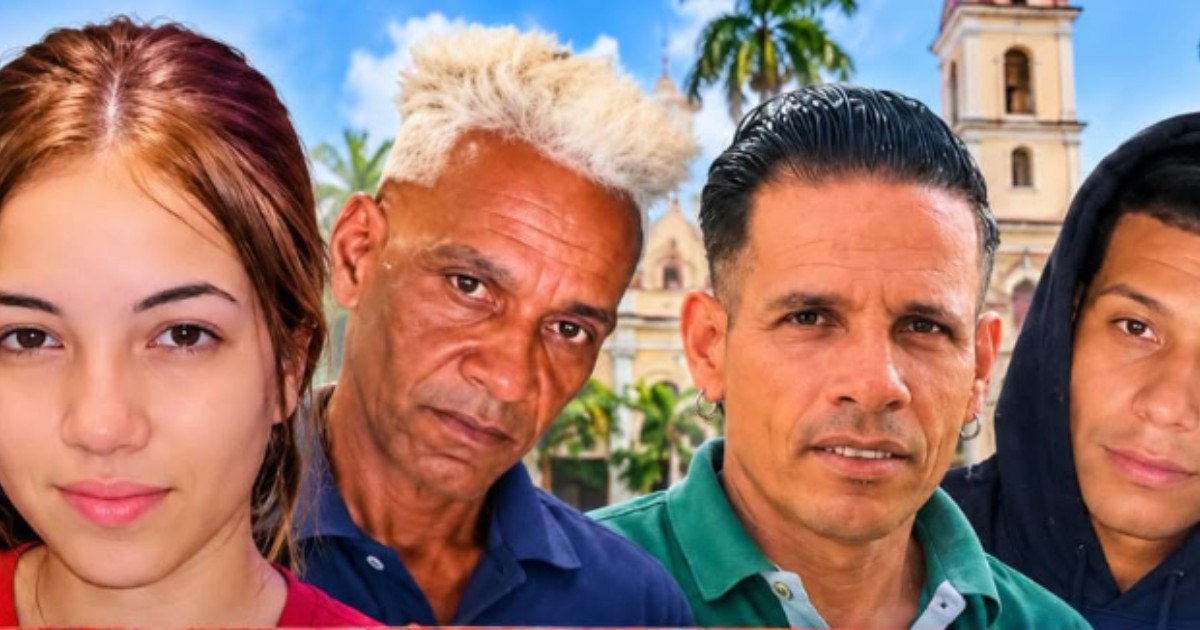
Amanda Pérez, an 18-year-old whose disappearance in Bayamo prompted a large-scale police search across Granma province, was found alive on Tuesday. However, the case took an unexpected twist: sources linked to the Ministry of the Interior (MININT) revealed it was not a kidnapping but a staged event.
The platform "Entérate con Aytana Alama" was the first to report the resolution of the case, citing MININT sources: "After intense hours of family distress and police mobilization in search of the young woman, the news of her discovery brought relief, but the outcome of the investigations took a dramatic and shocking turn: There was no kidnapping, but a simulation."
Amanda went missing between the night of October 29 and the early hours of October 30, according to various independent sources.
The last public sighting placed her near an establishment known as "Las 24 Horas" in Bayamo.
The case initially gained attention through the platform Nio Reportando un Crimen, which reported that the supposed captors demanded a $2,000 ransom from her family. They contacted the family using Amanda’s phone through brief calls and even conducted a video call as alleged proof of life.
Police Operation and Discovery
On Monday, around 1:50 p.m., a significant police operation took place in the Viviendas Campesinas area of Bayamo. It involved the Revolutionary National Police, special forces known as "black berets," and senior MININT officials, potentially including a lieutenant colonel.
During the search of a residence in the area, authorities discovered items allegedly belonging to Amanda: an electric bike, a helmet, and glasses.
In the initial phase, two individuals were detained in connection with the investigation, although there was no official confirmation regarding their identities or any criminal charges.
Conclusion of the Case
As the case concluded, the number of detainees rose to four, accused of being involved in the planning and execution of the staged event.
According to sources cited by "Entérate con Aytana Alama," "the facts indicate it was a self-kidnapping, a staged scenario that triggered all the alarms of the authorities and kept the community on edge."
No official Cuban media covered the case during the search days nor issued a formal statement about the outcome, thus the details of the self-kidnapping conclusion could not be independently verified.
Lack of Institutional Support
The phenomenon of self-kidnapping—faking one's own abduction to extort money from family members—is known in Latin America but is rare in Cuba, where the state does not publish crime statistics and independent media coverage of crimes is limited.
The case also highlights a significant institutional gap: Cuba lacks a public registry of missing persons and an early warning system similar to the Amber Alert, making situations like this heavily reliant on social media to reach public awareness.
The Alas Tensas Gender Observatory recorded 40 disappearances of women, girls, and children in 2025, of which 26 were found alive, six were found dead, and eight remained missing by the end of that year.
Key Questions on the Bayamo Staged Kidnapping Case
What led to the discovery of Amanda Pérez?
Amanda Pérez was found alive following a significant police operation in the Viviendas Campesinas area of Bayamo, involving multiple law enforcement agencies.
Why was Amanda Pérez's disappearance initially considered a kidnapping?
The disappearance was initially considered a kidnapping because supposed captors demanded a $2,000 ransom and made contact through Amanda’s phone, including a video call as alleged proof of life.
How common is staged kidnapping in Cuba?
Staged kidnapping is rare in Cuba, although it is a known phenomenon in other parts of Latin America. The lack of official crime statistics in Cuba makes it difficult to assess its prevalence.