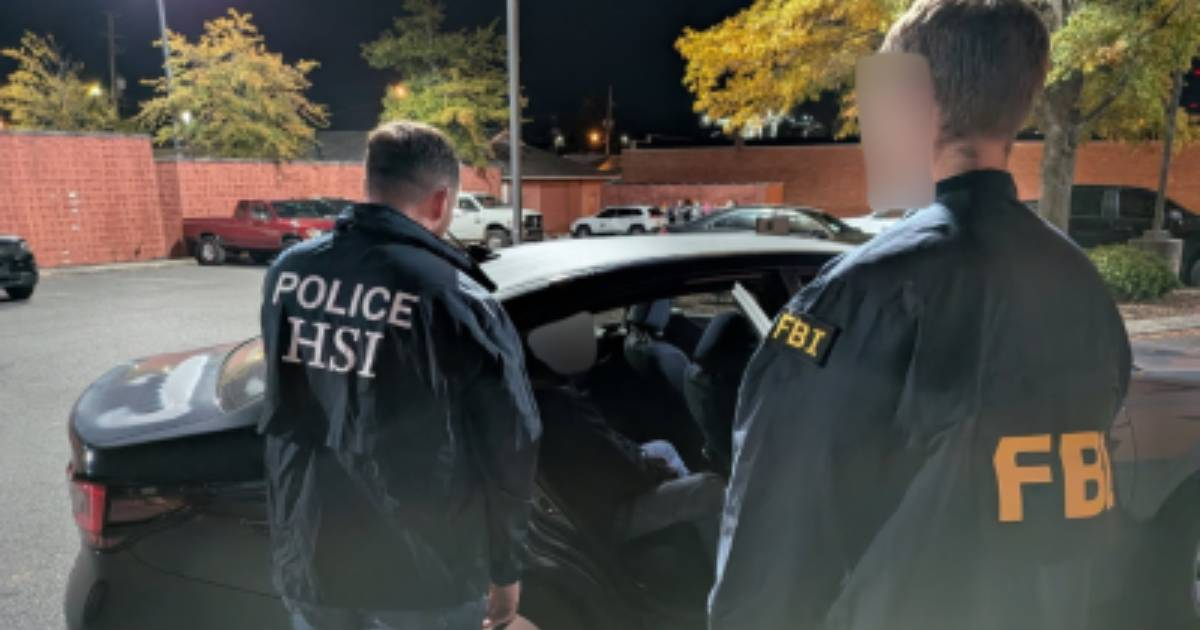
A Cuban national residing legally in the United States as a permanent resident is facing two federal charges in North Carolina for alleged electoral offenses, including falsely claiming to be a U.S. citizen to cast a vote.
This case is among 63 records of alleged election-related offenses that the Department of Justice highlighted in a national announcement made on Monday, November 2, just hours before the upcoming legislative elections.
Federal authorities have identified the Cuban individual as Juan Florencio Ramos, who is formally accused of knowingly making a false declaration of U.S. citizenship for electoral purposes and voting without the legal citizenship required to do so.
His case is situated in the Middle District of North Carolina and pertains to the 2024 elections.
The charges were previously announced on October 29, when the Department of Justice reported 18 individuals had been prosecuted for alleged illegal voting in the state.
The authorities have not specified the exact date on which the Cuban allegedly voted nor provided additional details regarding his legal proceedings.
Potential Legal Repercussions
In the United States, possessing a Green Card allows one to live and work legally, but it does not confer the right to vote in federal elections. Citizenship is required to participate in these elections, along with meeting other electoral requirements.
The Department of Justice indicates that falsely claiming U.S. citizenship to vote can result in up to five years in prison and a $250,000 fine.
Furthermore, illegal voting by a non-citizen carries a maximum penalty of one year in prison and a $100,000 fine.
Additionally, USAGov warns that illegal voting can impact naturalization processes and lead to immigration consequences, including possible deportation, depending on the circumstances.
A formal charge does not equate to a conviction, and the accused retains their presumption of innocence until proven guilty in a court of law.
Department of Justice Reports 63 Alleged Electoral Offense Cases
The announcement on November 2 encompasses procedures from various U.S. jurisdictions involving alleged illegal voting, false citizenship claims, electoral registration irregularities, and other offenses.
Among the 63 individuals mentioned, four were identified by authorities as undocumented immigrants, while several accused, including the Cuban, have legal permanent residency.
The Department of Justice also stated that over the preceding nine weeks, charges had been brought against 195 non-citizens in 25 states for alleged voting and electoral registration violations.
This disclosure comes on the eve of the midterm elections on November 3, during which Americans will elect all 435 members of the House of Representatives and approximately one-third of the Senate.
Understanding the Legal Implications of Illegal Voting
What are the consequences of falsely claiming U.S. citizenship to vote?
Falsely claiming U.S. citizenship to vote can lead to up to five years in prison and a fine of $250,000.
Can illegal voting affect immigration status?
Yes, illegal voting can affect naturalization processes and may result in deportation, depending on the circumstances.
Is a formal charge equivalent to a conviction?
No, a formal charge is not equivalent to a conviction. The accused remains presumed innocent until proven guilty in court.