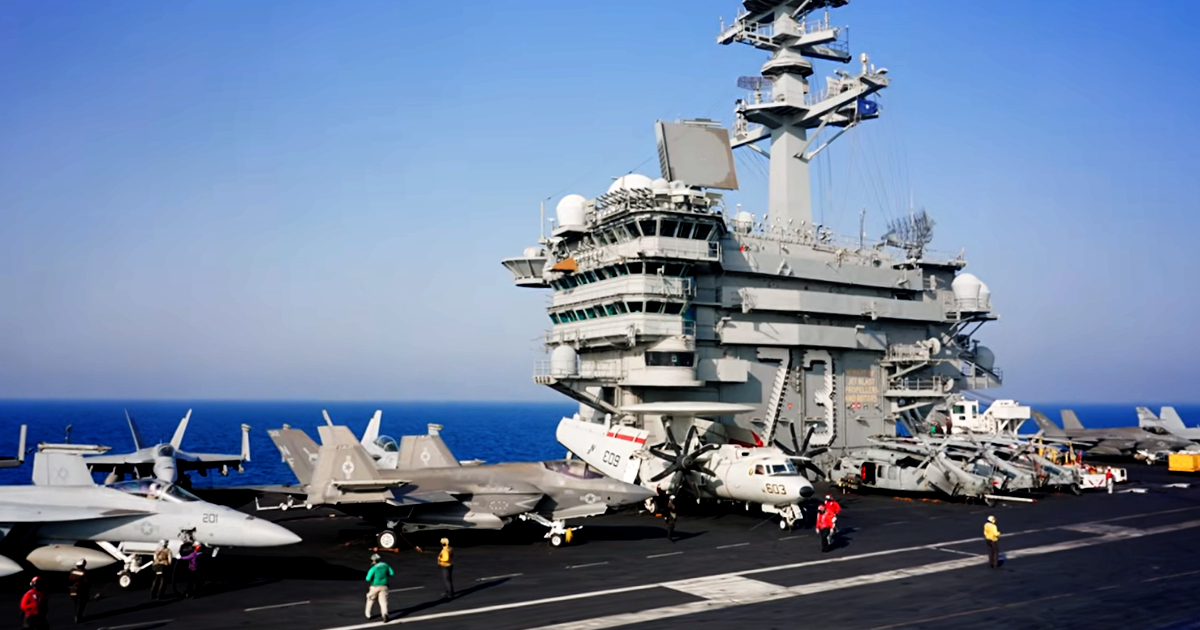
Countries allied with the United States in the Persian Gulf are on high alert, preparing for a possible large-scale U.S. airstrike against Iran. Concerns are mounting that such a move could trigger retaliatory actions against their economic and civil infrastructure as early as this week, according to a detailed report from the Wall Street Journal released Monday.
The region's anxiety is growing as diplomatic efforts have stalled, with both Washington and Tehran warning that a renewed conflict could be particularly destructive.
Former President Donald Trump is reportedly considering a significant post-election military action targeting Iran's infrastructure and nuclear sites. However, he has yet to make a final decision.
During a rally in Iowa on Sunday, Trump hinted at his stance: "The only reason I haven't dealt with Iran is that I want to be kind. I want to try to save all those lives if I can. But at some point, we'll have to bring the hammer down on them."
In a telephone conversation on Saturday, Israeli Prime Minister Benjamin Netanyahu urged Trump to initiate strikes immediately following the midterm elections held this Tuesday. However, Trump leaned towards giving diplomacy more time, according to sources familiar with the discussion.
There are signs that Washington might be drawing closer to making a decision. On October 29, Admiral Brad Cooper, head of the U.S. Central Command, made an in-person visit to the White House to present military options to the president—a meeting considered unusual since Cooper rarely conducts such briefings in person.
Diplomatic Efforts Stalled
On the diplomatic front, talks mediated by Qatar remain stuck over who should make the first concessions. In late October, Vice President JD Vance sent a letter to Mohsen Rezaei, Iran's top national security official, to explore negotiations regarding the nuclear program. Tehran acknowledged the correspondence courteously but has yet to formally respond.
Iranian Deputy Foreign Minister Kazem Gharibabadi returned to Tehran from Doha on Sunday without securing an agreement sufficient to prompt a visit by U.S. negotiators.
Meanwhile, Qatar proposed shortening a trust-building period to two days—from the initial seven—to reopen the Strait of Hormuz. Under this proposal, the U.S. would ease its naval blockade if Iran halted attacks on shipping in the strait.
Military Tensions Escalate
Tensions have already resulted in military action: A U.S. fighter jet destroyed an Iranian surface-to-air missile launcher on Qeshm Island after the Revolutionary Guard fired at a U.S. military aircraft in the Strait of Hormuz.
Gulf countries fear that Iran, unable to stop U.S. and Israeli airstrikes, might choose to strike at their more vulnerable neighbors across the Persian Gulf.
Qatar and the United Arab Emirates have conducted security drills at airports. Schools in Riyadh remain in virtual mode, and the Dutch and Belgian embassies have warned that security conditions could deteriorate rapidly.
Anwar Gargash, foreign policy advisor to the president of the UAE, acknowledged at a security conference that while the country hopes for a diplomatic solution, it is "prepared for the worst."
Oil markets reflect the volatility: Brent crude fell more than 6% on Monday amid hopes for an agreement but rebounded Tuesday following the Qeshm attack, settling around $106 per barrel.
Potential Consequences of an Escalated Conflict
Experts warn that the window to avoid a significant escalation is narrow. "There is no scenario where a short, sharp U.S. attack is absorbed by Iran," noted Behnam Ben Taleblu, senior director of the Iran program at the Foundation for Defense of Democracies. "A sustained campaign of strikes on infrastructure by Washington will likely provoke a similar response from Tehran against U.S. partners."
"There are still substantial differences between both sides, making an escalation seem inevitable," cautioned Ali Vaez, Iran expert and deputy director of the Middle East program at the International Crisis Group. "Things will get ugly very quickly."
FAQs on U.S.-Iran Tensions and Gulf Allies
Why are Gulf countries concerned about a U.S. strike on Iran?
Gulf countries are concerned that a U.S. strike on Iran could provoke retaliatory actions against their economic and civil infrastructure, potentially destabilizing the region.
What diplomatic efforts are in place to prevent conflict?
Diplomatic efforts, primarily mediated by Qatar, are focused on negotiations about Iran's nuclear program and reopening the Strait of Hormuz, but they remain stalled over who should make concessions first.
How have oil markets reacted to the tensions?
Oil markets have been volatile, with prices dropping on hopes of a diplomatic agreement but rebounding after military incidents like the attack on Qeshm, reflecting the uncertainty in the region.