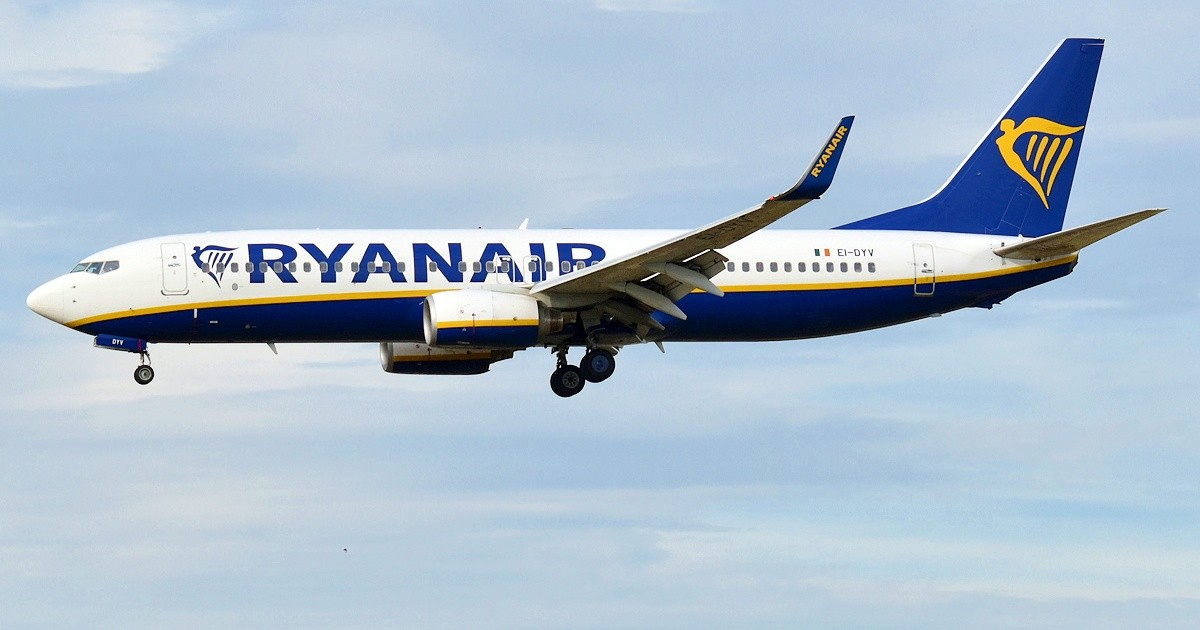
In a span of less than 24 hours on Tuesday, at least seven commercial flights across Europe were targeted by bomb threats, prompting emergency protocols at airports in Spain, Italy, Poland, and Bulgaria, as reported by Diario Área and El HuffPost. Fortunately, none of the aircraft inspected contained actual explosives.
The threats were predominantly delivered through anonymous emails and impacted flights operated by Ryanair, LOT Polish Airlines, SAS, and Wizz Air. By the end of available reports, authorities in the affected countries had not confirmed any connections between the threats nor identified those responsible.
A Critical Incident: Plane Diverted in Poland
One of the most serious incidents took place in Warsaw. A LOT Boeing 737 MAX, originating from London-Heathrow with 181 passengers, was forced to change its course after receiving a threat. The alert was issued at 9:54 AM, and the plane landed merely seven minutes later at Warsaw-Modlin Airport, which was temporarily closed for bomb squad inspections.
Another aircraft destined for the Polish capital, an SAS flight from Copenhagen, also faced a threat that morning. However, it landed safely at Chopin Airport at 9:28 AM, according to Flightradar24 records. Alexandra Lindgren Kaoukij, spokesperson for the airline, confirmed to Ritzau that a threat was received and was promptly communicated to the police.
Heightened Alerts in Murcia, Rome, and Sofia
In Spain, a Ryanair flight from Manchester landed at 10:50 AM at the Murcia International Airport carrying 114 passengers and seven crew members. A crisis committee, including National Police and TEDAX specialists, was activated. Francisco Lucas, the government delegate in Murcia, stated that both the aircraft and its occupants were searched; no explosives were found, allowing the airport to resume normal operations.
In Italy, Rome-Fiumicino Airport received threats via email against Ryanair flights from Lisbon and Dublin. The aircraft arriving from the Irish capital was escorted by the Italian Air Force to the runway. Ground inspections revealed no explosive devices in either instance.
Meanwhile, in Bulgaria, the Ministry of Transport reported threats against two aircraft heading to Sofia: a Wizz Air flight from Bergamo with 176 passengers and a Ryanair flight from Dublin with 185 on board. Both landed without incident, and security checks found nothing suspicious.
Experts Concerned Over Emerging Pattern
Tuesday wasn't the first day of such alerts. The previous Monday, a Wizz Air flight from London to Sofia was diverted to Budapest and escorted by a Hungarian fighter jet after receiving a similar threat. Weeks earlier, on October 26, operations at Gran Canaria Airport were temporarily halted due to a threat against a Vueling flight from Barcelona.
Experts consulted by Reuters pointed out that the pattern—multiple simultaneous threats, cost-effective and with difficult attribution—aligns with hybrid warfare tactics, though no authority has made a definitive public attribution.
Interim Secretary General of the Bulgarian Interior Ministry, Lyubomir Nikolov, remarked that there was "no information about terrorist intentions or specific actions" and noted that in prior similar cases, the email addresses were linked to IPs registered in other European countries.
By the end of Tuesday's reports, the European Commission had not issued a specific statement regarding the wave of threats, leaving aviation incidents in Europe unresolved and the parties responsible unidentified by any government.
Understanding the Bomb Threats Across Europe
What airlines were affected by the bomb threats in Europe?
The airlines affected by the bomb threats included Ryanair, LOT Polish Airlines, SAS, and Wizz Air.
Were any explosives found on the flights that received threats?
No, none of the aircraft inspected for explosives contained any actual bombs.
How did authorities respond to the threats?
Emergency protocols were activated at the affected airports, and specialized bomb squads conducted thorough inspections. Some flights were diverted as a precautionary measure.