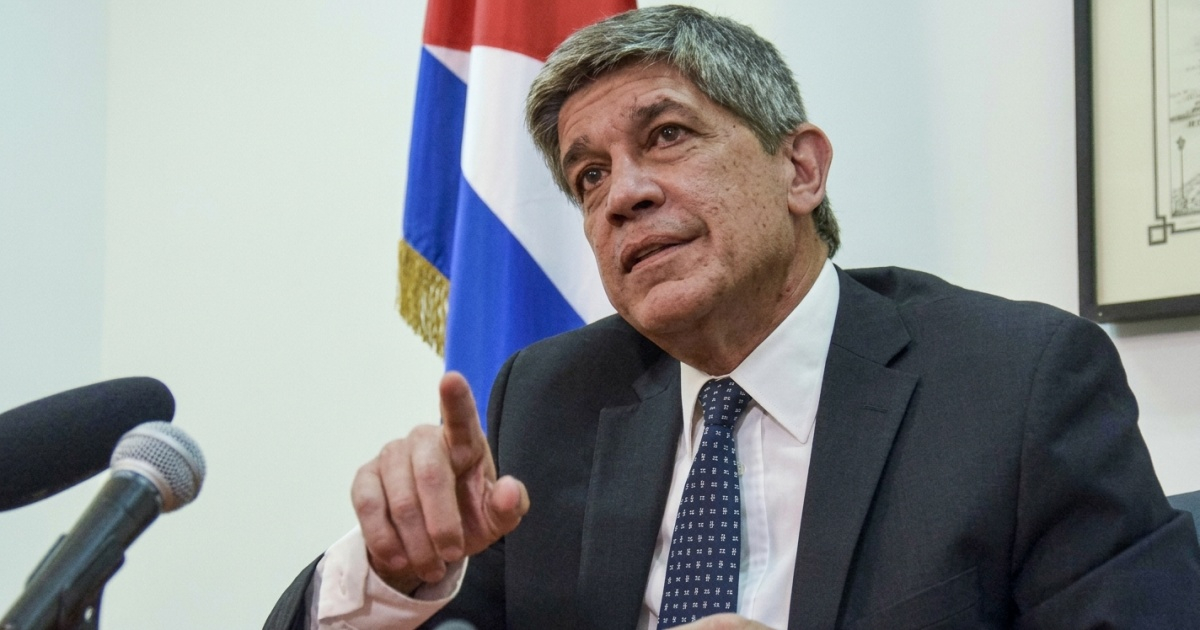
Carlos Fernández de Cossío, Cuba's Deputy Foreign Minister, has accused the United States government of fostering Cuban migration, only to later deport these individuals to third countries, separating them from their families and leaving them without means of support.
In a Facebook post, Fernández de Cossío directly blamed U.S. authorities for the precarious migratory situation faced by many Cubans. He argued that numerous Cubans ended up in irregular status due to shifts in Washington's policies rather than their own actions.
"The U.S. government, in its deportation campaign, has expelled dozens of Cubans to third countries. Many of these individuals find themselves in different continents, separated from their families and lacking basic means of sustenance, having lost their homes, possessions, and way of life," he wrote.
He further alleged that some Cuban migrants face indefinite detention in the U.S. without formal charges, leaving them and their families in a state of painful uncertainty.
U.S. Policies Blamed for Cuban Migration
Fernández de Cossío devoted much of his message to challenging the notion that the legal troubles of Cuban migrants are self-inflicted. He contended that the majority of these migrants entered the U.S. driven by the consequences of the American "economic war" against their homeland, and attracted by migration policies that invited both legal and illegal migration.
With this statement, he reiterated the claim that U.S. sanctions are a primary cause of Cuban emigration, omitting any mention of the Cuban government's internal economic policies.
The diplomat emphasized that many Cubans arrived in the U.S. with documentation issued by U.S. authorities themselves. "Many entered legally, with official U.S. documents provided in Cuba, a third country, or at the land border. They didn't have to climb a wall or jump over a fence," he highlighted.
Consequences of Migration Policy Changes
Fernández de Cossío argued that migrants should not be penalized for subsequent changes in migration regulations. "Their legally undefined status in the U.S. is due to shifts in government policy, not their fault, nor generally due to actions taken by them," he asserted.
He concluded his argument with a pointed accusation: "Their presence there and their illegal or irregular status result from the actions and official conduct of authorities."
His statements align with the aftermath of the cancellation of the CHNV humanitarian parole program, initiated during Joe Biden's administration for citizens from Cuba, Haiti, Nicaragua, and Venezuela. The program allowed the temporary entry of hundreds of thousands with sponsors in the U.S., but its termination under Donald Trump's administration left many with the need to secure a new legal basis to stay.
However, Cubans affected by deportations to third countries have diverse migratory backgrounds, and not all entered through this program.
Warnings About U.S. Intentions
In the latter part of his post, Fernández de Cossío transitioned from critiquing U.S. migration policy to issuing a warning about Washington's intentions toward Cuba. "If the U.S. government treats the Cubans it claims to represent, whom it invited to migrate, whose welfare it professes to care for, and whose interests it claims to defend in this way, what can be expected of its attitude toward the Cuban people if it were to realize its criminal ambition to seize Cuba?" he questioned.
Linking the treatment of migrants to an alleged desire by the U.S. to take over the island, he did not provide evidence to support this accusation in his post.
In the final segment of his message, he urged a review of the historical record of U.S. interventions in other countries. "History is rich in lessons. Study the experiences of countries that have suffered military aggression, coups, and domination by the U.S. Without mentioning them, they offer very eloquent lessons for reflection," he concluded.
Deportations and Human Rights Concerns
Fernández de Cossío's critiques come amid ongoing scrutiny from human rights organizations over the relocation of migrants to countries where they lack personal or familial ties.
A Human Rights Watch report published in May 2026 documented deportations of Cuban and other nationals from the U.S. to Mexico, highlighting protection risks and challenges faced by some affected individuals.
The organization also noted that Cuba's refusal to accept the repatriation of certain citizens has contributed to some being deported to third countries. These transfers have reached far-flung destinations.
On October 22, at least 69 Cubans arrived in Bangui, the capital of the Central African Republic, on a flight from the United States. Several deportees reported being handcuffed and restrained during the journey, without prior knowledge of their destination.
These statements follow closely on Fernández de Cossío's admission in a CBS News' 60 Minutes interview that the Cuban government bears "significant responsibility" for the island's ongoing crisis.
When asked about a potential resolution to the conflict between Havana and Washington, he responded, "With a change of attitude from the United States."
U.S. Secretary of State Marco Rubio declined to participate in the program, but a spokesperson from his office responded by accusing the Cuban government of blaming the U.S. for its own problems and holding financial resources abroad instead of addressing the population's needs.
Debate continues over U.S. migration policies and the deportation of Cubans to third countries. Stay updated on these issues in our U.S. Immigration section.
Understanding U.S. Migration Policies and Cuban Deportations
What led to the deportation of Cubans to third countries?
The deportation of Cubans to third countries is influenced by U.S. policy changes and Cuba's refusal to repatriate certain citizens, resulting in relocations to nations where migrants have no personal ties.
How has U.S. policy impacted Cuban migration?
U.S. migration policies, including the termination of programs like the CHNV humanitarian parole, have left many Cubans in legal limbo, prompting deportations and separations from their families.
What accusations has Fernández de Cossío made against the U.S. government?
Fernández de Cossío accused the U.S. of encouraging Cuban migration only to deport them later, separating families, and leaving them without support, while also critiquing their indefinite detention without charges.