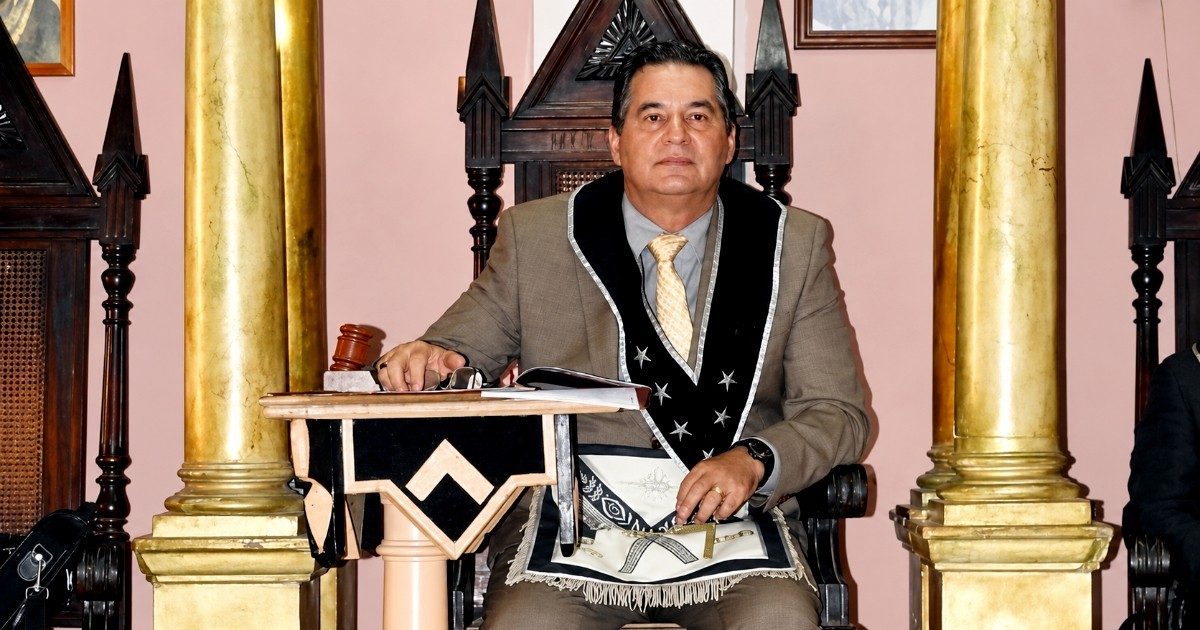
In Havana, the Municipal Popular Court of Diez de Octubre has set a trial date for Thursday, November 5 at 9:00 AM for a group of four Cuban freemasons facing allegations of "illegal trafficking of national currency, foreign exchange, metals, and precious stones." This trial, according to a document accessed by CubaNet dated October 29, 2026, has attracted significant attention.
The individuals charged include José Ramón Viñas Alonso, former Sovereign Grand Commander of the Supreme Council of the 33rd Degree; Fernando Marcos García, accountant for the National Masonic Asylum Llansó; Ángel Santiesteban Prats, current Sovereign Grand Commander and former political prisoner; and Osvaldo Ernesto Villegas Digat. These men are currently under house arrest and barred from leaving the country.
Allegations and Monetary Transactions
The charges stem from two currency exchange operations conducted at the informal market rate, totaling merely $300. Prosecutors assert that on September 14, 2023, Viñas Alonso authorized Santiesteban Prats to exchange 49,600 Cuban pesos for $200 belonging to the asylum. Nearly two years later, on June 13, 2025, he permitted Villegas Digat to trade 37,500 pesos for an additional $100 from the same institution.
The prosecution is seeking sentences ranging from two to four years of restricted freedom for each defendant, along with fines between 20,000 and 25,000 Cuban pesos. For Viñas Alonso, they are recommending the harshest penalty: four years and a fine of 25,000 pesos. Marcos García faces a proposed sentence of three years and 20,000 pesos in fines. Santiesteban Prats and Villegas Digat each face two years and fines of 20,000 pesos. These restrictions would limit the individuals' movements without necessitating imprisonment.
Defense and Humanitarian Claims
The defense attorney, Roberto Ortega Ortiz, argues for the acquittal of all the accused, claiming in his preliminary conclusions from October 9, 2026, that the transactions occurred within the institution among board members and were intended for charitable purposes. The $200 was used to purchase powdered milk for the asylum's elderly residents, while the $100 was Villegas Digat's personal funds used to buy medication for his son.
"The currency exchanges did not result in personal gain for any of the involved parties. On the contrary, they were conducted to enhance the quality of life for the elderly residents of the National Masonic Asylum 'Llansó,' a charitable initiative by the Freemasonry," wrote Ortega Ortiz.
Political Context and Implications
The political undertones of this case are impossible to overlook. Despite the charges being economically related, the investigation was conducted by the Specialized Criminal Investigation Body for Crimes Against State Security, under the Ministry of the Interior (MININT). The trial will be held in the Second Criminal Chamber, which shares facilities with the State Security Crimes Chamber.
Anonymous sources close to the proceedings informed CubaNet that political police have been installing security cameras around the court since last week, in a move reminiscent of the security measures taken during the July 11 protests trials.
The Cuban regime's pressure on Freemasonry has intensified following the July 11, 2021 protests, after Viñas Alonso publicly condemned President Díaz-Canel's call for violent confrontation against demonstrators. In April 2024, the Ministry of Justice froze the bank accounts of the Grand Lodge of Cuba and the Supreme Council of the 33rd Degree, attempting to seize control of the Masonic institution in the following months. Santiesteban Prats, who was sentenced to five years in prison in 2013 in a trial deemed arbitrary by international organizations, was elected Sovereign Grand Commander on September 26, 2026, with 19 votes in favor, just weeks before the trial date was announced.
Key Questions About the Freemasons' Trial and Context
Who are the individuals facing trial in Cuba?
The individuals facing trial are four Cuban freemasons: José Ramón Viñas Alonso, Fernando Marcos García, Ángel Santiesteban Prats, and Osvaldo Ernesto Villegas Digat.
What are the charges against the accused freemasons?
They are charged with illegal currency trafficking, involving small-scale exchanges at informal market rates.
What is the political significance of this trial?
The trial is seen as politically motivated, with the Cuban regime exerting pressure on Freemasonry, especially following the protests on July 11, 2021.