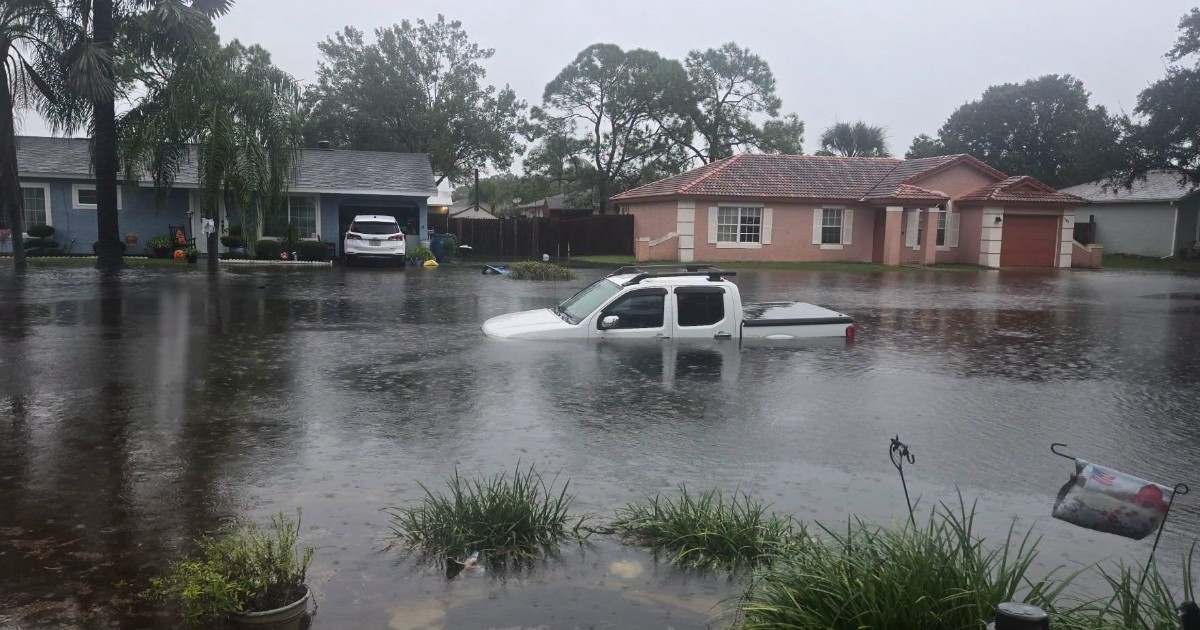
On Monday, Florida Governor Ron DeSantis issued an emergency declaration for seven counties in the central and southern regions of the state. This action comes in response to severe rainfall and flooding that have disrupted roads, homes, and public utilities.
This decision, formalized through Executive Order 26-227, was signed on Monday, enabling the allocation of extraordinary resources and expediting response and recovery efforts in the affected communities.
The counties included in the emergency declaration are Brevard, DeSoto, Hardee, Highlands, Indian River, Martin, and St. Lucie.
The order highlights that a significant low-pressure system crossed the Florida peninsula between October 31 and November 2, leading to heavy rainfall and substantial flooding incidents.
As per the order, flash flood warnings were in effect for parts of all seven counties by 12:30 p.m. on Monday. Authorities have cautioned that additional predicted rainfall could worsen conditions in areas already impacted.
The state government also pointed out that the storms and flooding have impaired, or could continue to impair, the operation of essential infrastructure, including roads, airports, and schools.
... Story developing ...
Florida Flooding Emergency: Key Questions Answered
Which counties in Florida are under the emergency declaration?
The counties under the emergency declaration are Brevard, DeSoto, Hardee, Highlands, Indian River, Martin, and St. Lucie.
What caused the flooding in Florida?
A major low-pressure system that passed over the Florida peninsula between October 31 and November 2 caused heavy rains and significant flooding.
How is the state of Florida responding to the flooding?
The state has issued an emergency declaration to mobilize resources and expedite response and recovery operations in the affected areas.
What infrastructure is affected by the flooding?
The flooding has impacted essential infrastructure, including roads, airports, and schools, potentially impairing their operations.