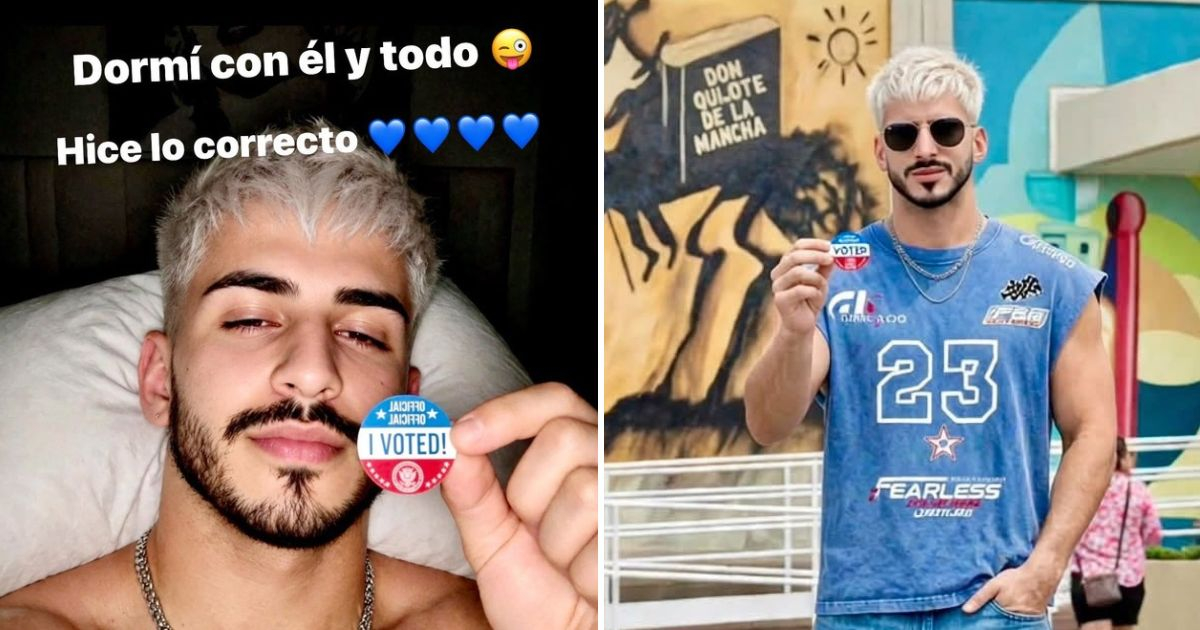
Joel Díaz, a Cuban-American who aligns with the Republican Party and migrated legally to the United States as a child, has spoken out in support of immigrants who entered the country via borders or rafts. He publicly shared the motivations behind his vote in the 2026 legislative elections, despite his disapproval of former President Donald Trump.
In a Facebook post, Díaz expressed that he participated in the elections to voice his opposition to the treatment of certain immigrants in the U.S., regardless of their means of entry.
“Although I’ve lived here since childhood and came legally because my family were political prisoners, I don't feel superior to those who crossed borders or arrived on rafts,” he wrote.
He stated, “I voted for honest, hardworking people who deserve a chance,” and wanted to honor those who have died defending rights and freedoms in the United States.
Remembering Renée Good and Alex Pretti
Díaz mentioned Renée Good and Alex Pretti, two U.S. citizens who were tragically killed in January 2026 during federal immigration operations in Minneapolis, Minnesota. Good was shot by an Immigration and Customs Enforcement (ICE) officer on January 7, while Pretti, an intensive care nurse, was killed by Border Patrol agents on January 24.
The deaths of Good and Pretti sparked protests and demands for investigations into the actions of federal authorities.
“I voted for RENEE GOOD, I voted for ALEX PRETTI; forgetting them would be UNFORGIVABLE,” Díaz emphasized, advocating for the freedom to make political choices without facing criticism.
Reflecting on Past Electoral Choices
On October 24, a day after sharing his initial post, Díaz elaborated on Facebook about feeling at peace with his decision, especially after abstaining from the 2024 presidential election.
“I slept like a baby last night, content with myself, making up for a mistake made in 2024,” he admitted.
Díaz explained that at that time, his Republican affiliation and disapproval of Trump led him to believe that abstaining was right. However, his perspective has evolved.
“In life, we learn from our mistakes. Today I understand that staying in the shadows doesn’t fix the problem; we must take action to solve it,” he reflected.
He also voiced his support for those who wish to vote but cannot, and for restoring a political climate less defined by personal conflict.
Cuban Voices in American Politics
Despite receiving some insults for his public stance, Díaz expressed gratitude for the many supportive comments. He criticized the use of insults to defend political ideas, stating, “Nobody with solid arguments needs to insult or offend others.”
Díaz did not explicitly reveal which candidates he voted for, maintaining his Republican identity, disapproval of Trump, and concern for immigrant treatment. However, he included several blue hearts in one of his posts, possibly signaling support for the Democratic Party, known for its blue color.
His statements align with other Cuban-Americans who have shared their electoral decisions and disagreements with certain U.S. policies. Recently, Lisbeth Arzola Fadragas, a Cuban Republican who had previously supported Trump, announced her support for Democratic candidates, considering her family, clients, and immigrants working in the U.S. without legal status.
Similarly, Miriam Bidot, another Cuban Republican in Miami, defended her choice to vote Democrat, citing concerns about immigration, healthcare, and opposition to racism and discrimination. Another Cuban voter noted losing family and friends over her Democratic vote but remained firm in her decision.
Additionally, some Cuban voters who supported Trump in 2024 now express disappointment with his administration’s policies. Cuban-American immigration lawyer Ismael Labrador from Miami regretted his support after a relative was deported to Cuba, explaining that he expected deportations to focus on those with criminal records.
FAQs about Cuban-American Political Perspectives
Why did Joel Díaz decide to vote in the 2026 elections?
Joel Díaz voted to express his disagreement with the treatment of certain immigrants in the U.S., and to honor individuals like Renée Good and Alex Pretti who died defending rights and freedoms.
How did Joel Díaz describe his feelings after voting?
Joel Díaz felt a sense of peace and satisfaction with his decision, feeling he corrected a past mistake by not voting in the 2024 elections.
What was Díaz's stance on using insults in political discussions?
Díaz criticized the use of insults to defend political views, emphasizing that strong arguments do not require offensive language.