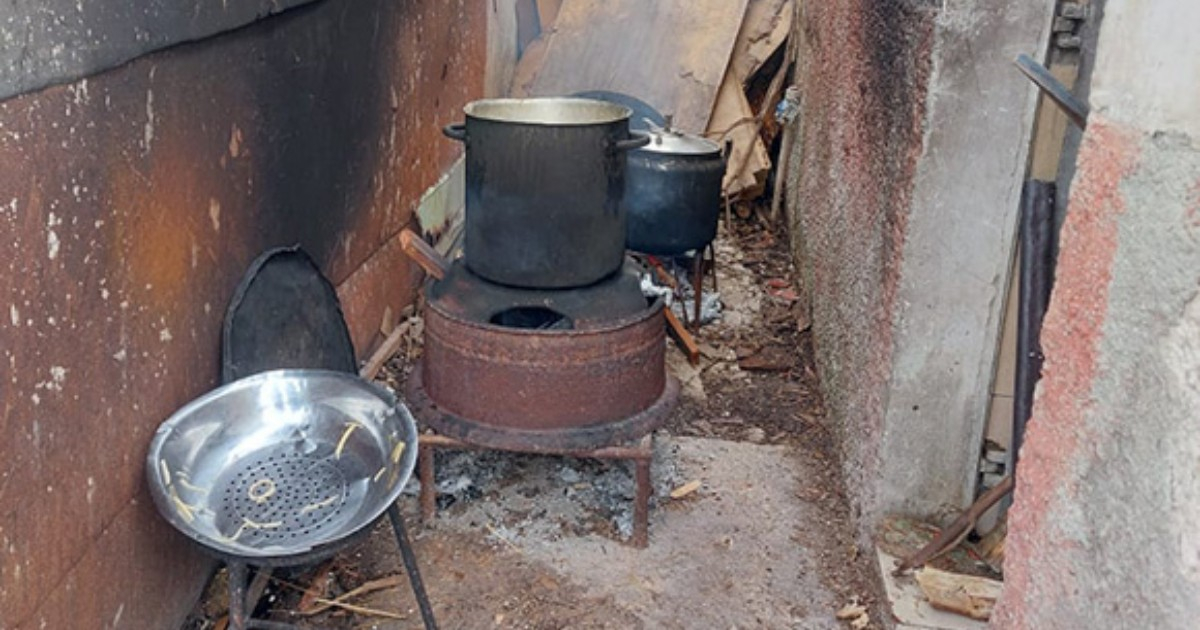
A dining hall in Havana's Vedado neighborhood, designed to support vulnerable individuals, receives a food allocation from the Municipal Department of Commerce that barely meets 10% of its needs, according to Mariuska Vega Dechamps. Vega Dechamps is the head of the microenterprise Mi Reina Café, which manages the Loipa Family Support System located at 23 and 10, Vedado.
This facility, which opened its doors on July 26, 2026, serves 12 elderly individuals identified as vulnerable, providing them with daily breakfast, lunch, and dinner. To sustain these services despite the meager state provision, the facility relies heavily on the generosity of other economic players. Specifically, the bakery at 23 and 12 supplies breakfast bread, and the De La Cream ice cream shop also lends its support.
“We don't consider it a burden, but we're still recovering from the significant investment made in refurbishing the premises. This limits our ability to take on more individuals in need. We hope more businesses will join us in offering better services,” Vega Dechamps expressed.
The Loipa SAF is among 11 establishments where the Ministry of Domestic Trade (Mincin) has initiated a trial to involve non-state actors in social care, spread across Havana, Matanzas, Sancti Spíritus, and Granma, as reported by Grettel Portales Pérez, Mincin's Director General of Services. The stated goal is to expand this model to the 1,461 locations within the SAF network nationwide, though this expansion remains an unfulfilled objective rather than an accomplished transition.
The legal framework for this initiative is outlined in Council of Ministers Agreement 10418/2026 and Mincin Resolution 14/2026, which permit microenterprises and other non-state entities to manage dining halls within the system. Pedro Blanco Guerra, Mincin’s chief gastronomy specialist, acknowledged the lack of tax incentives for the proposal, yet highlighted the administrative freedoms it provides to private businesses as an appealing feature.
The gap between state provisions and actual needs at the Loipa SAF is not unique. Another SAF dining hall on Monte Street in Havana, serving 269 people, reportedly served chicken only once throughout 2026, according to its financial officer. In September, images from a dining hall in Santiago de Cuba depicted seniors receiving a watery concoction described as “coriander water and chopped leek.”
This supply deterioration occurs amid rising demand. The SAF supports approximately 70,000 vulnerable individuals in Cuba, a number that continues to rise according to specialists cited by Granma. This network includes 1,250 community feeding homes in rural areas and 3,000 dining facilities run by non-profit and religious associations, all overseen by Mincin.
The demographic and food supply context exacerbates the situation: the Food Monitor Program estimated in May 2026 that 96.91% of the Cuban population lacked adequate access to food, with 55.6% of those over 60 completely losing such access, precisely the demographic the SAF aims to assist.
At the Loipa SAF, a 61-year-old beneficiary succinctly described the value of the facility for her and her 85-year-old husband: “The best part is the care. All the young workers here treat us with immense love and respect, and that is priceless in these times.”
Understanding the Challenges Faced by Cuban Social Dining Halls
What is the main challenge faced by the Loipa Family Support System in Havana?
The main challenge is that the state food allocation covers only 10% of the required needs, forcing reliance on the support of other economic actors.
How does the Loipa SAF sustain its operations despite inadequate state support?
The Loipa SAF depends on the solidarity of local businesses, such as a nearby bakery providing bread and an ice cream shop offering additional assistance.
What legal framework supports the involvement of non-state actors in managing social dining halls in Cuba?
The involvement is supported by the Council of Ministers Agreement 10418/2026 and Mincin Resolution 14/2026, allowing microenterprises to manage these facilities.