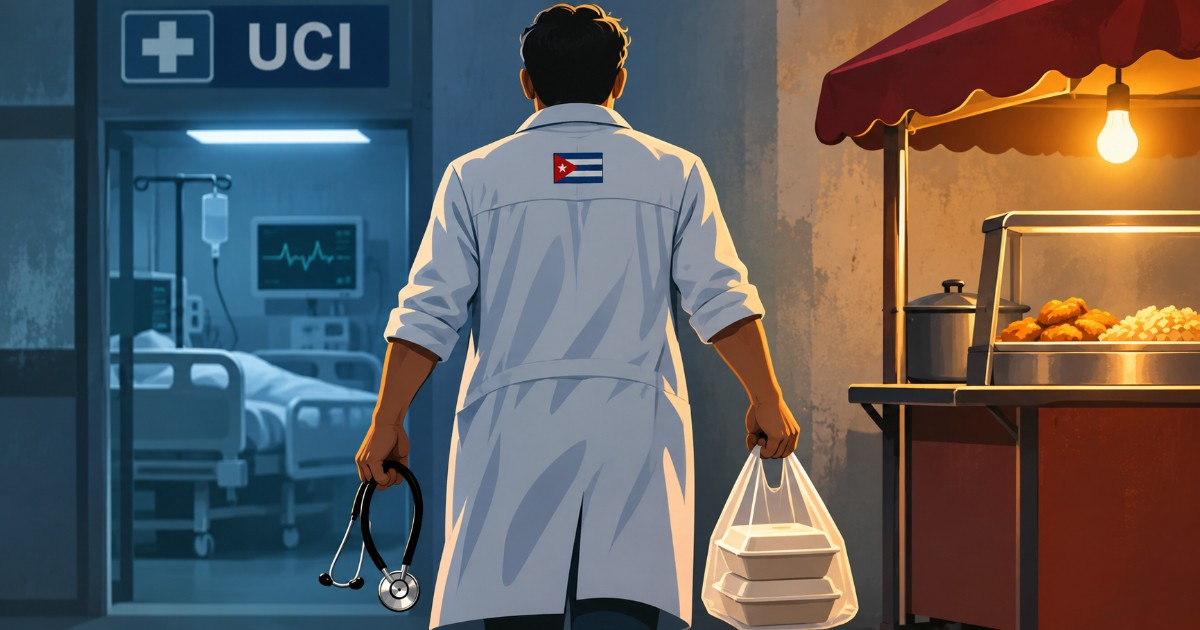
Dr. Alejandro Chong, head of the Intensive Care Unit (ICU) at William Soler Pediatric Hospital in Havana, has found that he makes more money selling food than by leading a critical service responsible for the care of seriously ill children.
This surprising revelation was made public on Sunday by CBS News' 60 Minutes in a report from Cuba. The segment highlighted the challenges faced by doctors who are compelled to seek additional income amidst shortages of medications, equipment, and hospital supplies.
Chong's situation underscores a significant contradiction. Despite years of training and holding essential responsibilities for patient care, many professionals receive wages inadequate to meet their basic needs.
He's not alone in this predicament. Lórien Rodríguez, a second-year resident in Pediatric Surgery, also works as a radio announcer to make ends meet.
Rodríguez shared with CBS that the shortage of staff and resources is increasingly complicating medical care, forcing healthcare providers to inform families about the inability to deliver certain treatments due to lack of necessary means.
The challenges they face include shortages of cancer medications, anesthetics, and laboratory equipment. During the American TV crew's visit, doctors recounted the story of a young girl who had been waiting 68 days for a crucial part of an extracorporeal circulation machine needed for her surgery, a process that would normally take just two days.
Power outages pose another serious risk. Chong explained that even the brief moments between a power cut and backup generator activation can be critical for patients under general anesthesia or on mechanical ventilation.
Doctors recounted scenarios where, when generators failed, they had to finish surgeries using the light from their cellphones and manually ventilate patients reliant on electric equipment.
The report also covered the case of a two-month-old infant brought to William Soler after being abandoned. The baby, suffering from dehydration and malnutrition, weighed less than 2.3 kilograms. After stabilization, specialized infant formula was needed, but unavailable. Chong explained they had to improvise with food alternatives made from malanga and chicken.
Before the program aired, 60 Minutes checked back with the doctor. Chong reported that the infant had developed respiratory complications and returned to intensive care, where he unfortunately passed away last Thursday.
Recently, Miguel Díaz-Canel visited the William Soler Hospital, praising the healthcare workers despite acknowledging the challenges posed by fuel, transportation, medication, and electricity shortages. His visit sparked public criticism regarding the deteriorating conditions of the facilities.
Chong's narrative is part of CBS News' broader coverage that has highlighted the scarcity of drugs, prolonged blackouts, and economic struggles of the Cuban populace from Havana.
Additional reports have illustrated how low wages drive medical professionals to seek opportunities outside hospital walls. In May, a Cuban woman shared that her mother, a physician, sold homemade flans because her hospital salary was insufficient to support their family. Her daughter noted that in just two days of sales, her mother earned what would take a month as a doctor.
Similarly, in October, another Cuban doctor recounted her decision to leave the medical field in pursuit of better income, despite her years of training and dedication to patient care.
Cuban Healthcare Challenges and Economic Pressures
Why are Cuban doctors like Alejandro Chong seeking additional income?
Cuban doctors are seeking additional income due to inadequate salaries that fail to cover basic living expenses, forcing them to find alternative sources of money.
What challenges do Cuban healthcare professionals face?
Healthcare professionals in Cuba face challenges such as shortages of medications, medical equipment, staff, electricity, and even basic hospital supplies, complicating their ability to provide essential care.
How has the Cuban government responded to the healthcare crisis?
Government officials, including Miguel Díaz-Canel, have acknowledged the difficulties related to fuel, transportation, medications, and electricity but continue to face criticism over the deteriorating state of healthcare facilities.