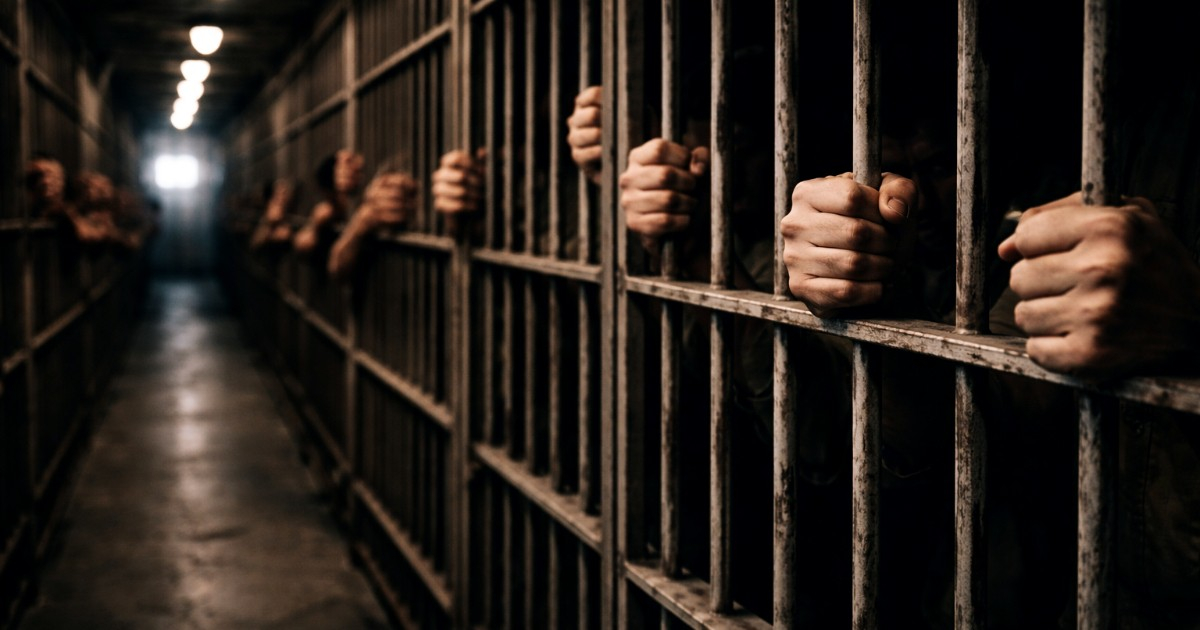
According to the independent organization Cubalex, Havana is home to 205 political prisoners, making up nearly a third of the 679 documented across Cuba. This capital city tops the list when it comes to the distribution of political prisoners by province of residence.
The Combinado del Este, a notorious prison located in Havana, is identified as the facility holding the highest number of these cases, with a count of 74. These figures are derived from Cubalex's original statistical panel, reviewed recently, offering insights into the geographical distribution of political detainees, the facilities where they are held, and the challenges faced in verifying their conditions.
Currently, the registry records 677 individuals, although the figures are subject to change as Cubalex updates its data. Following Havana, the provinces with the next highest numbers of political detainees are Santiago de Cuba with 63, Camagüey with 54, Villa Clara with 51, Matanzas with 50, and Granma with 41. Holguín reports 34 cases, Las Tunas 33, and Artemisa 31.
These numbers reflect the detainees' provinces of residence, not necessarily where they are serving their sentences. In fact, Cubalex identifies 192 political prisoners held in Havana's penitentiaries, distinct from the 205 recorded as residents of the capital.
Prisons and Their Role in Political Detention
The Combinado del Este leads the list of prisons with documented political prisoners, surpassing other facilities such as Valle Grande Prison in Havana with 30 cases, and Granma Provincial Prison, known as Las Mangas Nueva, with 26 cases. Las Tunas Provincial Prison follows with 22 cases, while both Boniato Prison in Santiago de Cuba and Prison 1580, known as El Pitirre, each hold 20.
In total, Cubalex has identified 97 detention facilities or prison centers where individuals are imprisoned for political reasons. A notable concern is the lack of information about the exact location of 99 prisoners, with identifiable penitentiary locations for the remaining 578 cases.
Impact on Families and the Broader Picture
For families, having a relative detained in a different province can mean long journeys and increased expenses for visits and providing necessities like food and medicine. The data shows that 81 political prisoners are detained outside their province of residence, about 12% of the total, while 495 remain in facilities within their home province. The territorial relationship remains undetermined for 101 cases.
The profile of those registered indicates that 92.5% are men and 7.5% are women, with an average age of 40 years, based on the 349 records that include age information.
Cubalex clarifies that its database does not aim to reflect the complete picture of political imprisonment in Cuba. "This is not a comprehensive census. We publish what we have been able to learn, document, and verify," the organization states in its interactive registry presentation.
The organization includes individuals prosecuted for state security offenses and those accused of contempt, public disorder, assault, or other common crimes when evidence suggests imprisonment is a punishment for protesting, expressing criticism, practicing independent journalism, or defending fundamental rights.
For its coverage, Cubalex considers individuals deprived of liberty as those held under state custody for more than seven consecutive days. The last methodological review was in July 2026, with records continuously updated, hence the recommendation to note the consultation date.
When released publicly on October 24, the interactive list accounted for 679 political prisoners, with 580 having identified penitentiary locations. However, recent checks show 677 and 578, respectively. Such variations may result from new verifications, transfers, releases, or reclassification of cases, not necessarily indicating that two individuals have been freed.
Cubalex’s registry differs from that of Prisoners Defenders, which recorded 1,351 political and conscience prisoners as of September 2026. Their list includes both those incarcerated and others under freedom restrictions outside prison, so the totals are not directly comparable.
The plight of political prisoners remains a pivotal issue for the Cuban exile community. On October 22, over 130 former political prisoners in Miami issued a declaration demanding the release of all individuals imprisoned for political reasons and the decriminalization of dissent before any negotiations with the Cuban regime.
Understanding Political Imprisonment in Cuba
What is the significance of Havana in the context of political imprisonment in Cuba?
Havana holds the largest number of political detainees in Cuba, with 205 prisoners, making it the epicenter of political imprisonment in the country.
Which prison holds the most political prisoners in Cuba?
Combinado del Este, located in Havana, is identified as the prison with the highest number of political prisoners in Cuba.
How does Cubalex gather and update its data on political prisoners?
Cubalex gathers information through various means, aiming to document and verify cases, although it does not claim to have a comprehensive census. Their data is regularly updated to reflect changes such as new verifications or reclassifications.
How do families of political prisoners cope with imprisonment outside their provinces?
Families often face long journeys and additional expenses when their relatives are imprisoned in different provinces, complicating visits and the provision of essential supplies.