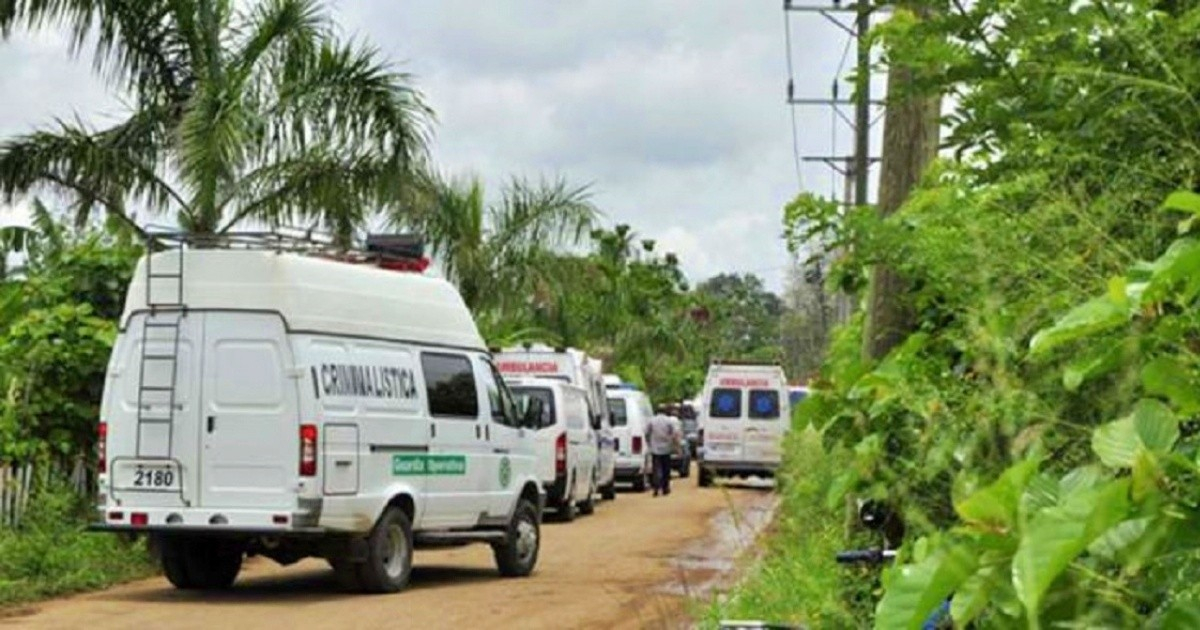
In a tragic incident, 36-year-old Yarielys Gigato Medina was brutally killed, allegedly by her former partner, on Friday morning in her home situated along kilometer 2.5 of the Viñales road in Pinar del Río, according to the Alas Tensas Gender Observatory (OGAT).
This heinous act has brought the number of femicides recorded in Cuba for 2026 to 61, surpassing the totals of the previous two years, which saw 49 cases in 2025 and 56 in 2024.
The deceased leaves behind three young children: two daughters and a son. "Our condolences go to the two daughters and son who survive her, now deprived of maternal care, as well as to all family and friends mourning her loss," OGAT expressed in their statement.
This tragedy comes just ten days after the body of Marili Reina Fajardo, aged 45, was discovered in Brisas del Mar, Habana del Este, showing signs of extreme violence and sexual assault, marking it as the 60th femicide of the year by the observatory.
Escalating Violence and Alarming Statistics
The pattern of violence documented throughout 2026 is deeply concerning: partners or ex-partners are responsible in 75.5% of the cases studied, 64.6% of the murders involve a knife, and 62.5% occur in or around the victim's home.
The year began with an unprecedented surge in violence: from January to July, 44 femicides were reported compared to 18 during the same period in 2025, representing an increase of approximately 112%. By September 4, 2026, Cuba had already surpassed the previous year's total with 50 femicides.
Challenges in Recognizing Femicide
The observatory also records 38 attempted femicides and two male murders in the context of gender-based violence this year, alongside investigating 11 potential femicides and 18 warnings of attempts in 2026.
Requests have been made for access to investigation reports on cases involving Anais Tamayo Puente, Danaibis Tamayo Ramírez, and Odalis Brizuela Zayas, while the case of Bárbara Sánchez González is being looked into as a possible femicidal suicide.
Despite the grim statistics, Cuba's current Penal Code does not recognize femicide as a standalone crime, an oversight that the National Assembly refused to address in 2022 by rejecting a proposal to criminalize it independently.
The lack of official systematic statistics on these crimes makes the Alas Tensas registry the primary public documentation source. Since starting its monitoring in 2019 through June 2026, OGAT has documented at least 350 femicides in Cuba.
Understanding Femicide in Cuba
What is femicide?
Femicide refers to the intentional killing of women because of their gender. It is often perpetrated by partners or ex-partners and involves a pattern of domestic violence.
Why is femicide not recognized as a separate crime in Cuba?
Currently, Cuban law does not recognize femicide as an independent crime. Efforts to legislate it as a distinct offense were rejected by the National Assembly in 2022.
How does the Alas Tensas Gender Observatory operate?
The Alas Tensas Gender Observatory (OGAT) monitors and documents femicides in Cuba, providing crucial statistics and information due to the lack of official data from the government.
What actions are being taken to address femicide in Cuba?
Despite the rising numbers of femicides, there are limited legislative measures in place. Activists and organizations like OGAT continue to push for recognition and action against femicide.